by Lance Hill | Mar 17, 2025 | How To, Mirliton
Strong winds and hurricanes can shred a mirliton vine and stress it enough to delay or even stop flowering.
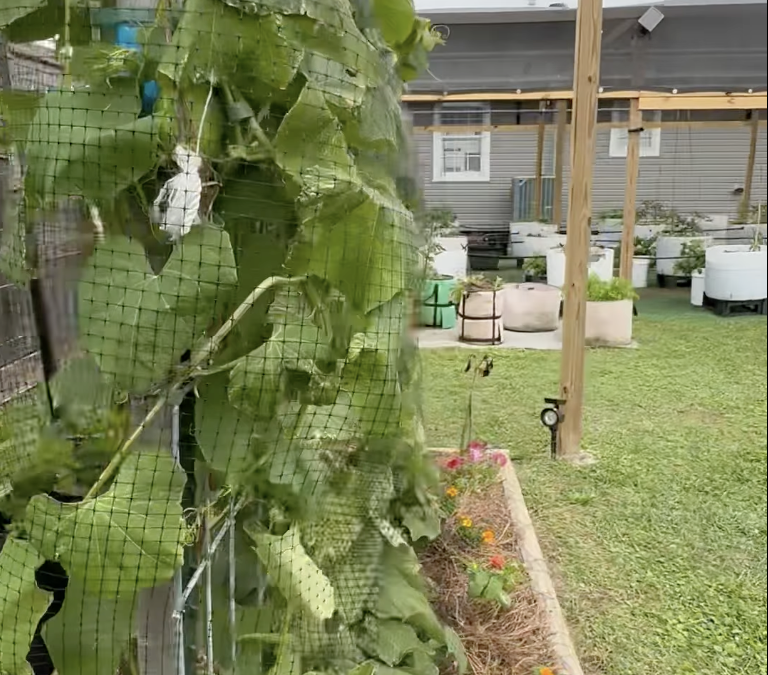
Michelle Impastato Glore discovered an ingenious way to inexpensively and quickly protect the vine from winds: netting. It’s the most effective way to protect your vines from wind damage–even in hurricane winds.
With young plants, she sandwiches them between two layers of netting and secures it to the trellis on both sides with clips. She pushes the tips of the clips through both sides so they hold the vine snugly but not so tightly that it breaks the stems.
To protect her large, mature vine, she wraps the entire vine with netting on both sides and secures it with velcro and or plastic tape.
Both vines survived gusts of 20 mph, and the large vine should have sustained gusts up to 70 mph.
The netting comes in many sizes at Tractor Supply and other stores, including this large roll for big vines.
Watch the video here of Michelle’s vine after 70 mph gusts. The vine had grown through the netting, so she had to cut holes in it before removing it.
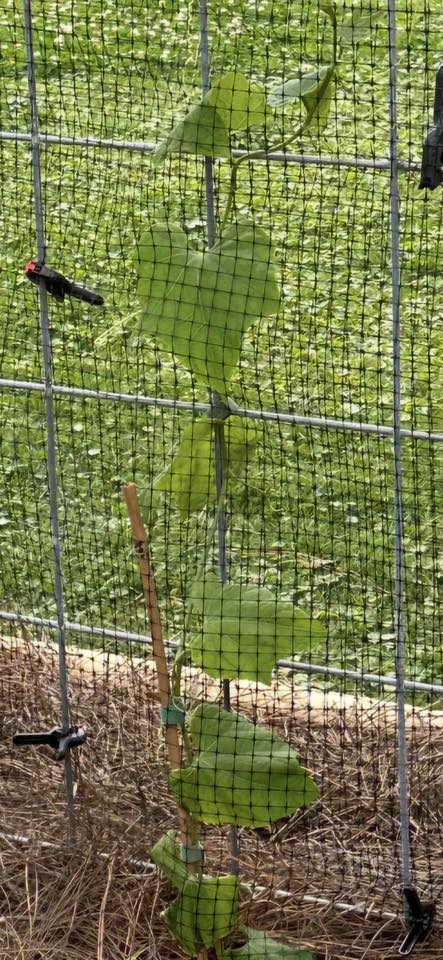
New plant sandwiched in with netting clipped to trellis.
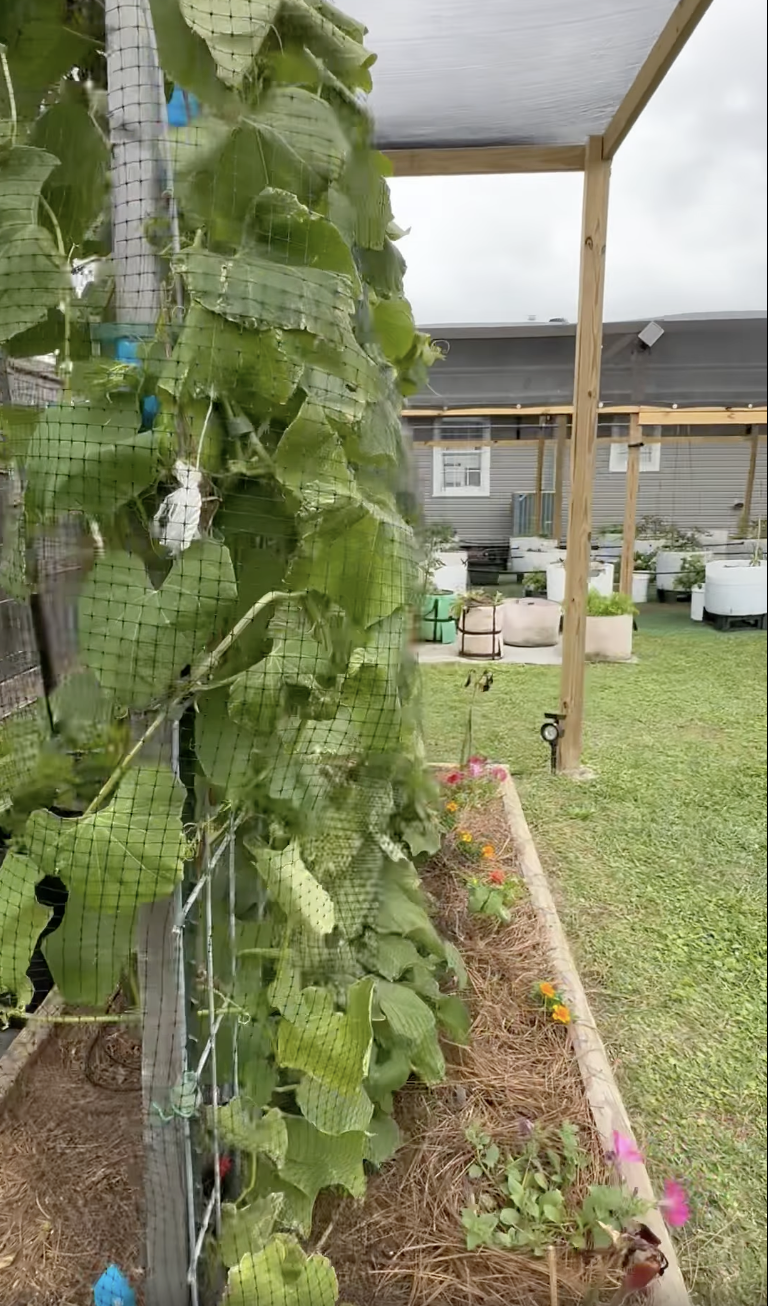
Netting wrapped around large vine.
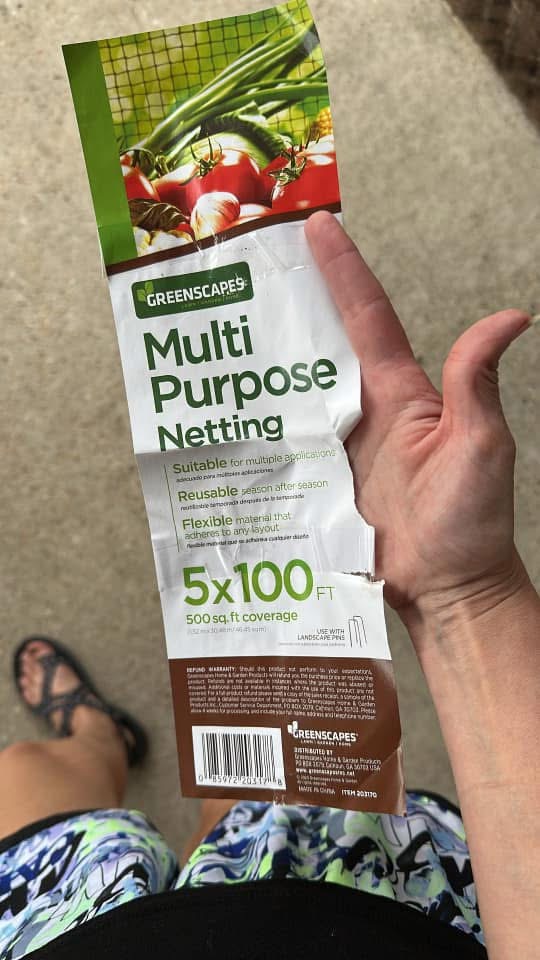
Garden netting.
by Lance Hill | Mar 8, 2025 | How To, Mirliton, Uncategorized

Mirliton is the Haitian-French word for the Louisiana chayote (Sechium edule) vine that originated in Mexico and Central America. Haitians brought it to Louisiana in the 19th century, and it evolved over 200 years, adapting to the climate, altitude, and diseases. It’s a self-pollinating climbing vine that makes both male and female flowers on the same vine.
How to Grow It:
1. Choose the right seed
Mirliton seeds can’t be dried and saved, like tomatoes and grains. The entire fruit must be planted. We recommend that you use only certified Louisiana Heirlooms for two reasons. First, Louisiana heirlooms grow and produce well in our climate and are naturally resistant to most diseases. Second, imported chayote–sold at grocery stores and online–are not screened for diseases and can introduce new diseases that could eventually destroy our heirloom variety. Avoid uncertified seeds and plants sold at nurseries, farmers’ markets, and roadside stands.
Read about imported chayote here.
Find a list of Certified Mirlitons here.
2. Sprout It.
Place the seed in a warm place, such as on top of the refrigerator, until it sprouts a stem. If it does not sprout within a few weeks, here is an easy way to speed up the process.
3. Container-Plant it:
Once the seed sprouts, we recommend overwintering it in a 3-gallon container. This will help it develop a good rootball for transplanting and help you get an additional crop in the spring. Mirlitons need 110 days after planting to set fruit, and by container planting it in December, it may set fruit in May. Find everything about sprouting, container-planting, and watering a new seed here.
4. Choose a Plant Site:
Select a well-drained area away from roofs for your plant site. Mirlitons don’t grow well in saturated soil–it can even kill a new plant. Till up a 4’ x 4’ patch to plant in. If you have poor or clay soil, dig a pit 2’x2’x18” and fill it with a mix of garden soil, compost, and manure to give the vine a good start. Mound a small hill of soil on top of the pit in which to plant the mirliton (so it drains well). The planting site does not have full sun because mirlitons are “sun seekers” and will grow along the trellis until they find sunlight. Here’s how to prepare the planting site, and here’s why you can initially plant in shade or full sun.
If you don’t have a well-drained area, you will need to build a large, deep, raised bed.
Here’s how to build a bed that drains quickly and keeps the correct soil moisture.
5. Build a Trellis:
Build an overhead trellis that allows you to both shade and frost-protect the vine. The trellis material must be the correct gauge and mesh. Mirlitons will climb almost anything, but a proper trellis makes protecting and harvesting easy. Read here how to select the appropriate trellis material. Make sure the trellis has a structure that will support a shade cloth or tarp when needed (PVC hoop or wooden frame).
6. Shade it:
Buy a shade cloth before you even plant. The last several summers have taught us that mirlitons can die in intense heat waves without a shade cloth–especially with a first-year vine. You may need a shade cloth starting as early as July. They are inexpensive and last for years. Read about them here.
7. Transplant it:
If you don’t want a spring crop, transplant your container plant into your ground site or raised bed in April after the threat of frost. If you want a spring crop, you need to transplant in the first week of March. Be prepared to cover it with a bucket or tarp in case of a frost.
8. Fertilize It:
Any balanced (8-8-8) chemical fertilizer will work, but slow-release fertilizers such as manure work best. Fertilize with a couple of tablespoons when you first plant and then once a month as needed. As long as the vine is green and growing, it’s fine. Don’t fertilize after July, or it will disrupt flowering. Read about fertilizing here.
9. Water It:
Water it at the ground level–overhead watering spreads plant diseases downwards. Mirlitons don’t need much watering in the spring, and that’s the time most people are likely to over-water. The simplest way to prevent over-watering is to use a soil sampler. The inexpensive device will also tell you if your soil is too dry during a heatwave or drought. Set up a regular watering schedule throughout the summer. Once the vine gets going, the mirliton leaves will indicate whether it has adequate moisture. This process is known as guttation, and you can learn how to read the leaves here. Read the basics of watering mirlitons here.
10. Scout It Daily:
The summer months should be a steady routine. Scout the vine daily for pests and disease.
11. Protect it from winds and Hurricanes:
Strong winds can batter a vine and disrupt flowering and fruiting. The most effective way to minimize wind damage is with netting, like here. You can also weave the vine into the trellis like here.
12. Protect it from diseases:
Two primary diseases affect mirlitons: powdery mildew (PM) and anthracnose. Powdery mildew is usually seen in the spring. It’s easy to identify and can be eradicated by spraying the vine with potassium bicarbonate, an organic fungicide. Read how here. The main summer disease is anthracnose. Fungicides are ineffective against anthracnose. But the good news is that anthracnose normally recovers by the fall. In addition, each time the vine gets anthracnose, it acquires more natural immunity to the disease. Read about how to identify anthracnose here and here. (Additionally, see “Alternaia Leaf Spot” below) You can also submit photographs of plant symptoms to the Facebook group for help identifying and managing the diseases.
13. Protect it from Pests:
There are three main insect and animal pests. Read about how to manage them at these links: Vine borers. Stink bugs. Squirrels.
You can submit photographs of insects to the Facebook group for help identifying them.
14. Protect it from Frost and Freezes:
Mirlitons are “cold-sensitive” plants that can get damaged and frostbitten if the temperature drops below 42°. Sprinklers can protect against most frosts and extend the growing season into December. Read how here. Simply covering the vine with a tarp will also protect against most cold weather. But, the most reliable and effective protection against cold damage is temporarily tenting and heating the vine when needed. Growers who did this during the 6° freeze in 2025 saved their vines and harvested mirlitons all through the winter. All it takes is a tarp and a small heater. Read how to do it here.
15. Flowering and Fruiting:
Mirlitons are photoperiodic, which means the length of the day stimulates flowering. That occurs during the spring and fall equinoxes in March and September. It may take a few weeks after the equinox for flowering to start, and a cold snap will help. Once the female flowers are pollinated, the fruit will mature within two to three weeks. If you don’t see bees pollinating, you may have to hand-pollinate–see how to do it here.
16. Cut back or Not Cut back the Vine?
In the past, the tradition was to cut back the vines at the end of the fall harvest. We don’t recommend doing that now because the weather patterns—increased summer waves and fall hurricanes—have often ruined the fall crop. Instead, we recommend extending the growing season for several months by temporarily tenting and heating the vine after the fall. If you temporarily tent your vine, you can grow mirlitons through January before having to cut it back. Read how here.
Additional “How-To” Links:
Growing mirlitons in a cloth gro-bag
How to prune back a new mirliton in a container
How to plant in the fall.
How to plant in the right sun conditions.
How To Plant A Spring Mirliton Sprout In May or June
Checklist for Transplanting Containerized Mirlitons
Fertilizing Mirlitons
Why are my leaves yellowing?
How to grow Mirlitons in a large container.
Shading Your Mirliton
Tarp for Frost Protection
How to water a new seed in a 3-gallon container
Hand Pollinating
Getting your Mirliton to Sprout Quickly
Squirrel Repeller
Sprinklers for Quick and Easy Frost Protection
Protect Vine From Winds and Hurricanes
How Mirliton Leaves will tell you they have enough water
How to Plant Spring Mirlitons
Help! My Mirliton is Wilting!
The Thumbnail Test for Ripeness
Managing Spider Mites and Mealybugs on Container-Planted Mirlitons
How to test compost or manure for pesticide residue
Why Growing Imported Grocery Store Mirlitons (chayote) Is a Bad Idea
Identifying and Managing Alternaria Leaf Spot
Identifying and Managing Anthracnose
The Smoking Gun: The Best Way to Diagnose Anthracnose
Root-Knot Nematodes.
Why Planting an Imported Chayote Can Spread New Diseases to U.S. Mirlitons
How Heat Stress Kills Mirliton Vines and What You Can Do to Prevent It
When Do Mirlitons Flower?
Frost Protection: Extend Your Harvest Through December.
Lightweight Frost Protection: The Glore System
Don’t Use Sugar Water to Attract Pollinators
Made In the Shade: Shade Cloths Protect Mirlitons and Increase your Harvest!
How to test for fruit ripeness.
If you overwinter sprouts in a 3-gallon container in the Fall, you’ll get a spring crop!
Be Careful Buying Mirliton Spouts and Plants Online and in Garden Stores
How to Rescue a Raised Bed from a Rain-Saturated Yard
Buyer Beware: How to Sell and Buy Mirliton Seeds, Sprouts, and Plants
Can You Plant Other Squash With Mirlitons–or is there a Danger They Will Cross-Pollinate?
Why Using Imported Mirlitons (chayote) to Grow Your Mirliton Vine is a Bad Idea
It’s Not Just Frosts: Cold Damage to Mirlitons Can Occur Anytime Temperatures Fall Below 50℉
How We Diagnose Mirliton Diseases and Problems
Mirliton Waterlogging: Symptoms and Quick Treatments
Elevated Raised Beds
Why You Should Not Remove Dead or Diseased Leaves
Fall is No Longer the Main Mirliton Harvest Season
Want to Grow a Mirliton Without Heatwaves or Anthracnose?
Controlling Leaf-Footed Stinkbugs
by Lance Hill | Feb 14, 2025 | How To
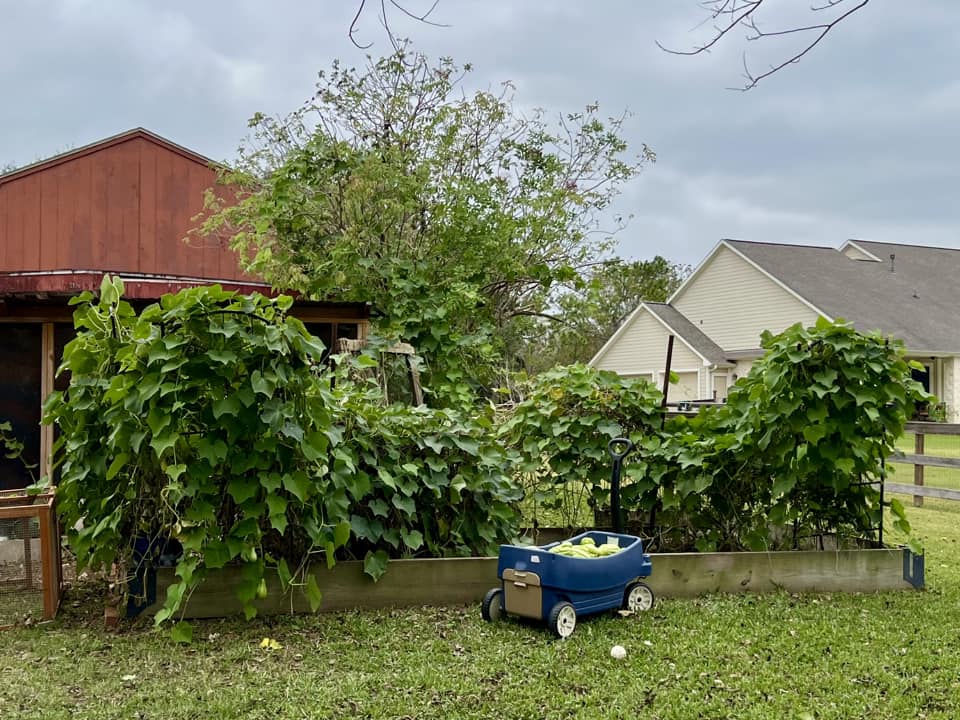
Tedra Erikson Stanley’s Raised bed
Many people’s yards have poor soil or soil with inadequate drainage which makes mirliton growing difficult. Either their soil gets overly saturated or has a high clay content and does not drain well. Raised beds are the solution.
But growing mirlitons in a raised bed requires special planning–it’s not like growing tomatoes or bell peppers. Mirlitons “hate to get their feet wet.” If the soil in the bed gets overly saturated, it will stress the vine, cause disease, and disrupt flowering and fruiting. They also get stressed by excessively dry soil.
The solution is a large, deep bed that moderates the changes in soil moisture and simulates ground planting. The ideal bed is a large, tall bed, 4’ X 8’ and 12-18 inches deep. Make sure to till the soil beneath the bed before installing it. You can make the bed with concrete blocks, wood, or galvanized steel. It doesn’t have to be quite as large as some of these images, but the larger and deeper the bed, the more likely that your vine will survive intensive rains and droughts.
Beds that sit on top of saturated or clay soil will not quickly drain into the soil, so you will need a lateral outlet so excessive rainfall moisture can drain out the sides. If you use a double stack of concrete blocks (below), it will allow the water to drain from the bed laterally. If you are using wood, it’s best to drill holes around the perimeter at about 4” above the soil line or leave a crack between the boards. Or you can bury a corrugated drain pipe in the bed and cut release outlets on the ends (photo below).
Finally, and most importantly, add a structure on top of the bed to place a shade cloth in the summer and tent the vine with a tarp in the fall to protect against frost/freeze. (photo below) If you are in an area that gets high winds, build the trellis and shade/tent structure so that it is relatively secure and the vine does not get traumatized.
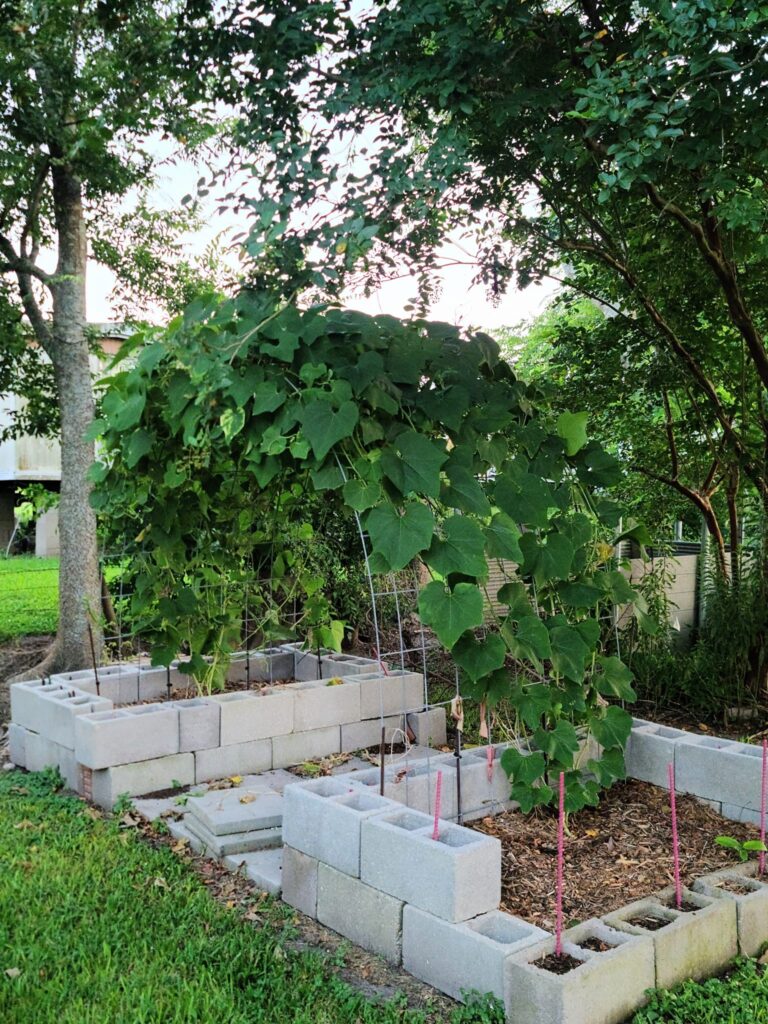
Concrete block raised bed by Michelle Landry
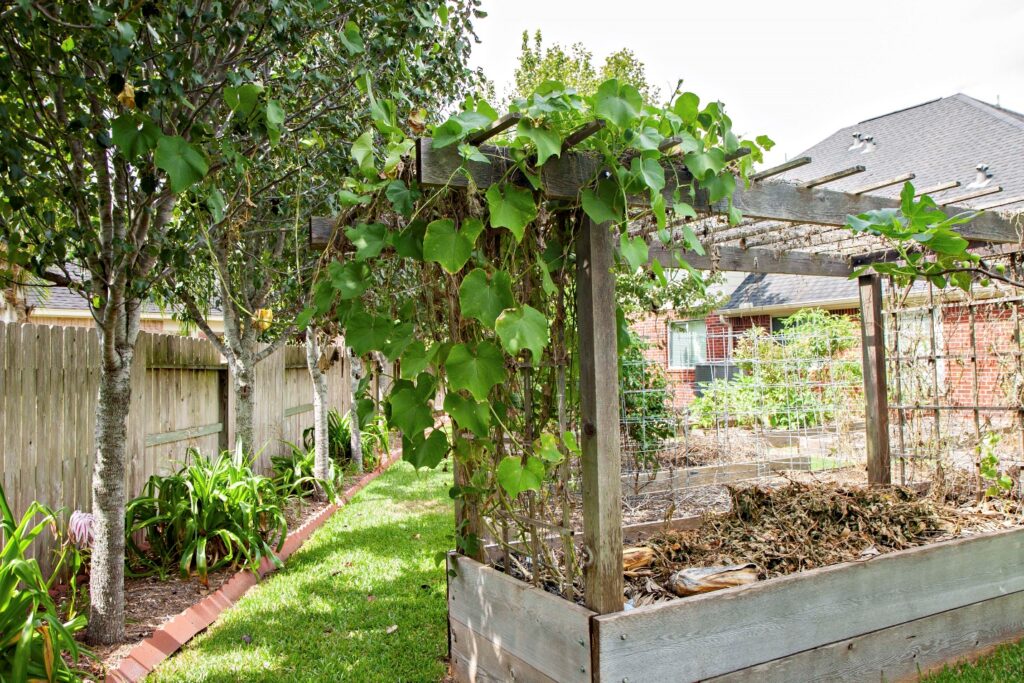
Mirliton raised bed.
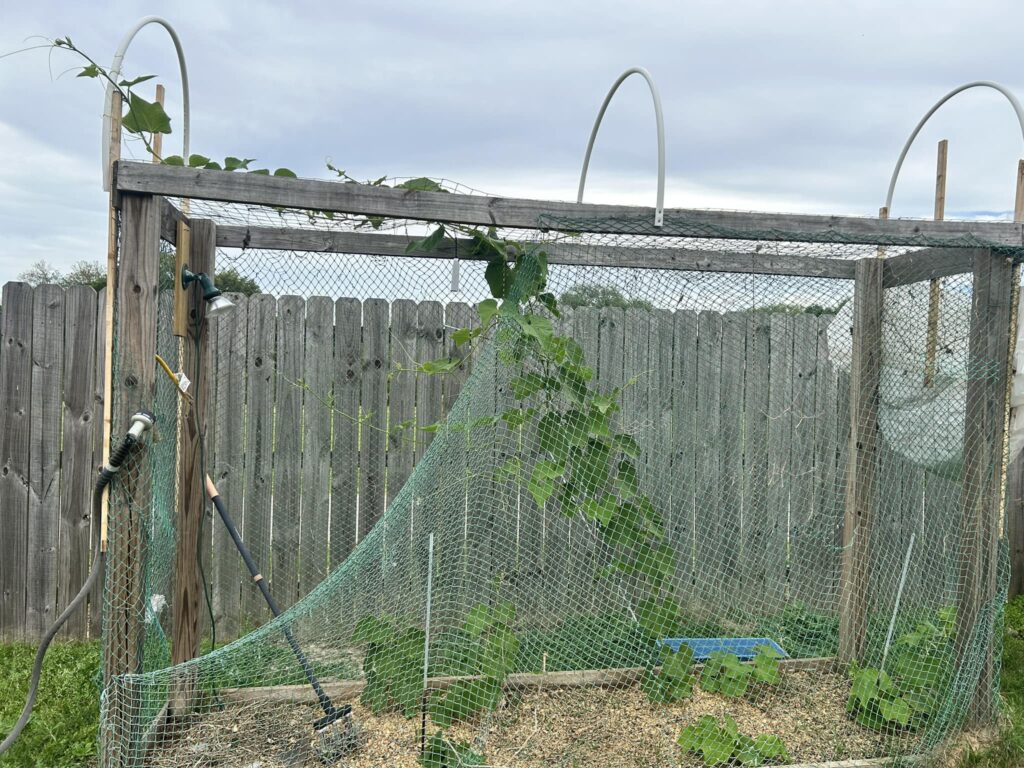
Raised bed with hoops for shade and tarps
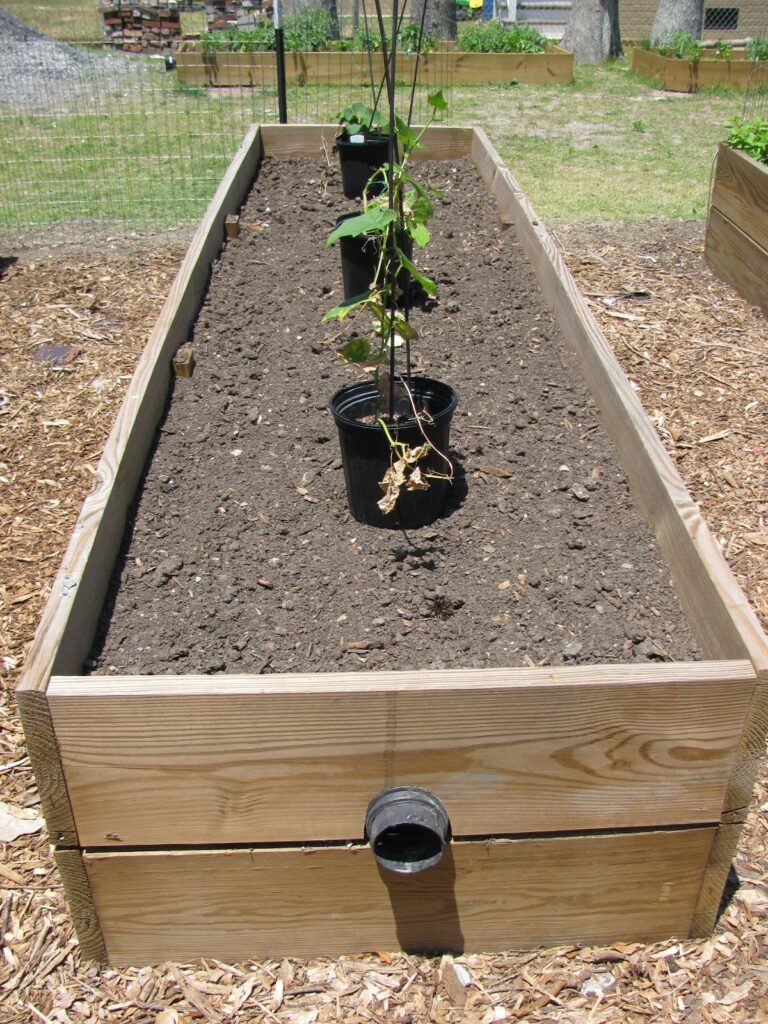
Raised bed with corrugated pipe drain
Tedra Erikson Stanely’s Raised bed
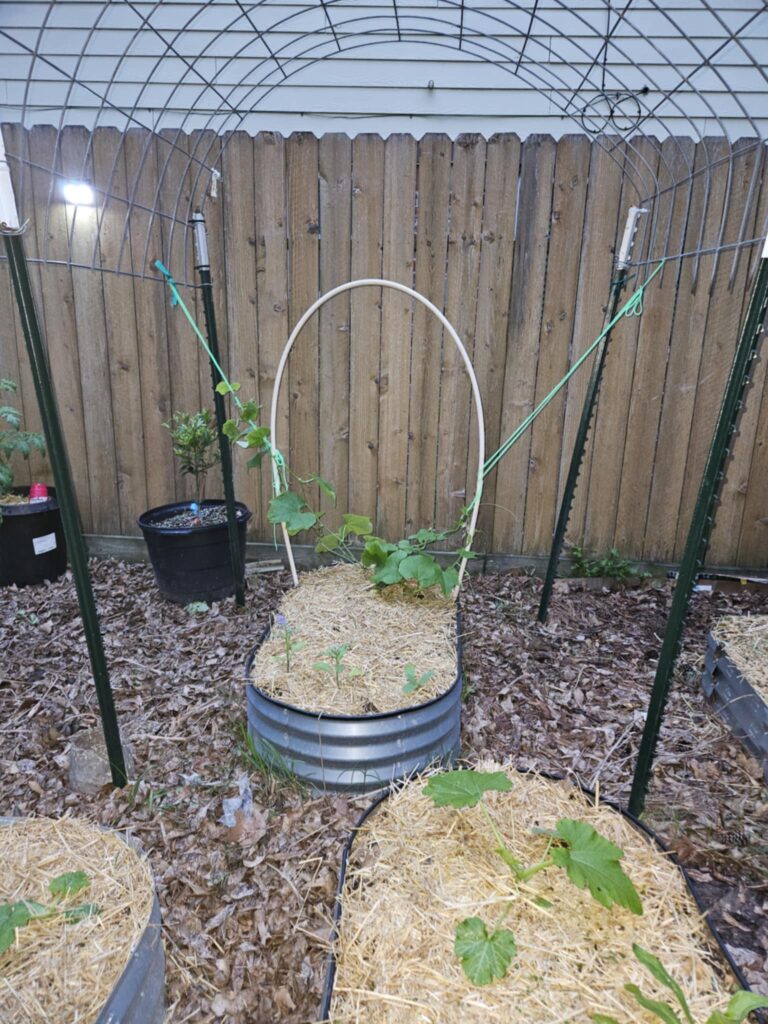
Aisha Elwood’s metal raised bed with shade structure

by Lance Hill | Dec 29, 2024 | How To, Mirliton
I learned of a large mirliton farm in Cut Off, Louisiana, in 2009 and traveled there to meet its owner, Vivian Danos Arceneaux. I learned it had been grown for decades and after examining the variety, I told her I wanted to give it a name to help preserve and popularize it. Miss Vivian decided on the name “Papa Sylvest” in honor of her father, Sylvester Antoine Danos, Sr (1901-1998), who planted the first seed at their farm.
Miss Vivian is a mirliton grower extraordinaire. She had grown mirlitons for more than 60 years and had hundreds of feet of trellis and an advanced drainage system. She willingly shared her vast knowledge of the art of mirliton growing with me and donated several dozen Papa Sylvest sprouts to Mirliton.Org for other growers.
Miss Vivian retired from farming but is still alive and active in 2024 at the age of 97 years old in Lafourche Parish. Her nephew, Alvin “Butch” Orgeron, has kept the variety going with his enormous trellis in Thibodaux and is responsible for almost all the Papa Sylvest vines you see today in Louisiana.

Miss Vivian on her porch on the farm, 2010

Papa Sylvest Trellis
by Lance Hill | Oct 20, 2024 | How To, Mirliton
 We have a problem.
Anyone growing mirlitons for the past few years knows that if the heat waves don’t get your vines, the hurricanes will. The weather has changed, and the forecast is that it will only get worse- more heat waves and hurricanes.
But we have a solution. We have the perfect six-month season free of heat and hurricanes: November through April. Why not take advantage of it? It’s possible for you to get three crops in those six cool months: fall, winter, and spring!
You can plant your sprouts in the fall and let them grow on a small trellis throughout the winter. You can easily protect it from those few frost/freeze nights by temporarily tenting it with a tarp or plastic and adding a heating element. It’s additional work, but you will get a spring crop and head into the summer with a healthy vine with a good root structure. A strong, mature vine like that can make it through summer heat domes and you may even get a second fall crop.
Cool, ain’t it?
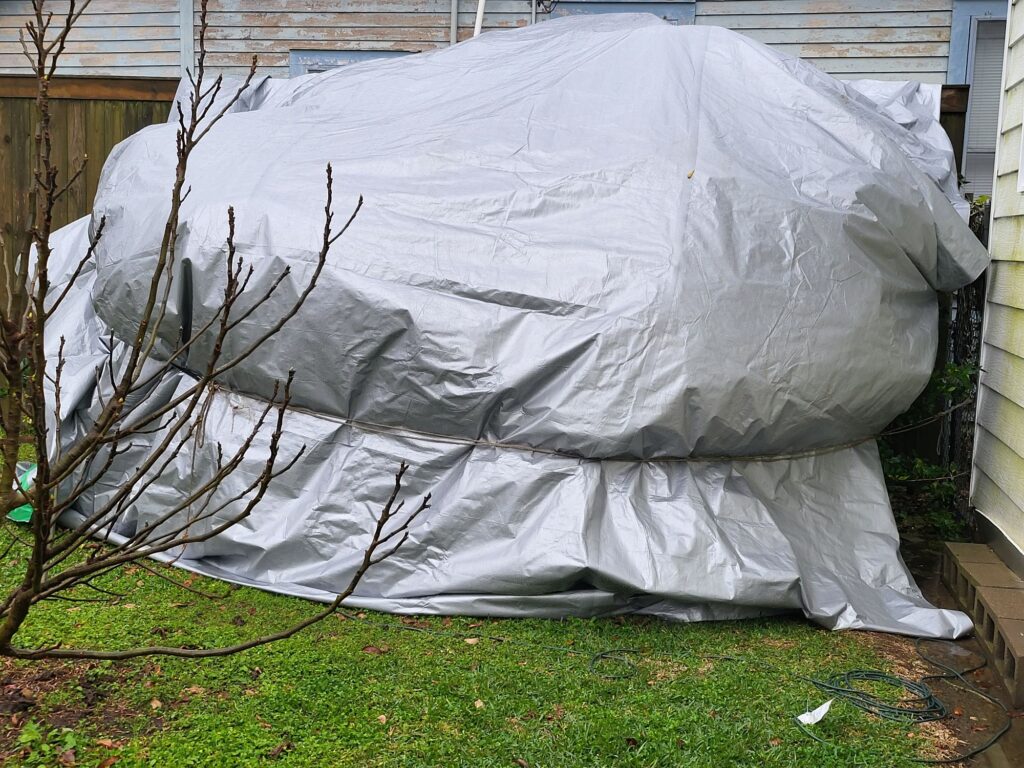
You don’t need anything fancy to cool-season grow mirlitons. Just a tarp or plastic to throw over the vine and a small space heater to keep the temperature inside the enclosure above 32℉. I use an inexpensive remote thermometer to monitor the temperature. If you use clear plastic, you can leave the enclosure up all winter and open up the sides on warm days to allow pollinators to access the vine.
As always, you will need a certified Louisiana heirloom mirliton to ensure success.
Even if you don’t attempt to grow year-round, the cool-season method will help you extend the fall season well beyond the normal frost date.
Here are the tools I use for cool-season planting:
Tarp or 6-mil plastic sheeting
Portable Heater (electric, propane, or heat lamp)
Wireless Remote Thermometer (click to view)
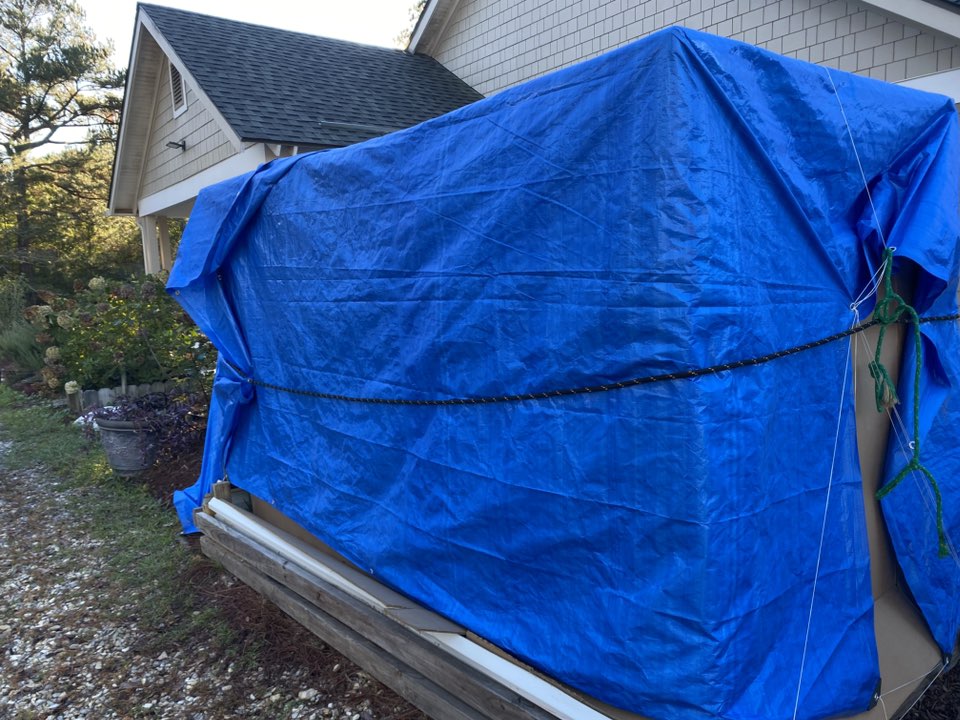
Walter Livaudais’s tarp frost cover.
Michelle Glore’s trellised and tented vine in the 2025 blizzard
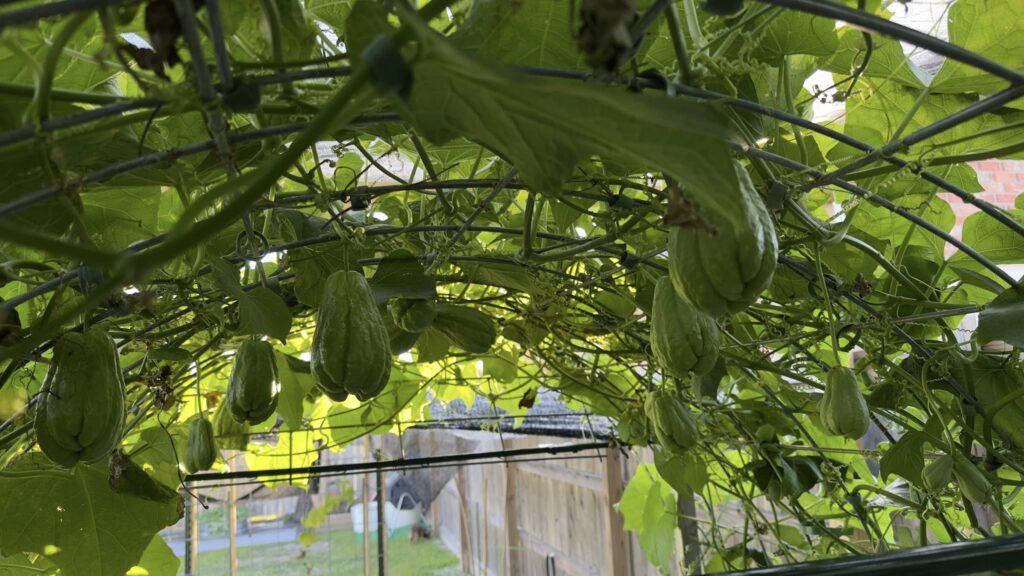
Michelle’s winter mirliton crop is ready to harvest in early April.
Melissa Minevielle’s tented vine with a heater.
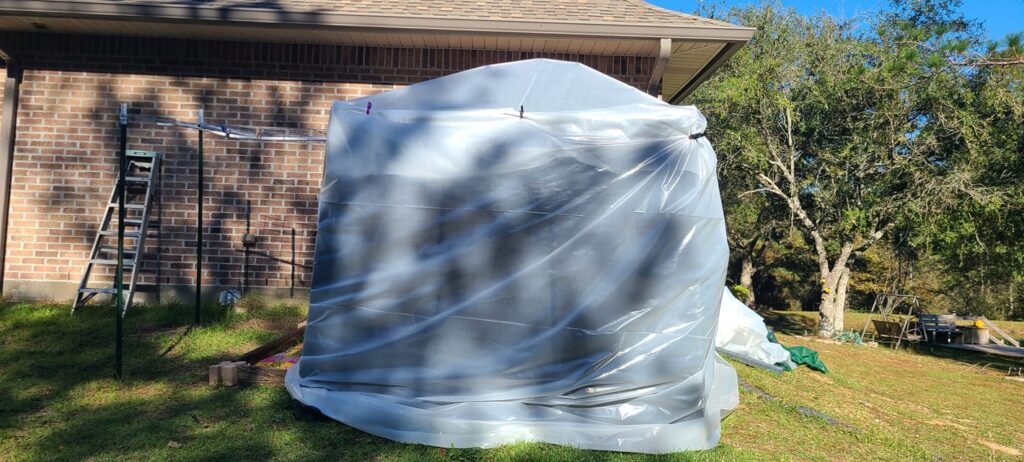
Deb Sepulveda’s tented vine before the freeze.
Recent Comments