by Lance Hill | Mar 20, 2026 | How To, Mirliton

Checklist for Transplanting a Containerized Mirliton Plant
✔ Harden off the potted plant before transplanting–or erect a shade cloth for the first week
✔ Plant in fast-draining, composted soil
✔ Add manure or slow-release fertilizer
✔ Water thoroughly the first time.
✔ Use a bamboo stake or soil sampler to determine when to water subsequently
✔ Protect from cold damage if the temperature drops below 50℉
by Lance Hill | Mar 14, 2026 | How To, Mirliton
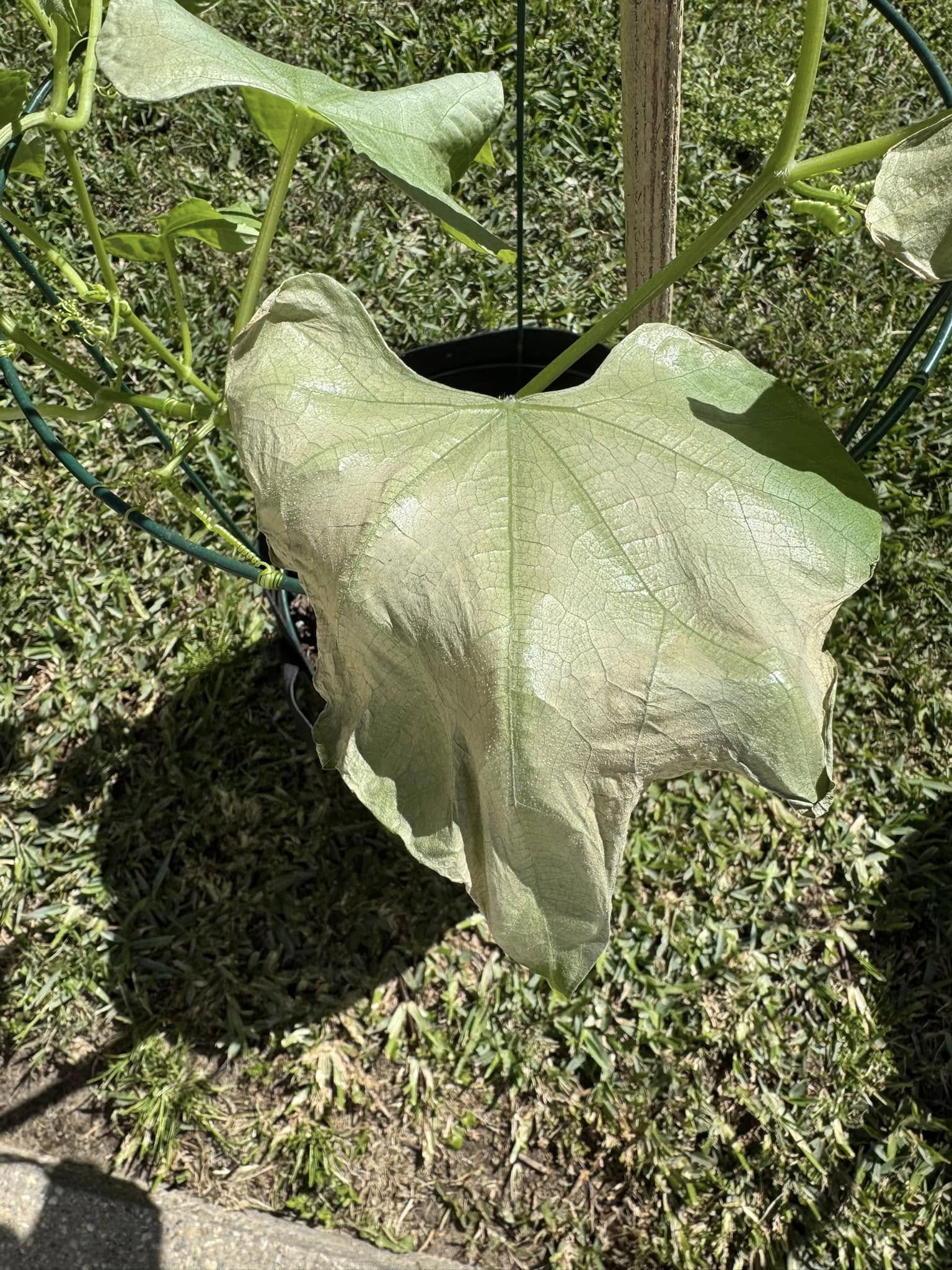
Cold-damaged mirliton leaf.
Freezes and frosts are not the only cold temperatures that can damage mirliton leaves. While not as damaging as frosts, Cold Damage can occur when temperatures drop below 50℉.
Cold damage symptoms often appear several days later and include limp, wilted, or yellowing leaves, and subsequent slowed growth. Light cold damage can generally be outgrown by an established vine, but young, newly transplanted plants are more vulnerable. So protect them by covering them with tarps or buckets and even adding a heating element.
by Lance Hill | Mar 8, 2026 | How To, Mirliton, Uncategorized

Many people want to grow their own mirliton (chayote) vine but find it difficult to find locally grown mirlitons. Because of their frustration, some people try to grow mirlitons by purchasing and planting one from the produce department in a grocery store, or online from seed stores. There are two reasons why this is not ideal.
First, all mirlitons sold in grocery stores and markets are imported varieties. They are grown and imported only as produce, just like all the other vegetables that you purchase. The USDA tried to grow these varieties a century ago and concluded that high-altitude plants have tremendous difficulty growing in low altitudes. This is because these varieties have adapted to the altitude, pests, diseases, and ultraviolet exposure in their native environment. The patterns of light and temperature influence when and if the variety will flower and fruit. Moreover, an imported variety may not have acquired resistance to diseases or disease pressures that occur in its new environment.
All imported mirlitons will sprout and send up a shoot, but most imported mirlitons will not flower and set fruit. We have received reports of this problem from hundreds of growers over the years, and I had the same disappointing experience when I tried to grow a vine using imported mirlitons.
Second, even if you could grow an imported mirliton, you may introduce new diseases that have devastated mirlitons elsewhere. Local mirliton varieties adapted to U.S. conditions have been grown for over two centuries in Louisiana and California. These were originally brought from low-altitude coastal areas in the Caribbean and Central America. In horticulture, these local varieties are called landraces —cultivars that growers have improved through traditional agricultural methods. The Louisiana heirloom mirliton is the U.S. mirliton landrace that has adapted to the regional climate, diseases, and pests through generations of trial and error. They are a reliable and healthy variety.
But they are vulnerable to new diseases. Many mirliton diseases have not reached the U.S, and some, like the destructive Chayote Mosaic Virus (CMV), are transmitted inside infected mirliton fruit without any sign of infection (seedborne and sapborne diseases). The U.S.D.A. does not screen imported chayote for diseases becuase, rightfully so, they assume that it will be eaten, not planted. If you purchase infected imported mirlitons that carry the disease and then plant them, you may spread the disease to the Louisiana heirloom mirlitons.
There is no cure for CMV and other viral plant diseases, and planting imported, unscreened chayote can potentially destroy all U.S. varieties. That applies to both grocery chayote and chayote of unknown origin sold online. Read about CMV here.
Plant diseases are constantly evolving and afflicting chayote. In Brazil, scientists have discovered two new plant diseases in chayote. One is a new fungus that causes anthracnose disease in mirlitons — another soilborne and sapborne disease that can be spread through imported chayote. Read the article here.
Read the article about the new seedborne fungal pathogens that cause anthracnose discovered in Brazilian chayote herel https://www.mdpi.com/2309-608X/10/12/847
And another has been discovered: Cowpea Mild Mottled Virus (CPMMV). Read about it here.
To summarize: Imported mirlitons may not grow and fruit in the U.S., and if they do, they may have disastrous consequences for U.S. mirlitons landraces.
by Lance Hill | Mar 8, 2026 | How To, Mirliton, Uncategorized

Many people have asked if there is a danger of interbreeding (cross-pollination) if they grow mirlitons with other squash, like Cucuzza and luffa. That’s understandable because the vines look and flower similarly. The short answer is no, mirlitons and other squash species can’t cross-pollinate.
Mirlitons can only pollinate other mirlitons, and other squash can’t pollinate mirlitons.
But here’s an easy way to determine the danger of interbreeding with any combination of plants.
We usually use common names for plants, but the key to knowing whether they can interbreed is the scientific name, called the “binomial name,” which consists of two words: genus and species. It is analogous to your personal name; your last name is your genus (family name), and your first name is specifically who you are in the family (specie).
To determine the possibility of interbreeding, simply Google the common name followed by “binomial.” For example, if you Google “mirliton binomial,” your first result is Sechium edule, the binomial name you are looking for. Then Google “Cucuzza binomial” and it will return Lagenaria siceraria. Now you know the genus and species of both.
Mirliton: The Genus: Sechium. The Specie: edule
Cucuzza: The Genus; Lagenaria. The Specie: siceraria
The two vines are in different genus (genera is the plural), and different genera seldom interbreed.
What if you have two plants in the same genus? Then look at the second name, the species. If they are the same species, they can generally cross-pollinate-that’s how botanists define species- any plants that are capable of interbreeding. There are exceptions, but to be safe, don’t plant them together until you contact a plant expert for advice.
Now, practice the method on another plant:
Find the scientific names (binomial names) for mirliton and cucumber. Compare them. Are they the same genus? If not, then it’s safe to plant them together.
( Special thanks to Dr. Joe Willis of the LSU AgCenter for his indispensable contribution to this article)
Recent Comments