by Lance Hill | Jul 6, 2026 | How To, Mirliton, Uncategorized
 We Have Changed the Two Categories of Certified Mirlitons
In the past, Mirliton.Org had two categories of mirlitons that we certified as Louisiana heirlooms: named and unnamed. This was a little cumbersome for some people, so we have modified it to “Named Mirliton” and “Certified Mirliton.” If you are growing an unnamed variety, all you need to say is that it’s a “Certified Mirliton” or “Certified heirloom mirlitons.” If someone asks for the name, say it’s unnamed.
by Lance Hill | Jul 5, 2026 | How To, Mirliton, Uncategorized
Summary:
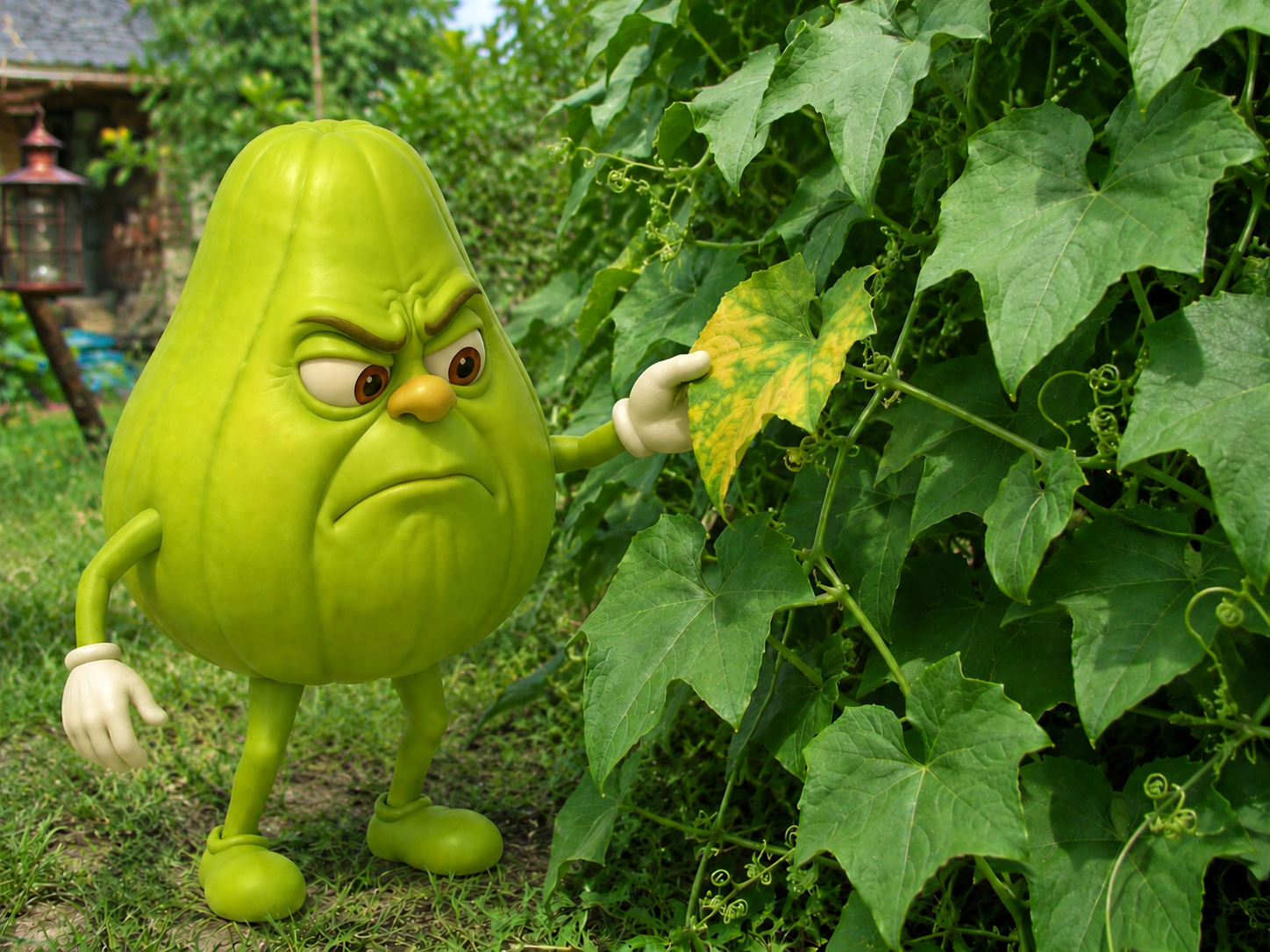
The standard advice we hear is to remove diseased leaves and stems to reduce the spread of anthracnose and other fungal diseases. It’s wrong; in fact, rummaging around in a mirliton vine, pinching off or clipping infected leaves will increase the spread of the disease. That’s because plant diseases are dispersed differently, depending on the disease and the plant. Anthracnose spreads differently from other fungi. And mirlitons, unlike pepper or bean plants, are dense, climbing vines that you can’t prune without rubbing up against the leaves. Those leaves can look perfectly healthy, but be covered with fungal toxins and their spores. When you brush up against them, you become a human transport of the deadly sticky anthracnose spores.
Your vine is better off left alone.
Here’s the Science:
Rummaging around in your Mirliton vine to prune off infected leaves probably spreads the disease even more. Anthracnose pathogens (Colletotrichum spp.) produce conidia (spores) in slimy, mucilaginous masses that are specifically adapted for water-splash dispersal, not wind. That sticky mucilage matters here: the spores are sticky and suspended in a wet matrix, which is exactly what makes them transferable by contact. When you push through a dense, wet vine, you are doing what a rain splash does — picking up conidia on hands, sleeves, and tools and depositing them on healthy tissue and at fresh wounds
This is well established for Colletotrichum in general and is why the standard advice across many crops is to avoid working plantings when foliage is wet. That’s nearly impossible along the Gulf Coast, where morning dew and daily afternoon coastal showers keep the vines moist — as well as the sweat-soaked clothes you wear while gardening.
Moreover, even if most of your vine looks healthy, those healthy-looking leaves can be covered with anthracnose fungi and their spores. The pathogens and their sticky spores can be on the leaves long before any visible symptoms, such as brown or yellowing spots or stem lesions, appear. Which means while you are brushing up against what appear to be healthy leaves to get what are clearly infected ones. You are spreading more disease to the healthy leaves than you accomplish by removing the clearly infected ones. This is why we constantly advise growers not to remove dead leaves–even when there are no signs of disease. You get a pretty vine, at the risk of spreading diseases!
There have been numerous scientific studies on human-borne spore transport.
In one study on bean anthracnose (Colletotrichum lindemuthianum), workers and equipment moving through wet fields were identified as a significant dispersal route, and the standard recommendation became to stay out of bean fields when foliage is wet. There’s comparable documentation for strawberry anthracnose (C. acutatum), where workers’ hands, clothing, pruning tools, and picking activity have been shown experimentally to move conidia from plant to plant during harvest. They tested transmission on denim, leather, metal, and rubber (i.e., clothing and equipment surfaces) using prepared spore inoculum in both wet and dry crop canopies, and found that equipment and workers transmit pathogens from infected to clean plants.
So, both science and plain common sense tell us:
Leave the leaves if you don’t want more disease!
Recent Comments