by Lance Hill | Apr 17, 2024 | How To, Mirliton
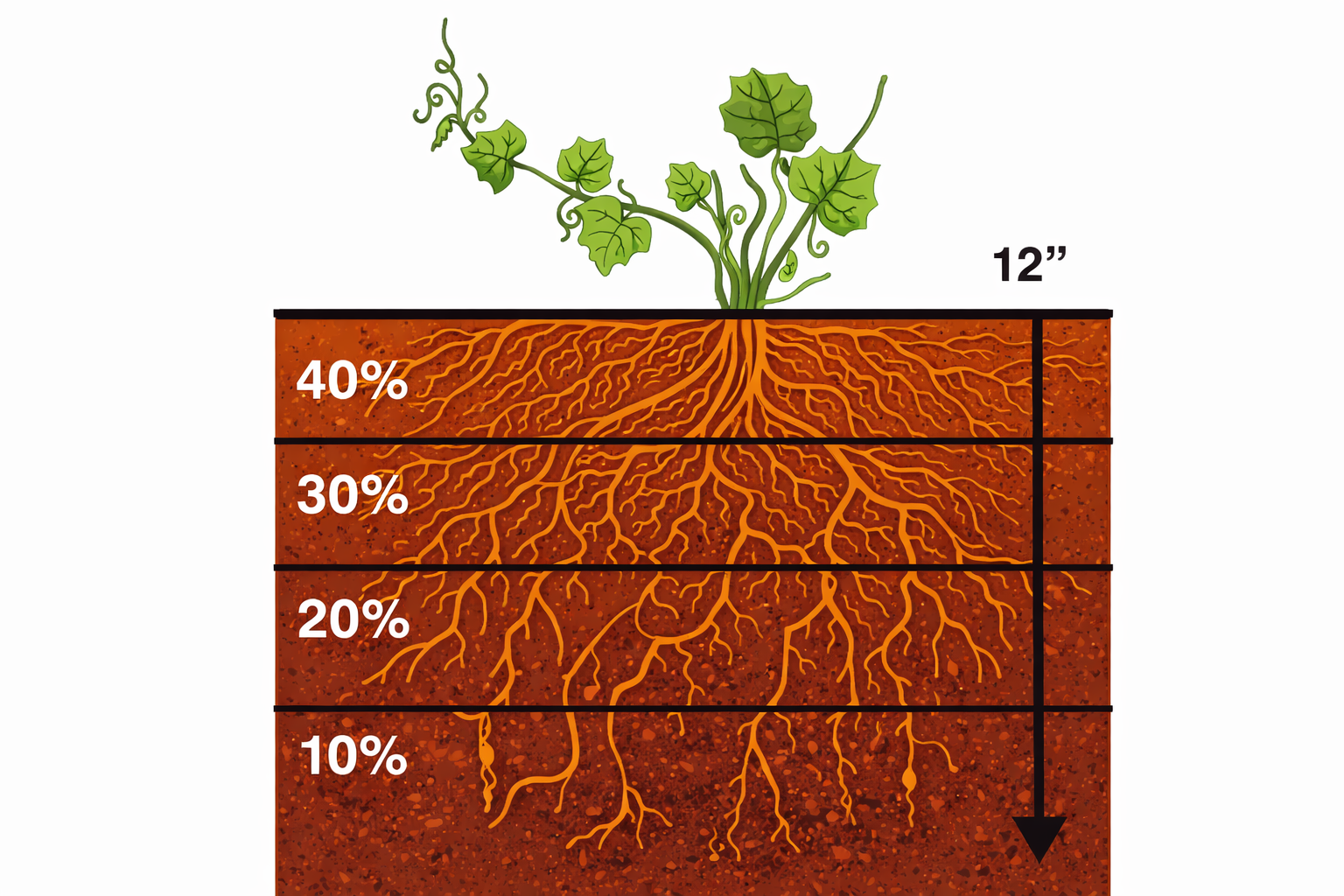
Mirliton Root Structure: The roots extend about 12” deep. This diagram shows water uptake in increments of 4″.
As you can see, 70% of the water uptake occurs in the top 8″.
This is why, if you are doing a ground planting, you will need a metal soil sampler that can penetrate the soil down 8′ to get a useful core sample. (A bamboo stake as a moisture gauge will do if you have a raised bed filled with porous potting or garden soil, since bamboo can easily penetrate it)
And here’s a correction to my previous writings based on new information I have learned about mirliton root structure and moisture uptake: Although mirlitons have a few long, superficial roots a few inches below the soil surface that can extend laterally for up to 6 feet, they only take up a small percentage of the available moisture and nutrients. Most of the soil moisture uptake occurs within a few feet of the plant base.
This correction means it is possible to grow a healthy vine in an area smaller than 12 feet in diameter or 6 feet in length. A raised bed that’s the standard 3′ x 6′ is adequate, but it will still need to be at least 3′ deep to avoid excessive soil saturation and waterlogging.
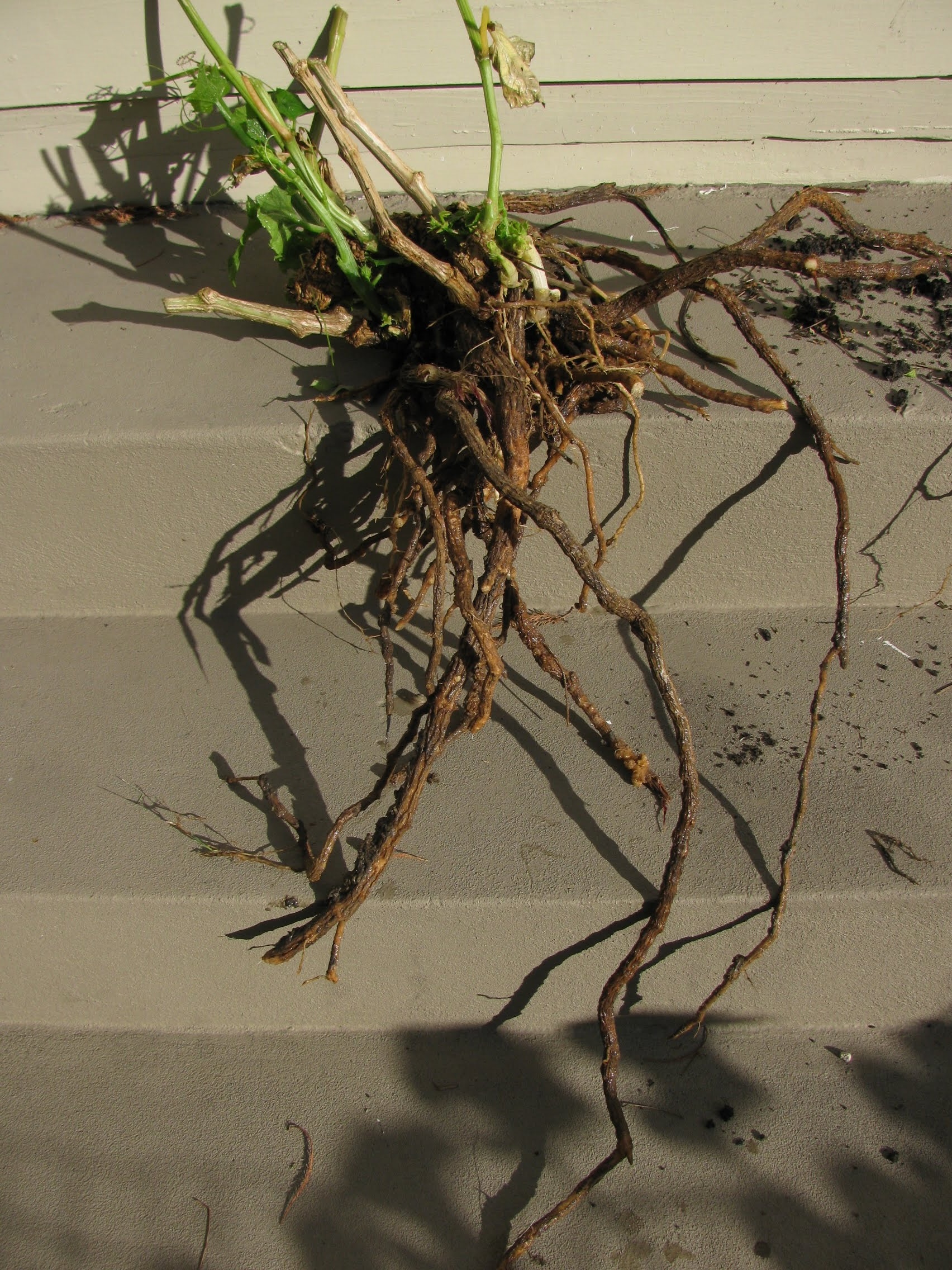 A first-year mirliton that was excavated with the roots intact. The roots were more spread out horizontally in the soil, so they are not as deep in the soil as they appear in the steps.
_________________
by Lance Hill | Apr 1, 2024 | How To, Mirliton
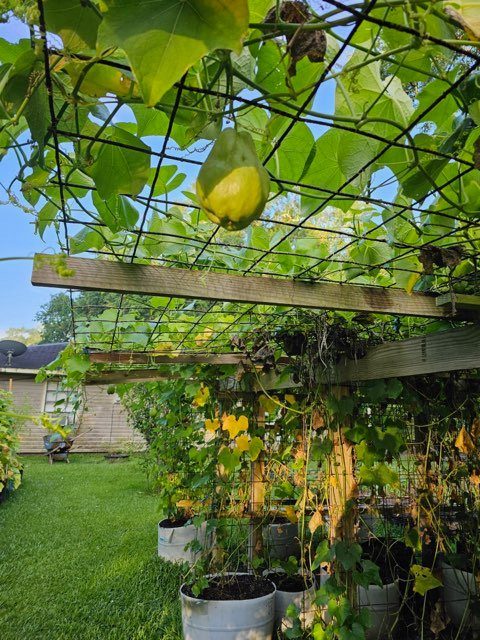
Many people don’t have access to yard space, so they are attempting to grow mirlitons in containers. That’s difficult to do along the Gulf Coast–but not impossible. In 2020, James Cobb in Houma, Louisiana, was the first person I knew of who grew a mirliton to fruition in the state. In 2023, Bonnie Landry Palumbo and her husband Butch also successfully got mirlitons to set fruit in pictured 22 ½ -gallon containers in Jeanerette, Louisiana. I don’t know anyone else in Louisiana who has grown one in a container, though it’s a common way to grow them in drier climates like the West Coast.
The difficulty in our region is that intensive rains saturate containers, and droughts dehydrate them, and this stress disrupts flowering and fruiting. The solution is to use a large enough container to moderate the wide fluctuations in soil moisture. Bonnie and Butch did that by dividing 55-gallon containers into two 22 ½ -gallon ones. (If you don’t have a 55-gallon container handy, I would recommend the 40-gallon oval Tuff Stuff tub at Tractor Supply.)
Some people are experimenting with fabric grow bags. The principal challenge is that they tend to dry out quickly and the soil moisture fluctuations disrupt flowering and fruiting. Some growers have tried to remedy that with wicking and automatic watering systems.
The Palumbos used the “Miss Clara” certified mirliton variety. They proved that you don’t need a yard to grow mirlitons; it will be difficult–but not impossible. You can grow them on a patio, driveway, or balcony. You can use a vertical trellis if you don’t have space for a horizontal. The container has to be at least 22 ½ gallons, relatively shallow and raised a few inches off the ground to ensure drainage. You will need a soil sampler to closely monitor soil moisture.
Recent Comments