
Mirliton Root Structure: The roots extend about 12” deep. This diagram shows water uptake in increments of 4″.
As you can see, 70% of the water uptake occurs in the top 8″.
This is why, if you are doing a ground planting, you will need a metal soil sampler that can penetrate the soil down 8′ to get a useful core sample. (A bamboo stake as a moisture gauge will do if you have a raised bed filled with porous potting or garden soil, since bamboo can easily penetrate it)
And here’s a correction to my previous writings based on new information I have learned about mirliton root structure and moisture uptake: Although mirlitons have a few long, superficial roots a few inches below the soil surface that can extend laterally for up to 6 feet, they only take up a small percentage of the available moisture and nutrients. Most of the soil moisture uptake occurs within a few feet of the plant base.
This correction means it is possible to grow a healthy vine in an area smaller than 12 feet in diameter or 6 feet in length. A raised bed that’s the standard 3′ x 6′ is adequate, but it will still need to be at least 3′ deep to avoid excessive soil saturation and waterlogging.
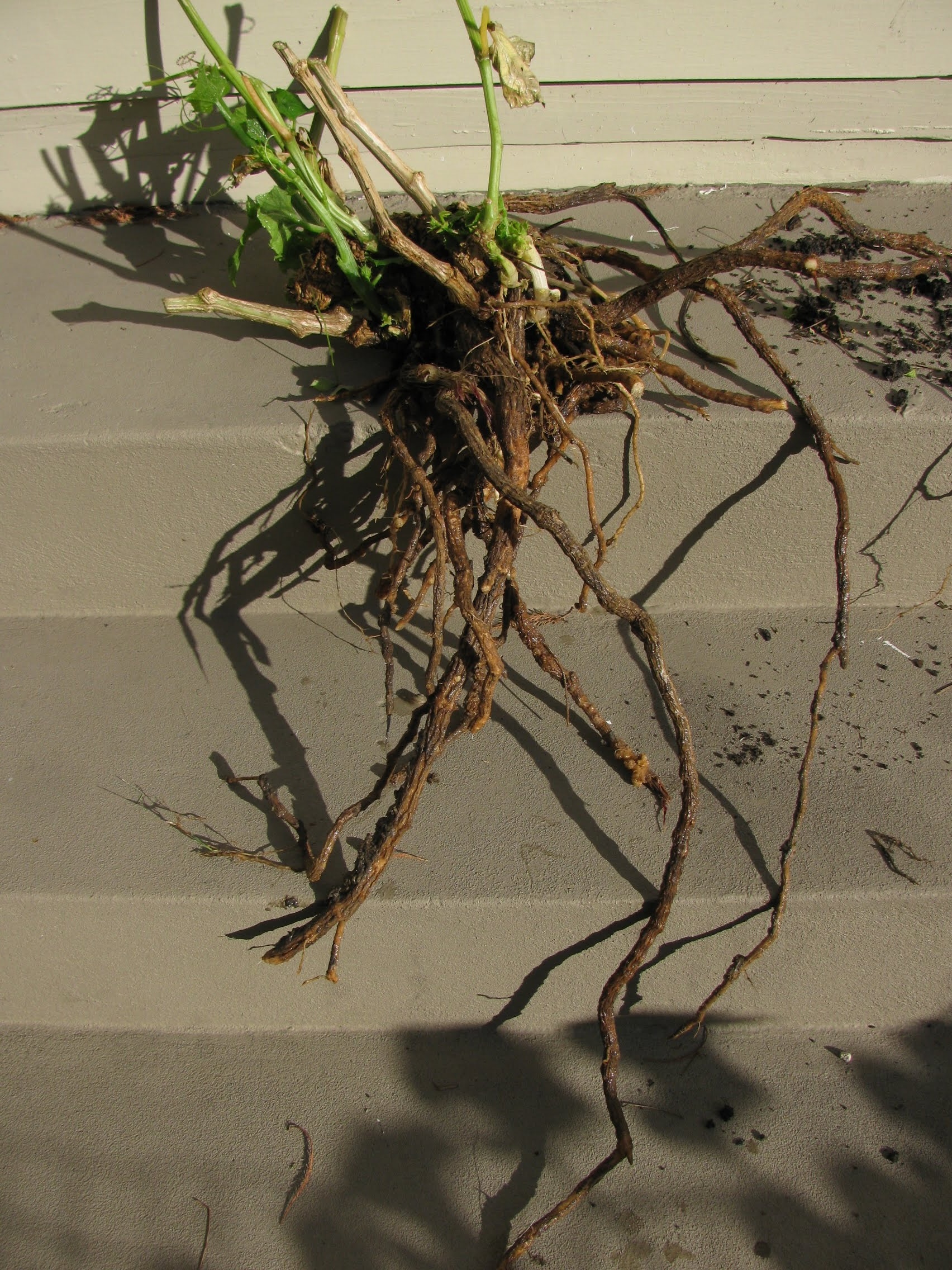 A first-year mirliton that was excavated with the roots intact. The roots were more spread out horizontally in the soil, so they are not as deep in the soil as they appear in the steps.
_________________