
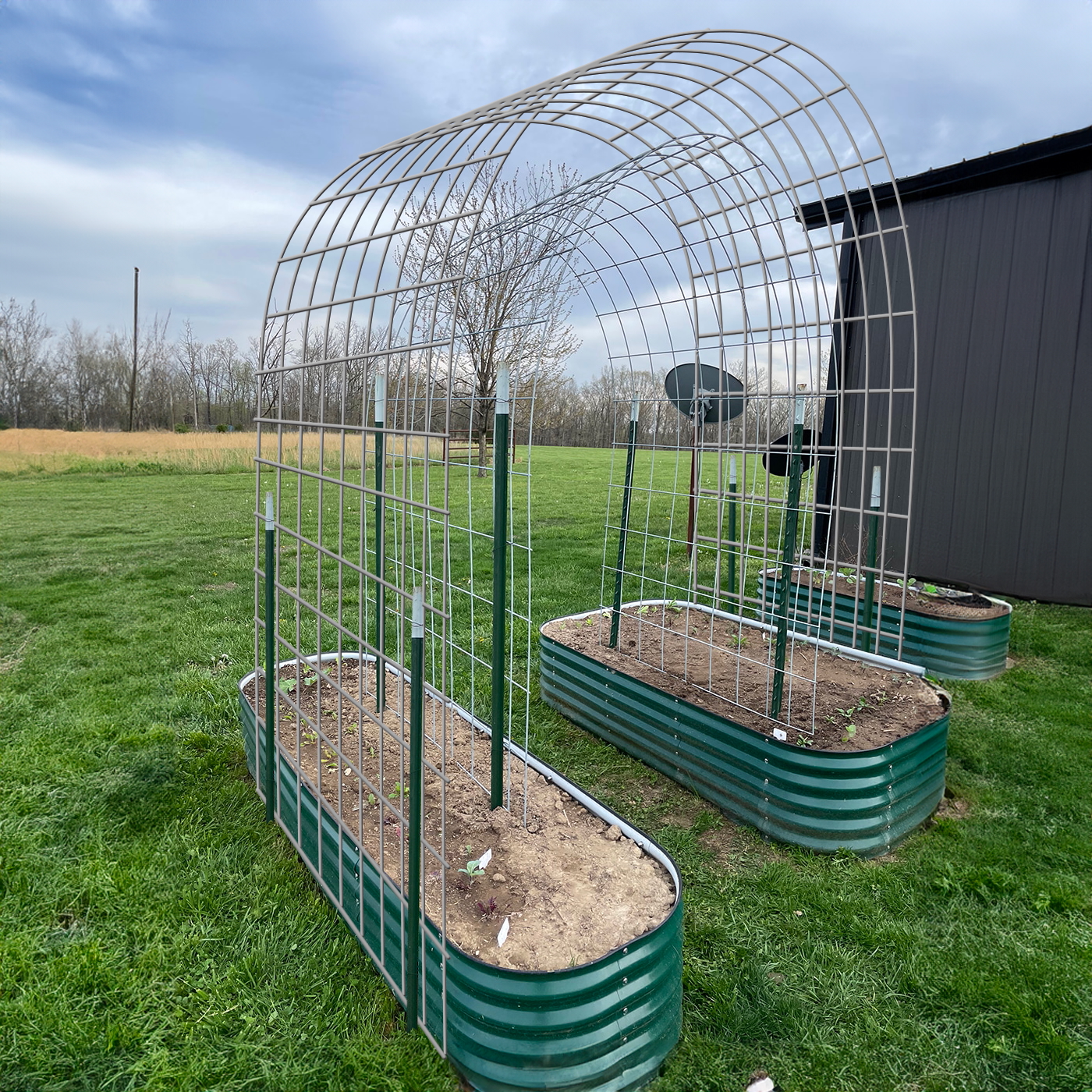
1. Vineguard double-arched cattle panel trellis. This can be built using two 16′ panels, with the inside panel cut shorter to provide the canopy space between the upper and lower panels.
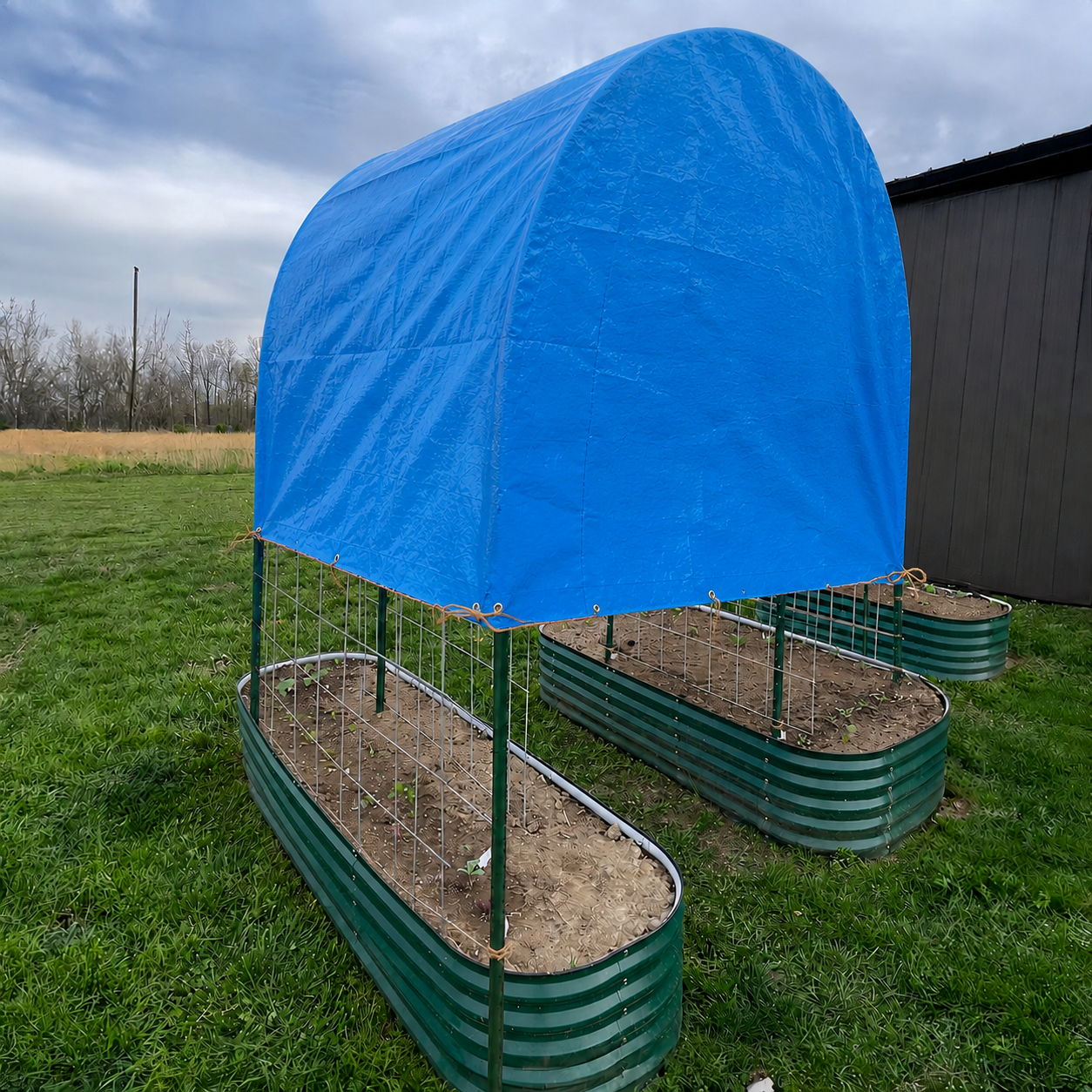
Vineguard Trellis with tarp as a rain guard.
Here’s an idea. Design an arched trellis structure to protect mirlitons from excessive rain, solar radiation, and cold. I call it a Vineguard. It can be used to shunt rain away from the beds, shield the vine from intense heat, and protect it from frost.
One structure–three purposes.
We invite you to design and test the concept. (post your ideas and results on the Facebook group)
The concept is simple: An arching structure that you mount above the trellis, similar to the shade cloth structure that many of you already use–but sloped. During periods of heavy rainfall, place a tarp or a single sheet of clear 6-mil plastic on top to divert the water away from the bed and prevent waterlogging.
If you use a tarp, don’t use it for more than 2 consecutive days (the vine will eventually need sunlight), but a clear sheet can be left up for several days. Make sure you allow air to circulate through to prevent overheating and discourage plant diseases. In the summertime, replace the rain guard with a shade cloth to protect from the sun. In winter, you cover the entire trellis with a tarp and enclose the vine to prevent frost damage.
The Vineguard can be built several ways. If you are already using an arched cattle panel, arch another one a few feet above it. If you’re using a horizontal cattle panel trellis, install a PVC pipe arch overhead that slopes to direct rainfall away from the bed (see photo). Or you can construct a similar pitched wooden frame with a pitched roof.
The Vineguard will work for both raised-bed and ground plantings, but it works especially well against waterlogging in tall raised beds. That’s because raised beds provide more control over soil moisture. Tall raised beds are less likely to wick moisture from the rest of the rest of the yard when its saturated.
(When you use the clear plastic rain guard, be careful to leave it up no more than two or three consecutive days, and make sure the enclosure is well-ventilated. It can generate additional heat that might harm the vine.)
We will be experimenting with Vineguards this year, and I invite all you Mirliton Wizards out there to create designs that provide the simplest, most effective, and least expensive model.
Special thanks to R. Ranjith at the Nesamony Memorial Christian College for his advice on soil hydrology and managing intense rainfall.
Thanks to Buster Avera for the photo of his shade-cloth arch, which can also serve as a rain guard.
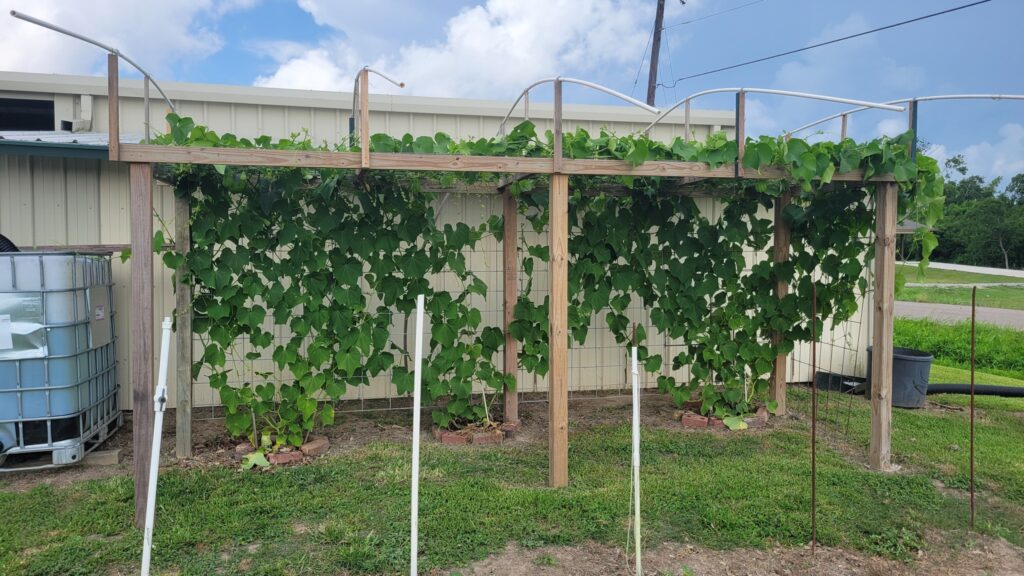
2. Buster Avera’s arched shade cloth structure could also easily double as a rain guard.
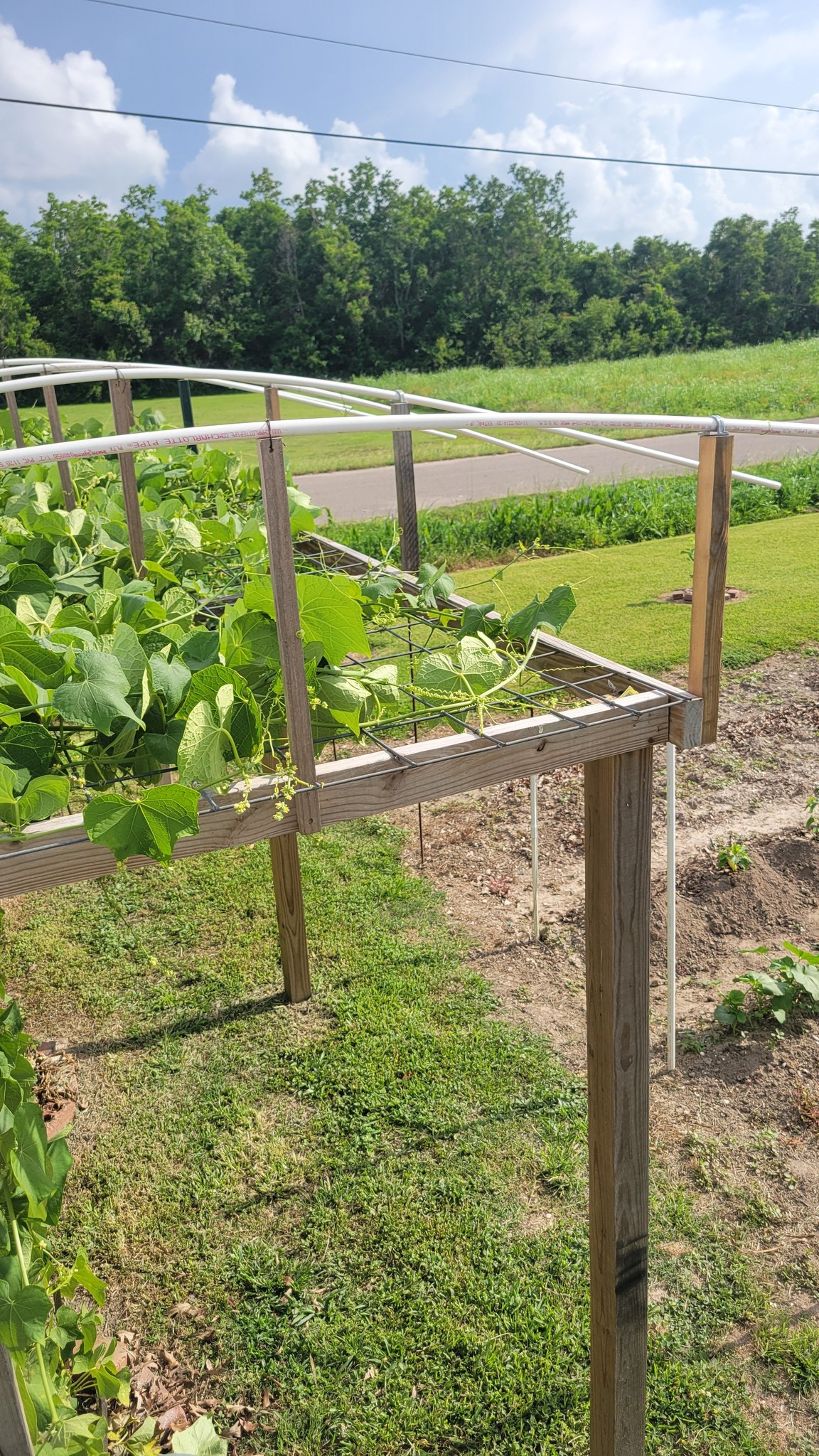
3. Corner view of Buster Avera’s arched shade cloth structure.