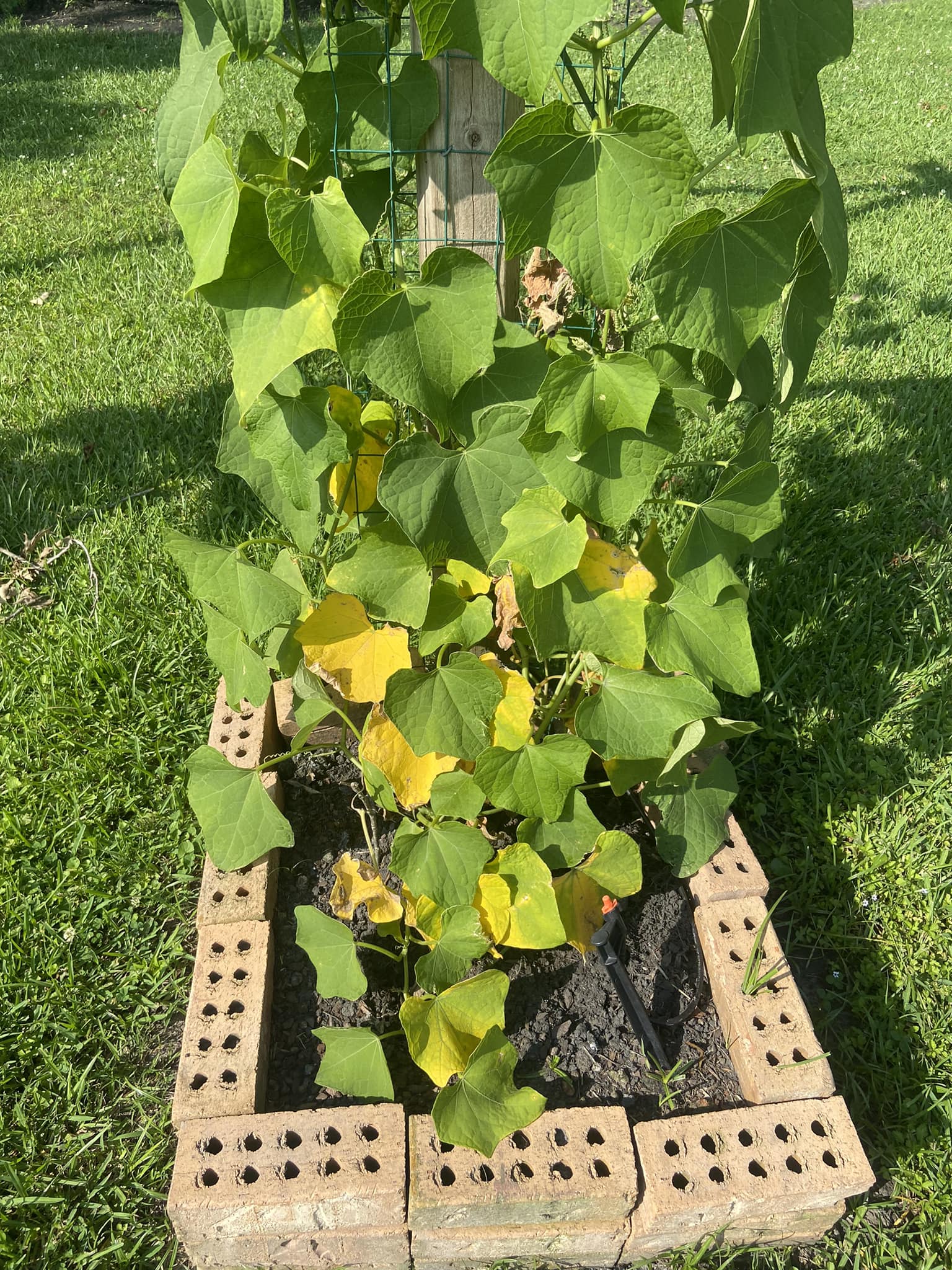
Why Are My Mirliton Leaves Turning Yellow?

by | Jun 9, 2024 | How To, Mirliton | 0 comments

Yellowing of a few leaves on a mirliton vine is normal and not necessarily caused by anything the grower did wriong. It’s usually caused by the stress of widely fluctuating soil moisture–intensive rains and droughts. You can’t control rain.  Adding fertilizers won’t help and may hinder. 

Yellowing of the bottom leaves on mature plants is another matter. It can happen because fungus splashes up from the soil and causes anthracnose disease. If the yellowing begins to move up the vine, it’s probably anthracnose. But there is nothing you can do to prevent that. There is no known preventative or cure for anthracnose. The fungus that causes it is in your soil all the time. The disease tends to flare up in hot, wet months, like August, but the vines usually recover by the fall. The good news is that each time your vine gets anthracnose, it will also develop increased immunity to the disease. So, an old plant is a healthy plant.

The main thing you can do to prevent disease is not over-water or under-water the vine—and the best way to avoid this is to test soil moisture with a soil sampler. Of course, you can grow a healthy mirliton without testing and knowing your soil moisture.  But knowing your soil moisturel increase the odds of success in your favor.

Finally, should you remove the yellow leaves? Some people do and some don’t. I know of no scientific study about the benefits of removing the leaves.  But if you think it helps, then prune off the dead leaves.


Recent Posts

Mirliton Waterlogging: Symptoms and Quick Treatments

Mirlitons don't like wet feet. They spent some 26 million years evolving on the mountainsides of Mexico and Central America, where rain races downhill and barely gets a chance to soak into the porous slope soil before it's gone. Our job as growers is to recreate those...

How We Diagnose Mirliton Diseases and Problems

Overview: As most of you know, I provide free diagnosis and treatment for mirliton plant diseases and problems to this group. I’m also training Tedra Stanley and Michelle Impastato Glore to do the same. I’m not a formally trained plant pathologist, but have learned...

DeBay Hydroponic Method for Growing Mirlitons (Chayote)

  A Cool Weather Hydroponic Method of Growing Mirliton (Chayote) Vines and Fruit in a 55 Gallon Blue Barrel Perfected use of “Kratky Method” by William DeBay, on location in Haverhill, Florida The following method was used in a 95-day period from January 10,...

How to Use a Soil Sampler to Prevent Watering Problems in Mirlitons

If you felt feverish and wanted to check your temperature, you wouldn't guess; you would get a thermometer and take your temperature. Your garden soil is no different, and we now have a way to determine exactly how much soil moisture your mirliton has available: the...

Checklist for Transplanting a Containerized Mirliton Plant

  Checklist for Transplanting a Containerized Mirliton Plant ✔ Harden off the potted plant before transplanting--or erect a shade cloth for the first week ✔  Plant in fast-draining,  composted soil ✔  Add manure or slow-release fertilizer ✔ ...

Vineguard: Protection From Sun, Rain, and Frost.

  Here’s an idea. Design an arched trellis structure to protect mirlitons from excessive rain, solar radiation, and cold. I call it a Vineguard. It can be used to shunt rain away from the beds, shield the vine from intense heat, and protect it from frost. ...