 We have a problem.
Anyone growing mirlitons for the past few years knows that if the heat waves don’t get your vines, the hurricanes will. The weather has changed, and the forecast is that it will only get worse- more heat waves and hurricanes.
But we have a solution. We have the perfect six-month season free of heat and hurricanes: November through April. Why not take advantage of it? It’s possible for you to get three crops in those six cool months: fall, winter, and spring!
You can plant your sprouts in the fall and let them grow on a small trellis throughout the winter. You can easily protect it from those few frost/freeze nights by temporarily tenting it with a tarp or plastic and adding a heating element. It’s additional work, but you will get a spring crop and head into the summer with a healthy vine with a good root structure. A strong, mature vine like that can make it through summer heat domes and you may even get a second fall crop.
Cool, ain’t it?
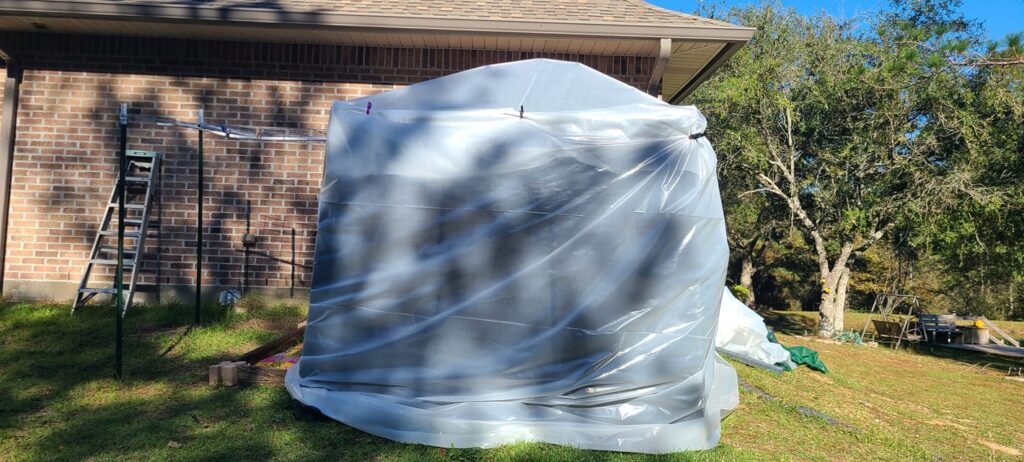
You don’t need anything fancy to cool-season grow mirlitons. Just a tarp or plastic to throw over the vine and a small space heater to keep the temperature inside the enclosure above 32℉. I use an inexpensive remote thermometer to monitor the temperature. If you use clear plastic, you can leave the enclosure up all winter and open up the sides on warm days to allow pollinators to access the vine.
As always, you will need a certified Louisiana heirloom mirliton to ensure success.
Even if you don’t attempt to grow year-round, the cool-season method will help you extend the fall season well beyond the normal frost date.
Here are the tools I use for cool-season planting:
Tarp or 6-mil plastic sheeting
Portable Heater (electric, propane, or heat lamp)
Wireless Remote Thermometer (click to view)
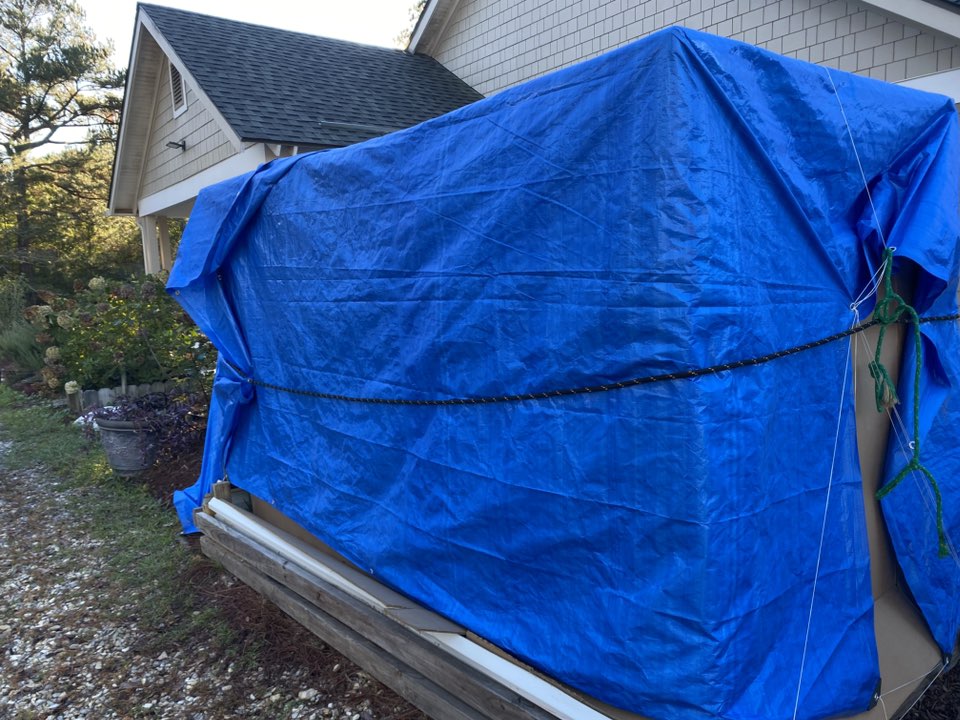
Walter Livaudais’s tarp frost cover.
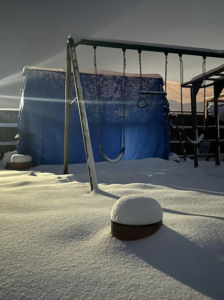
Michelle Glore’s trellised and tented vine in the 2025 blizzard
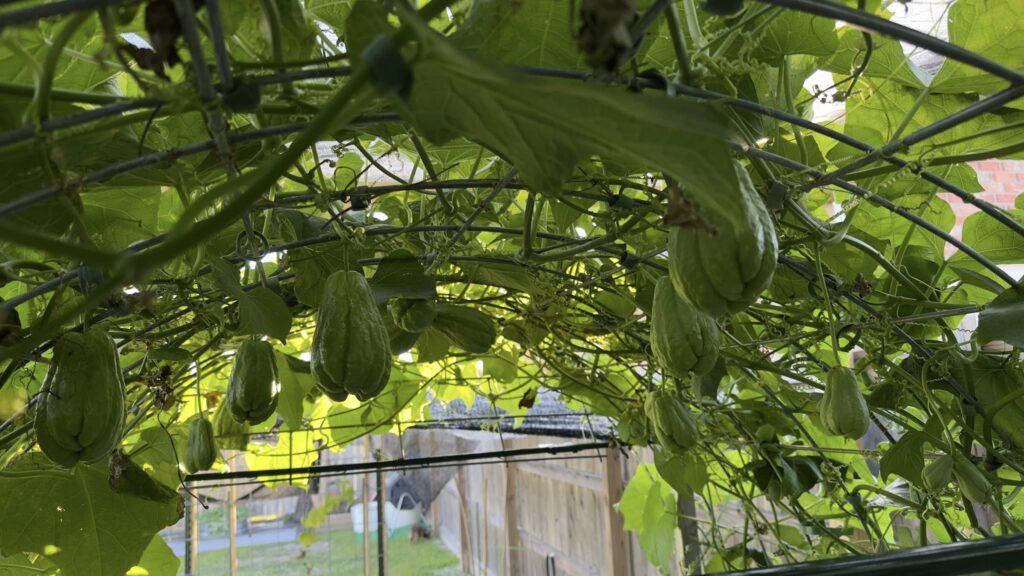
Michelle’s winter mirliton crop is ready to harvest in early April.
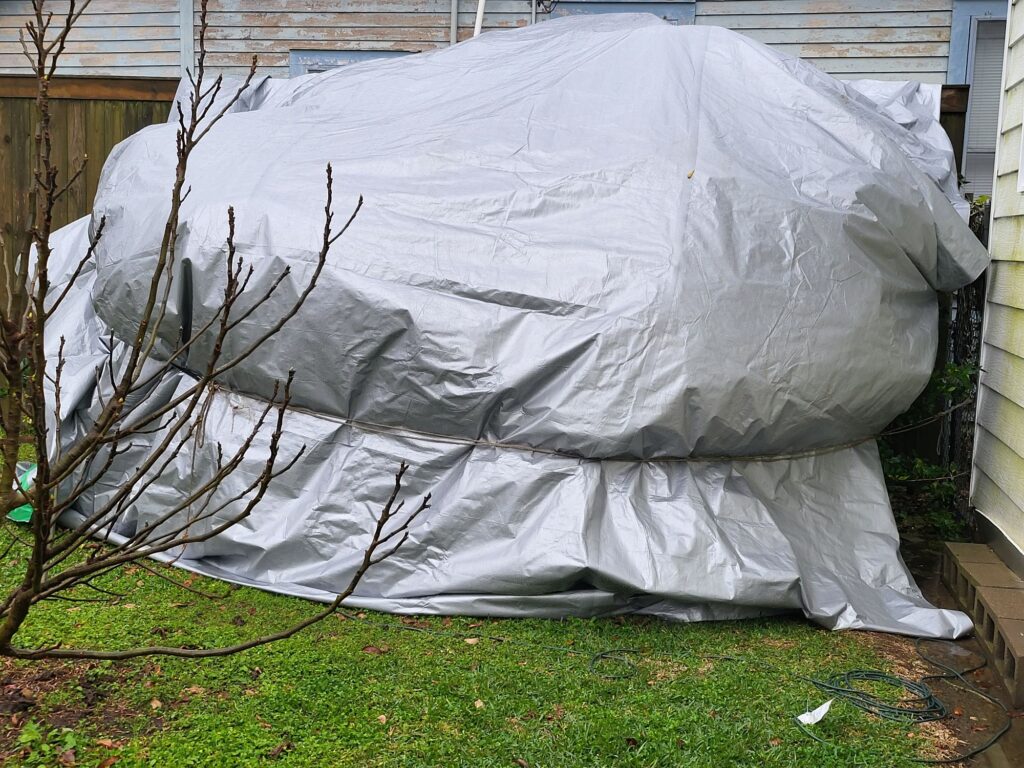
Melissa Minevielle’s tented vine with a heater.
Deb Sepulveda’s tented vine before the freeze.