by Lance Hill | Nov 16, 2026 | How To, Mirliton, Uncategorized
 Don’t put it in a paper bag under the sink! That may have worked for your grandparents, but it won’t work in today’s climate.
Take these seven steps:
- Incubate the seed to get it to sprout, if it hasn’t already. Read how here.
- Plant it immediately in a 3-gallon container. Read how and why here.
- Overwinter it in a sunny window and prune back to keep it compact. Read how to prune here.
- Be careful not to overwater it. Here’s how to test if the plant needs water.
- Transplant it into the garden bed the first week of March.
- Protect it when a frost is forecast by tarping it or covering it with a 5-gallon bucket.
- Protect it from excessive rain. Read here.
That’s it. Not only will this produce a healthy vine, but it will probably bear a small crop in May.
Plant the seed with the sprouting large end down like this:
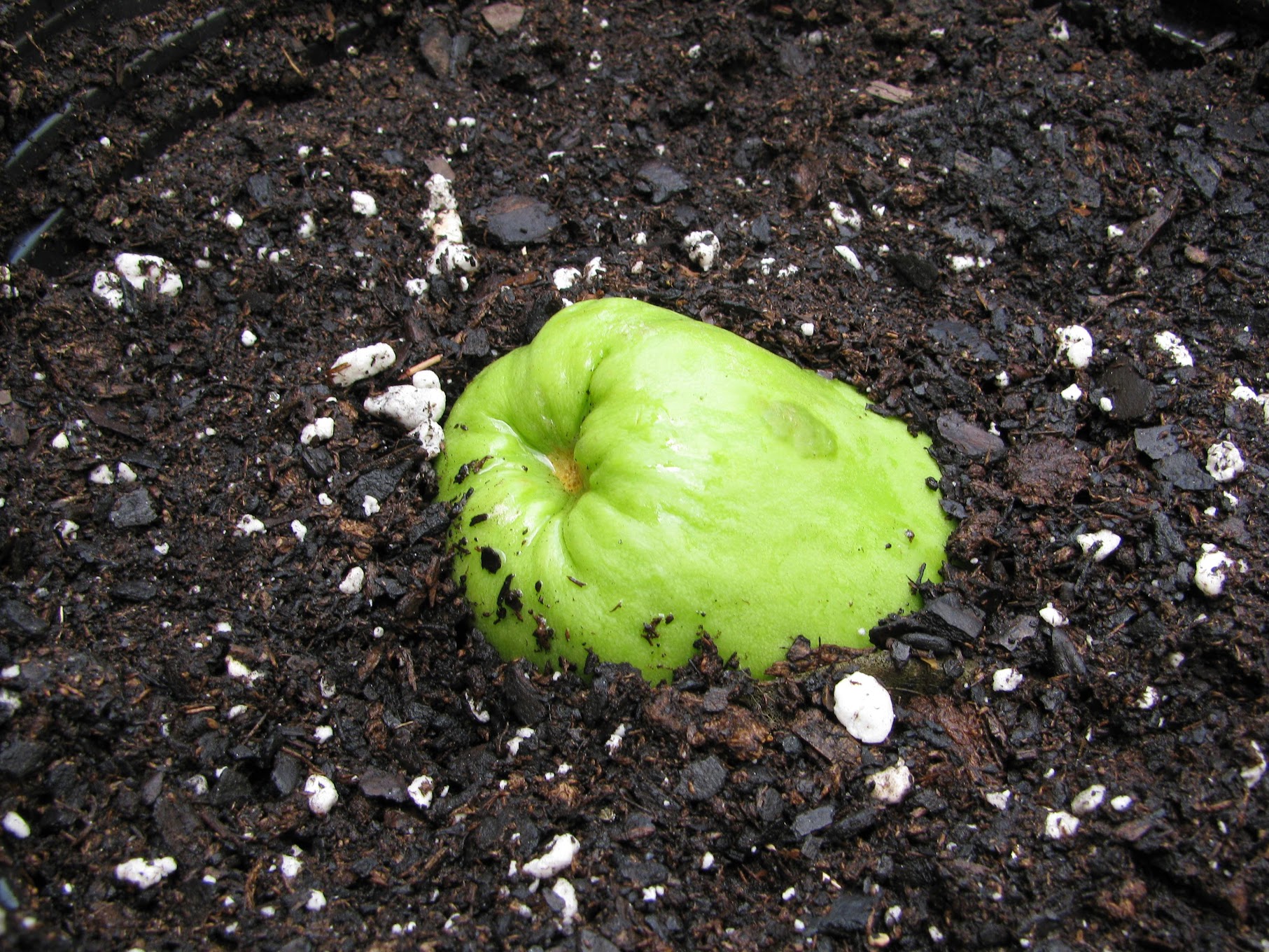
Sprouted seed planted correctly.
by Lance Hill | Nov 15, 2026 | How To, Mirliton, Uncategorized

Rock Panvelle and his “Mister Rock” Mirliton Variety
That’s Rock Panvelle holding his “Mister Rock Heirloom Mirliton” variety. I met Rock twenty years ago outside Thibodaux, Louisiana, where he grew this unique, elliptical mirliton. Over the years, I bought hundreds of them and gave them out for free.
Not a single one survived.
That’s becuase I was giving people the traditional but outdated advice on how to grow them.
I told them to overwinter the sprouts in a paper bag, and then plant them in April after the last frost.
But the weather was changing, and as summer approached, the vines weren’t strong enough to survive the heat, solar radiation, and anthracnose.
I felt like I had let Rock down.
But we now know exactly how and when to plant them so they enter the summer season as mature, strong vines with good root structure, capable of making it through the summer.
If you are selling or giving away a certified variety, provide this link or print out the post and give it to the person with the seed. That will help them succeed and ensure the variety doesn’t meet the same fate as the extinct Mister Rock.
It’s simple:
- Incubate the seed to get it to sprout, if it hasn’t already. Read how here.
- Plant it immediately in a 3-gallon container. Read how and why here.
- Overwinter it in a sunny window and prune back to keep it compact. Read how to prune here.
- Be careful not to overwater it. Here’s how to test if the plant needs water.
- Transplant it into the garden bed the first week of March.
- Protect it when a frost is forecast by tarping it or covering it with a 5-gallon bucket.
- Protect it from excessive rain. Read here.
That’s it. Not only will this produce a healthy vine, but it will probably bear a small crop in May.
by Lance Hill | Nov 10, 2026 | How To, Mirliton, Uncategorized
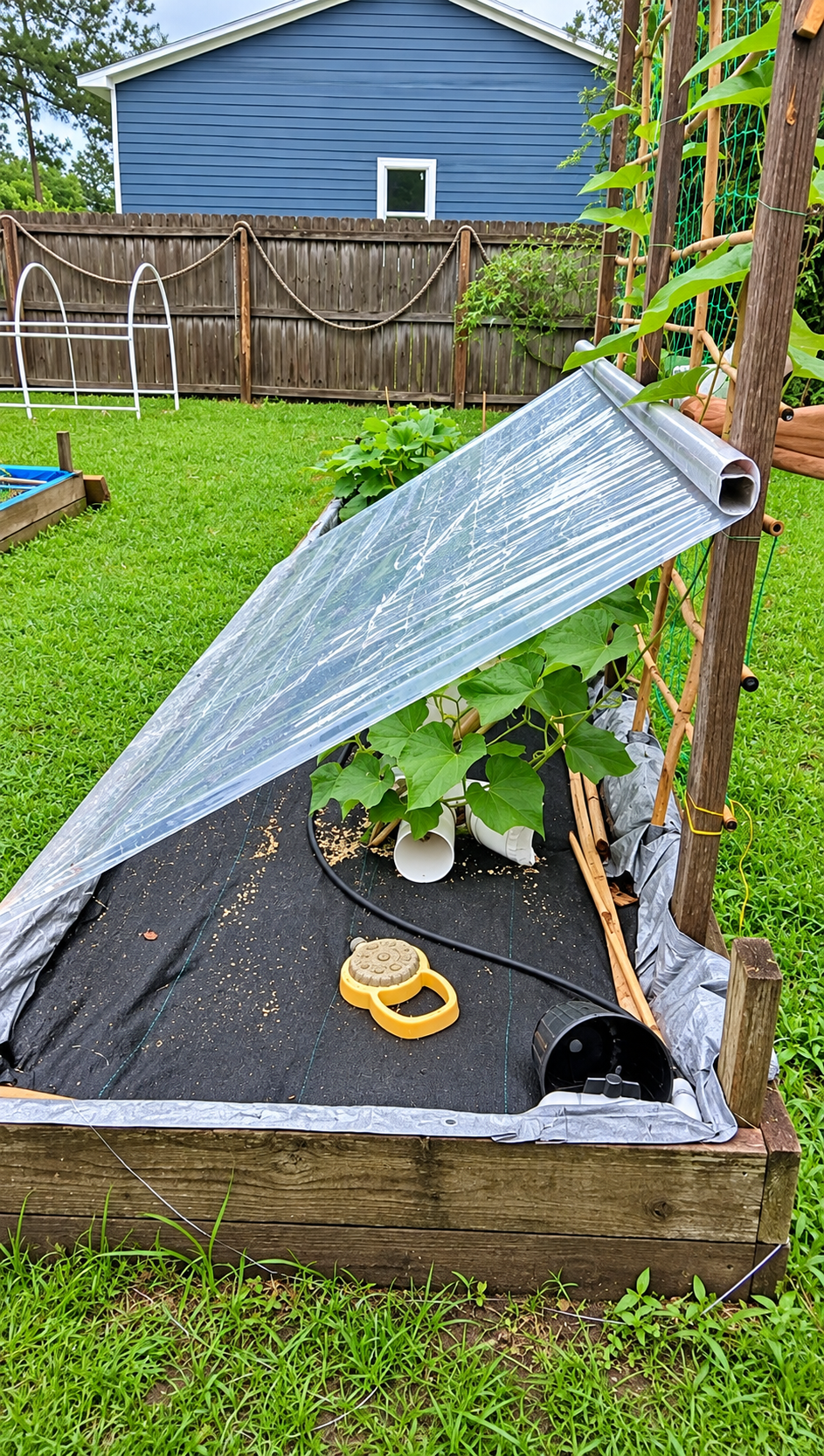
Retractable Rain Shield
Torrential, frequent rains in spring 2026 flooded garden beds and killed many new mirliton vines because their roots were waterlogged. The vines couldn’t breathe.
Here’s a simple solution–route the rainwater away from the beds. When rain is forecast, you can place 10-mil clear plastic or a tarp between the rainfall and the beds.
Read how to build the retractable rain shield (above) here.
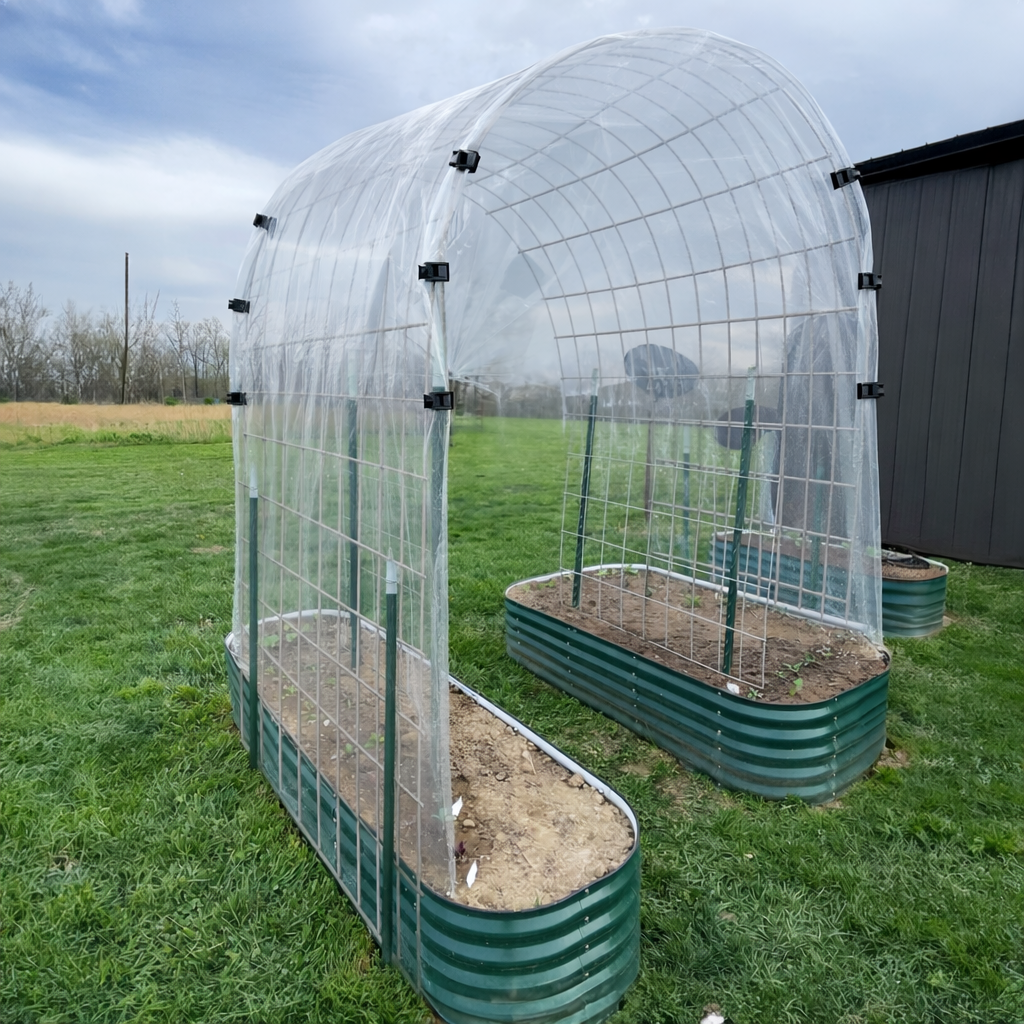
Rain Shield on a double-arched panel with plastic added to the top arch to prevent excessive rainfall from saturating bed soil.
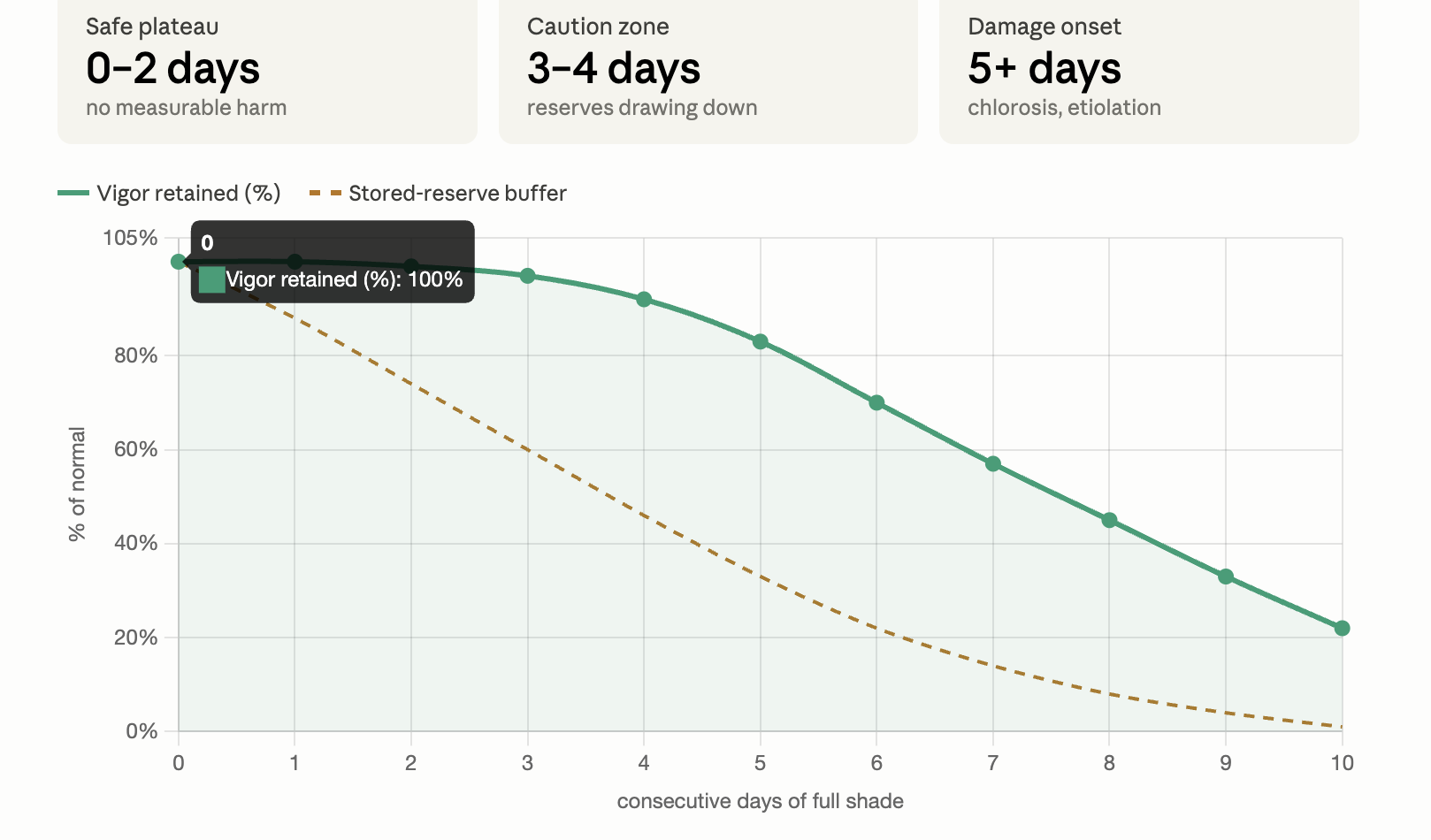
A tarp won’t pose any threat to the vine’s health as long as it’s used intermittently. When the forecast calls for heavy rains, you can mount a tarp over your trellis for two consecutive days, without affecting vigor. Take it down for a day, and then remount if needed. Remember to ensure there’s plenty of cross-ventilation.
Here’s a chart showing the effect of tarps on vines:
by Lance Hill | Nov 9, 2026 | How To, Mirliton, Uncategorized

Climate change’s intense heatwaves have disrupted the tradition of growing mirlitons primarily for a fall harvest.
Heat Domes and Heatwaves kill most first-year plants. The Hurricane season now extends far into the fall, when hurricane and tropical storm winds can traumatize the vines, delaying flowering and causing immature fruit drop. In 2026, we even saw climate change’s repeated heatwaves delay fall flowering until November, when the plants were at risk of frost. We barely got a crop.
But there’s one season without heatwaves, hurricanes, or anthracnose. It’s the Spring.
Spring forward, don’t fall back!
For two hundred years, Louisiana gardeners got a mirliton in the fall, stuck it in a paper bag, put it under the sink for the winter, then took the sprout and planted it in late April — long after the last frost. It would grow all summer and flower and fruit in the fall.
Climate change has upset that tradition.
Intense heat waves make that increasingly difficult — especially for first-year vines.
Fortunately, we learned a couple of years ago that once you put a sprout in a container with potting soil, the reproductive clock starts ticking. Within 110-120 days, it will flower and fruit. All you have to do is overwinter the sprout in a 3-gallon container, transplant it into the garden bed early — the first week of March — and it will grow a small canopy and set fruit by May. Long before the heat waves, hurricanes, and diseases start.
We call this the SpringForward method.
Here are the steps:
- Incubate the seed to get it to sprout, if it hasn’t already. Read how here.
- Plant it immediately in a 3-gallon container. Read how and why here.
- Overwinter it in a sunny window and prune back to keep it compact. Read how to prune here.
- Be careful not to overwater it. Here’s how to test if the plant needs water.
- Transplant it into the garden bed the first week of March.
- Protect it when a frost is forecast by tarping it or covering it with a 5-gallon bucket.
- Protect it from excessive rain. Read here.
The spring crop doesn’t have to be a small one. Since spring mirlitons have a smaller canopy and take up less space, you can plant several vines close together to increase yield! Four vines in a raised bed can produce 60 mirlitons.
Following this method guarantees a small spring crop and produces a healthier vine that can withstand summer heat and disease.
And if your vine survives the summer and subsequent extreme weather, you will get a large fall crop too. Either way, you win.
Become a SpringForwarder!
Recent Comments