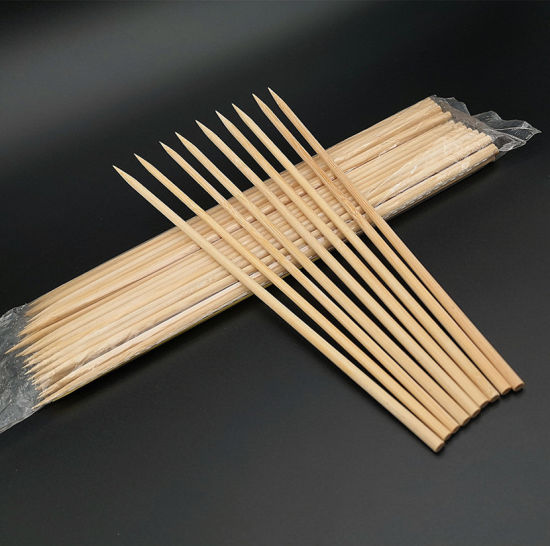
The video at the bottom of this post explains in 60 seconds the simple bamboo skewer stick soil moisture technique that will prevent you from drowning your young mirliton.
If you get a mirliton sprout and it’s too early to ground-plant it, we recommend that you plant it in a 3-5 gallon container or grow bag filled with potting soil. It can remain in the container for more than a year and can be pruned back if necessary. Watering is the main problem you may encounter. The mirliton needs very little water the first several weeks because it comes with its own water source–the fruit. You should initially thoroughly water it and leave it alone for a few weeks so you don’t drown the roots. The only way the container will lose water is through evapotranspiration—by natural evaporation of the soil and loss of small amounts of water through the leaves (transpiration).
The best way to check the soil moisture in a 3-gallon container is the bamboo skewer stick test. It works better than any expensive electronic tester. Insert and withdraw the skewer quickly and visually examine it. It will provide you with a graduated reading–each particle of soil represents the available moisture at that specific level. The bottom of the stake will show the moisture at the deepest level. If a few soil particles adhere to the skewer, that means they are moist, which means you have good soil moisture. If it comes out clean and dry, it needs water. If it comes out smeared and muddy, that’s too much moisture. After visually examining it, run the skewer between two fingers to feel the moisture at the different levels. You will develop a good sense of when it’s not drenched or dehydrated.
Then, leave the stick out to dry for the next test.
Using this “sight and feel” method is similar to the one that soil labs use to assess clay content for a soil sample–they roll the soil between their fingers and use their senses to judge the clay content. We don’t advise that people use the knuckle method, where you insert a finger into the soil. That will tell you if the top inch of soil is moist but not if the rest of the container is drenched.
When you move the plant outside, it may lose moisture and need to me monitored more regularly. Here’s the quick and simple video: bit.ly/3w6vJ8o
In addition, you can use the skewers to help peel the mirliton! View the 60-second tutorial here.