If You Overwinter Sprouts in a 3-Gallon Container In the Fall, You’ll Get Spring Crop!

by | Nov 16, 2025 | How To, Mirliton | 0 comments

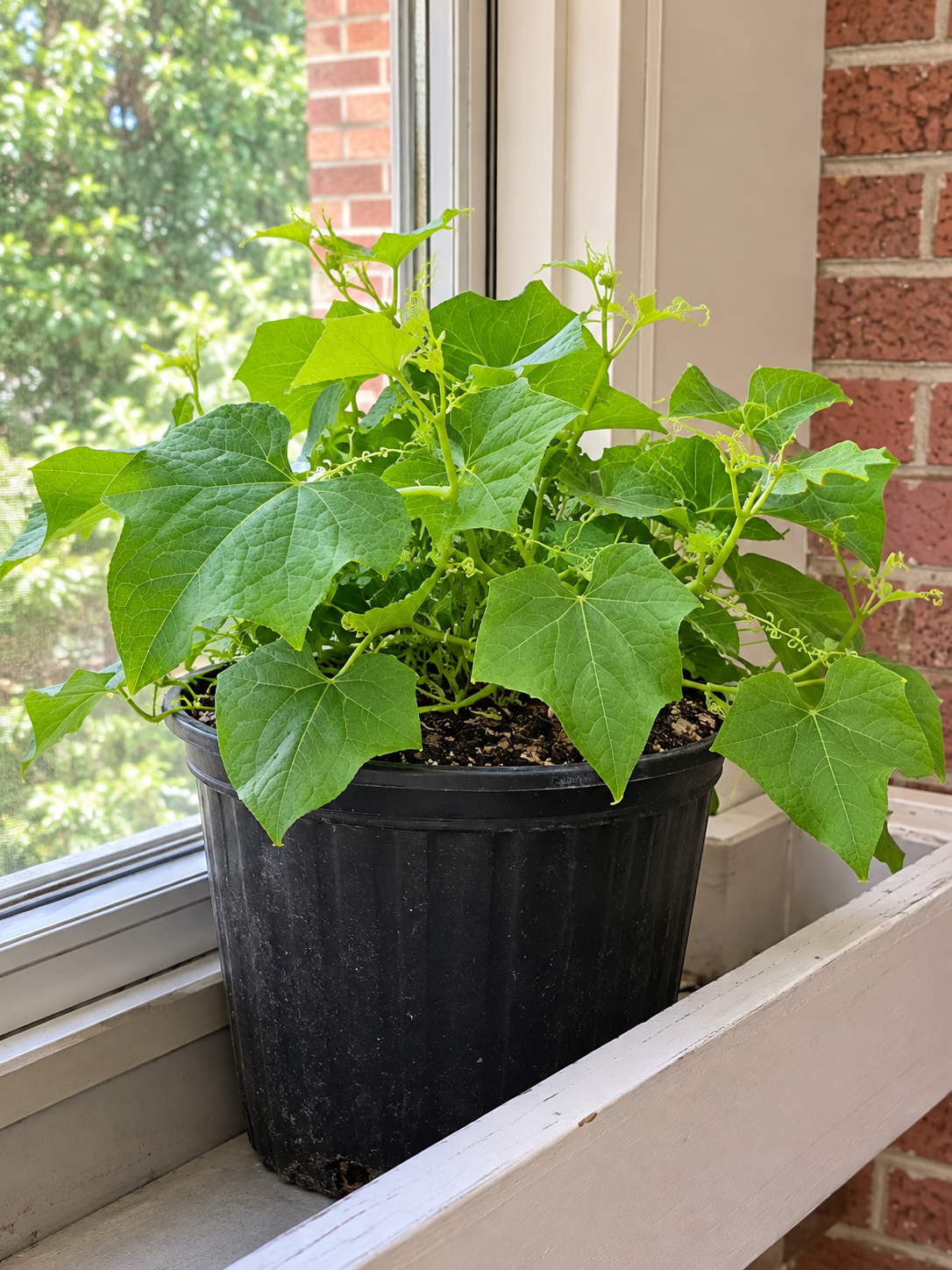
Pruned mirliton in a 3-gallon container being overwintered.

How can you get a spring harvest from a newly planted mirliton?

Try a little wizardry- trick the sprout!

We learned last year that people who plant fall sprouts in containers can get a crop as early as the next spring. How did they do that? They made the sprout think it had been planted in the ground for several months. 

Here’s how it works:

The reproduction clock on a mirliton starts the day it senses that it’s in soil. Then it will flower and fruit 110 days later. 

Do the math.

If you container-plant a sprout in November and then transplant it into the ground in March, it has been in soil for 110 days by the following May. That’s why so many people who container-planted their fall sprouts last year got a small spring crop. 

That won’t happen if you use the old method of overwintering your sprouts in paper bags underneath your sink. No soil, no reproductive clock.

No academic scientist discovered this trick. Mirliton growers discovered it.

Congratulations!

Normally, newly planted mirlitons don’t flower and fruit until the following fall. But if you overwinter them in a container, they will develop a strong rootball, helping them thrive once transplanted.

So, plant that sprout in a 3-gallon plastic or cloth container now and get ready for a spring crop as well as one next fall!

 You can either trellis them on a tomato cage or prune them back during the winter. Pruning them back in the container is safe and will result in a compact, bushy plant.
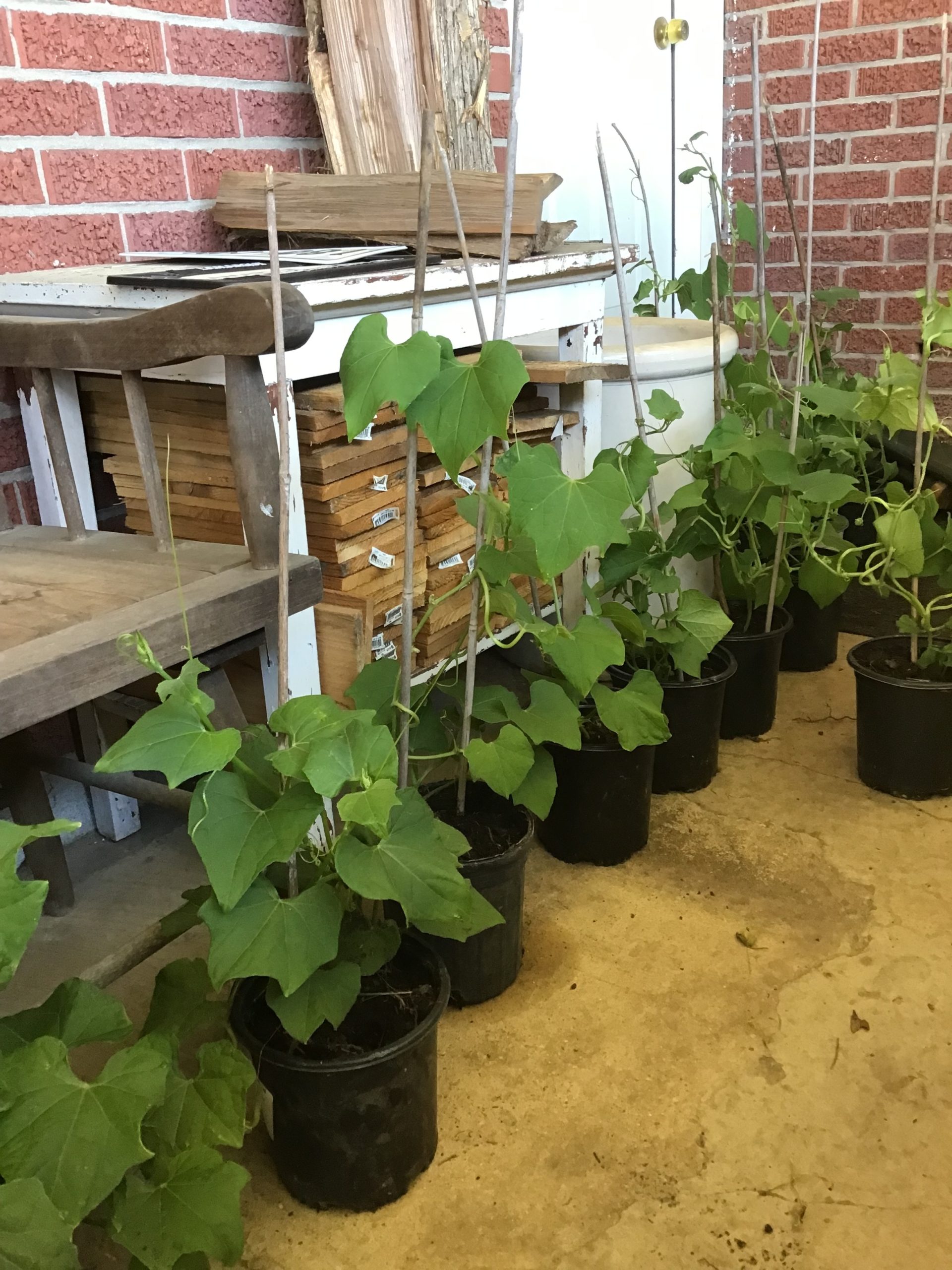
Trellised Mirlitons being overwintered in 3-gallon containers.

Recent Posts

How to Plant a New Mirliton Seed in the Fall

Don't put it in a paper bag under the sink! That may have worked for your grandparents, but it won't work in today's climate.  Take these seven steps: Incubate the seed to get it to sprout, if it hasn’t already. Read how here. Plant it immediately in a 3-gallon...

I Helped Destroy This Mirliton Variety: How You Can Avoid My Mistake

That’s Rock Panvelle holding his “Mister Rock Heirloom Mirliton” variety. I met Rock twenty years ago outside Thibodaux, Louisiana, where he grew this unique, elliptical mirliton. Over the years, I bought hundreds of them and gave them out for free.  Not a single...

Rain Shields for Mirliton Beds

  Torrential, frequent rains in spring 2026 flooded garden beds and killed many new mirliton vines because their roots were waterlogged. The vines couldn't breathe.  Here's a simple solution--route the rainwater away from the beds. When rain is forecast, you...

How to Freeze Stuffed Mirlitons

How to Freeze Stuffed Mirlitons Vacuum sealing is the best possible method, but if you don’t have a vacuum sealer, use the conventional method below. Stuffed mirlitons can last 3 months in the freezer if frozen conventionally and 6 to 12 months if vacuum-sealed....

Want to Grow a Mirliton Without Heatwaves or Anthracnose?

Tired of heat and disease killing your vine?  Here are two simple ways to grow them in cool, disease-free weather — and get a crop.  (1). Plant your sprout in the fall, then heavily mulch it for the winter. When it pops up the next spring, it will flower and...

We Have Changed the Two Categories of Certified Mirlitons

  We Have Changed the Two Categories of Certified Mirlitons   In the past, Mirliton.Org had two categories of mirlitons that we certified as Louisiana heirlooms: named and unnamed. This was a little cumbersome for some people, so we have...

Elevated Raised Beds

If excessive rainfall is chronically flooding your mirliton bed, consider building a large, deep, elevated raised bed with bottom and lateral drainage.  You can still do a ground planting, but place the elevated raised bed under the same trellis and shade cloth...

Mirliton Waterlogging: Symptoms and Quick Treatments

Mirlitons don't like wet feet. They spent some 26 million years evolving on the mountainsides of Mexico and Central America, where rain races downhill and barely gets a chance to soak into the porous slope soil before it's gone. Our job as growers is to recreate those...