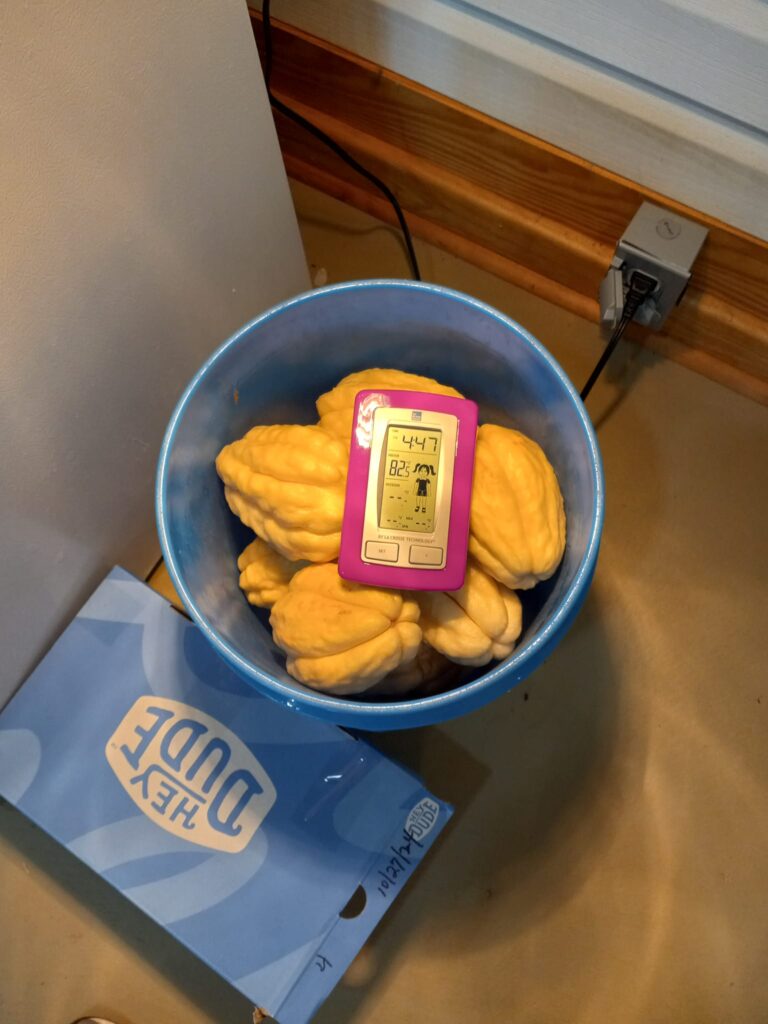
Angela Joan incubated her mirlitons in a 5-gallon bucket with a 125w heat lamp above. They sprouted in 11 days.
Growers typically attempt to delay mirliton sprouting by placing new fruit in paper bags and storing them in a cool part of the house. Cool temperatures promote dormancy and prevent sprouting. But you may want to promote quick sprouting so you can plant them immediately in the ground or container, especially if you want to plant them in the fall. Normally, you would place the mirliton in the warmest part of your house — on top of the refrigerator. But if it hasn’t sprouted within a week or two, here’s an “incubation” trick that Joseph Boudreaux of Broussard taught me that speeds up sprouting.
You can incubate them inside your home in the fall or winter using a small plastic trash can and a heat lamp. Put the mirlitons in a 5-gallon bucket and place a thermometer on top. You can cover the bucket with cardboard, as shown in the photo below, but it’s not necessary.
You want to maintain a temperature of 80°-85°F. You may have to experiment with the distance between the lamp and the bucket. When kept warm in this manner, the fruit will typically begin to sprout within 7-14 days. Sprouting is defined as when the internal seed pushes its way to the large end of the seed (“sticks its tongue out) and a small green shoot emerges. Alternatively, you can place a heating pad underneath the container.
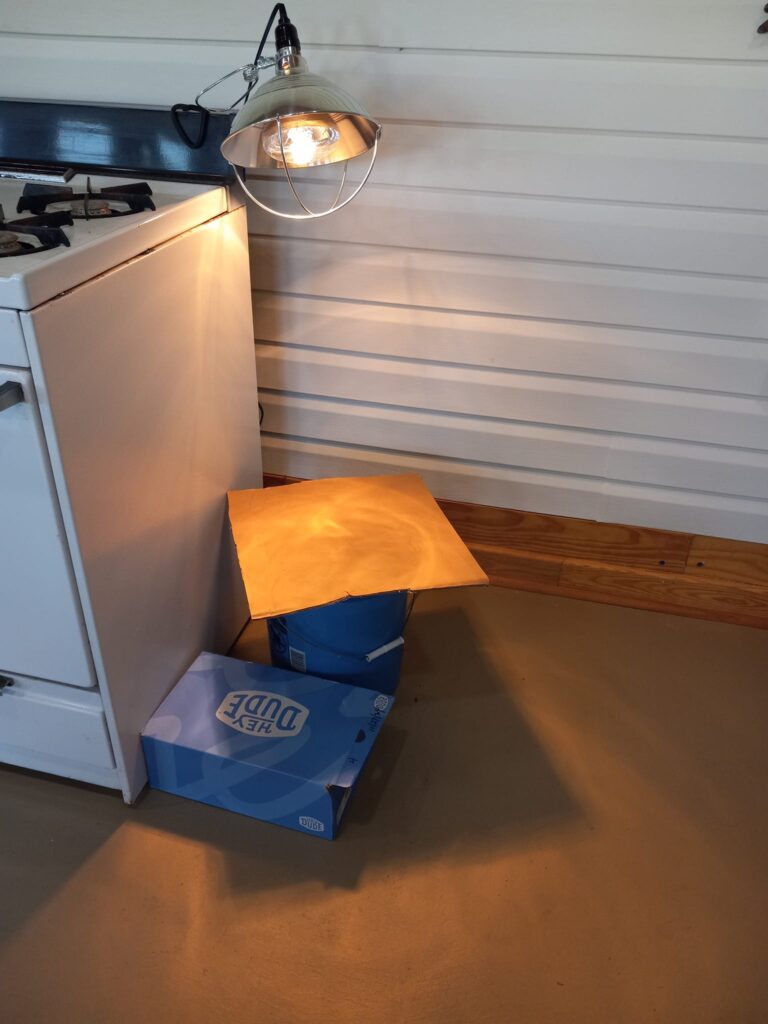
Angela covered the bucket with cardboard, used a remote thermometer, and kept it at 85 degrees.
If the outside temperatures are in the 90s, you can do this outside in a cardboard box without a heating pad. Once you pick the fruit, place it in a shaded warm area with a constant temperature of at least 75-80°F to encourage sprouting. If storing them outside, use chicken wire or netting to protect the seed from pests that enjoy eating the new sprouts.
Once a mirliton sprouts, it means the seed is viable and can be planted. It’s important not to distribute or sell the seed until it has sprouted because sometimes, especially with Spring mirlitons, the fruit can look healthy but have not been properly pollinated and will not sprout and grow a new vine (it’s called parthenocarpy). That occurs more frequently in the spring when there are fewer pollinators and they have more flowers to distract them from the mirlitons.