by Lance Hill | Nov 24, 2020 | Mirliton
Old Family Tradition of Mirliton Growing Flourishes in St. John Parish
By Renee Lapeyrolerie and Dr. Lance Hill
First, a little genealogy. In the 1970s, Joseph “Junior” Remondet started his first mirliton (chayote) vine in Reserve, St. John the Baptist Parish in Louisiana. Remondet’s uncle had handed down the old family variety that they had for generations. Junior shared it with his bother-in-law and next-door neighbor, Earl Perque, who bequeathed it to his son Paul Perque It’s a bit like the begats in the bible, but Louisiana mirliton growers believe in preserving family traditions.

Figure 1 Remondet-Perque Heirloom Mirliton
Mirlitons are in the Remondet-Perque family’s genes. The family has grown them for generations. Junior Remondet is a big, garrulous man with a thick Louisiana French accent. His uncle told him to plant two mirliton seeds in keeping with an old myth that you need a male and female plant; but it was good advice since it doubled his chances of success. The family heirloom mirliton is now primarily in the care of Paul Perque. The trellis 15′ X 10’ and is made of fence posts and covered on top with livestock panels (4”x4” mesh) and receives full sun.

Figure 2 Joseph ‘Junior’ Remondet, Paul Perque, and Ryan Remondet.

Figure 3 Paul Perque with his current vine, has yielded over 300 mirliton at publishing.
Paul Perque’s late mother, Sylvia, took careful notes of the harvest in the back of her address book. Her records include years of family and friends who would call and request mirliton for purchase by the dozen to make stuffed mirlitons. Miss Sylvia was a great cook, known for making pastries for the local church and school.

Figure 4 Sylvia Audiffred Perque’s family notebook of 2013 Mirliton Harvest.
Ryan fondly remembers helping his father tend to the mirliton trellis, running new wires across the top. Ryan is in the grocery produce business and recounts when a colleague from the West Coast visited him and was mystified by the enormous quantity of chayote coming into Louisiana since there were few of the Latino and Asian populations that valued the squash. Ryan told him the history of home growing mirlitons in Louisiana. For the coup de grace, he had his mother prepare his colleague some of the traditional shrimp-stuffed mirlitons.
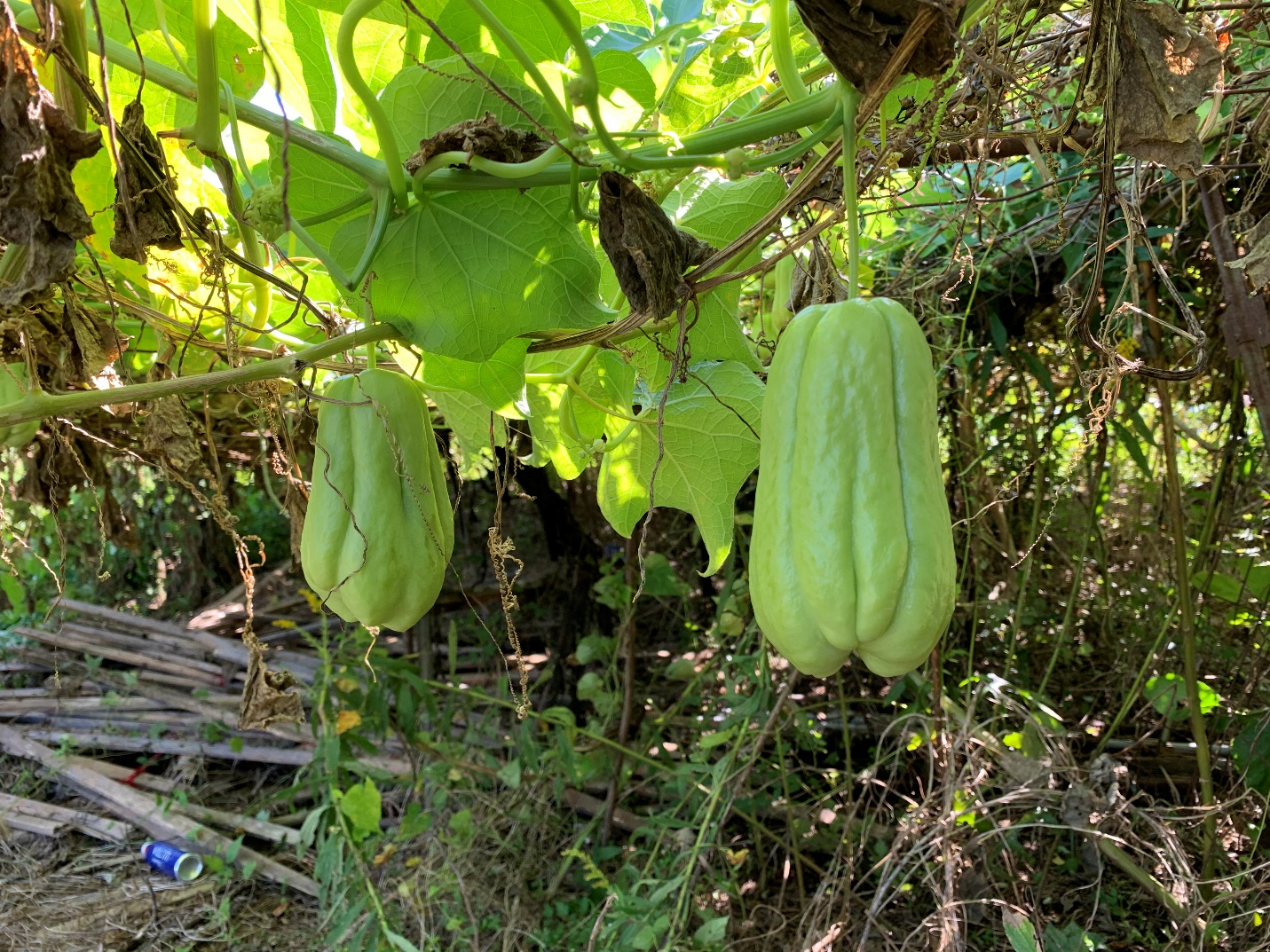
Figure 5
The vine is located at the end of the family lane and adjacent to a large drainage ditch alongside the Canadian North Railroad. Junior’s uncle had suggested that he plant near a water source such as this, and Paul credits the vine’s success to this location.
The vine has a traditional Louisiana overhead trellis (arbor) and access to an adjacent tree that it likes to climb. In 2019, an early frost—the first in over a century—killed the top of the vine but it recovered and regrew in the spring of 2020.
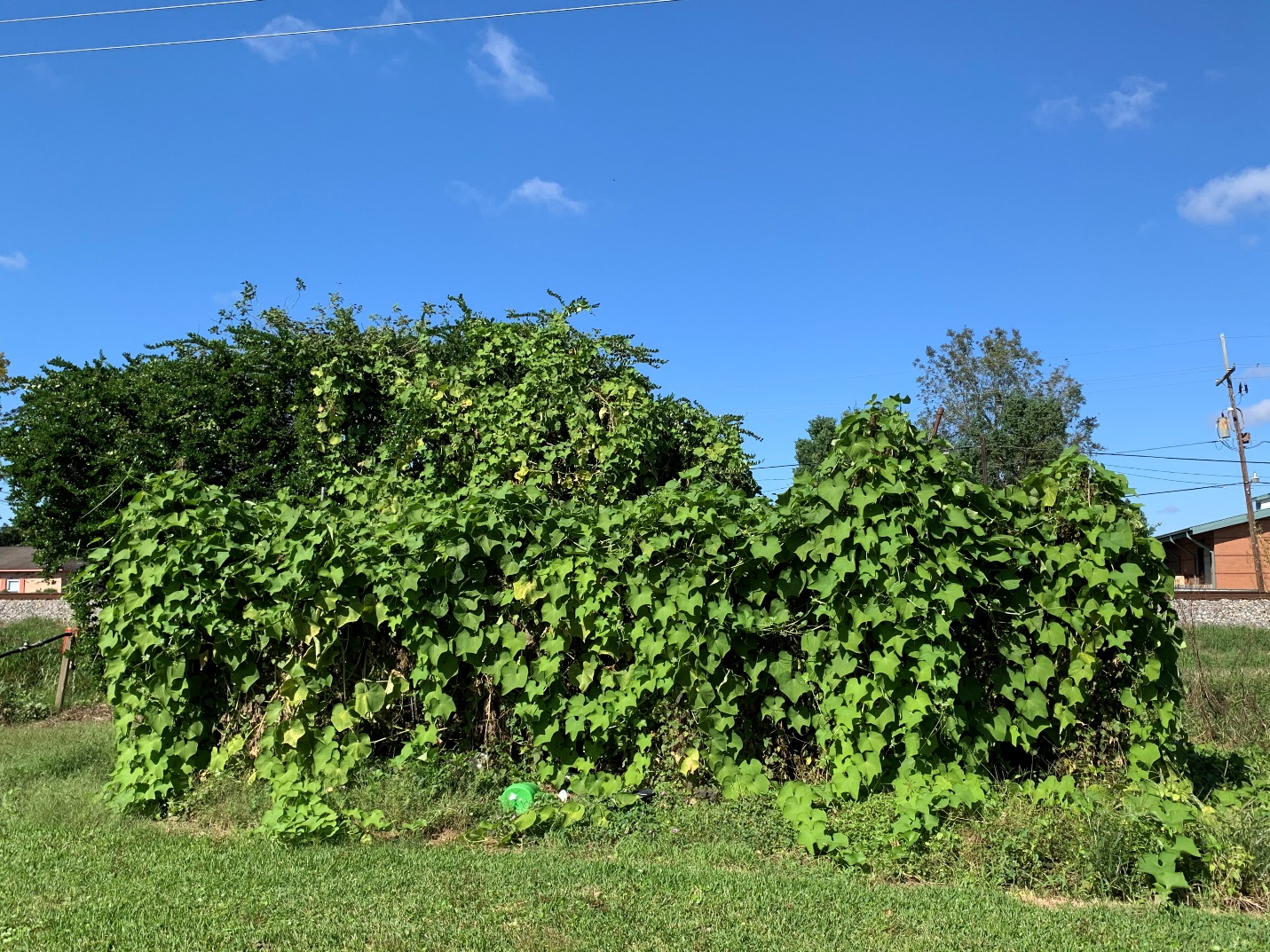
Figure 6 Full Vine.

Figure 7 Earl Perque with his mirliton vine in background.
by David Hubbell | Nov 13, 2020 | Mirliton
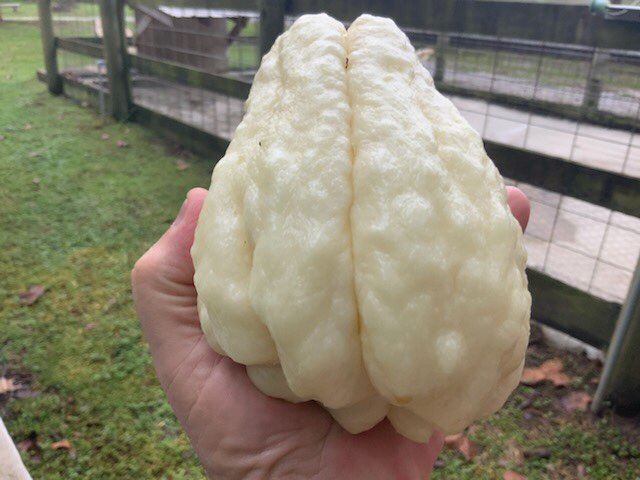
Update on the Ishreal Thibodeaux White Mirliton Preservation Project – October 2020
By David J. Hubbell
Background:
On June 20th, 2020, Mirliton.org announced the we were kicking off the Ishreal Thibodeaux White Mirliton Preservation Project in an attempt to bring back, from the brink of extinction, this rare ivory white variety of the mirliton grown and cared for over four decades by Opelousas, Louisiana’s Ishreal Thibodeaux. If you haven’t already check out the Update on the Ishreal Thibodeaux White Mirliton Preservation Project – July 2020 or August/September 2020 please do so here: https://www.mirliton.org/2020/08/10/update-on-the-ishreal-thibodeaux-white-mirliton-preservation-project-july-2020/ or here https://www.mirliton.org/2020/09/26/update-on-the-ishreal-thibodeaux-white-mirliton-preservation-project-august-september-2020/. They contain an in depth look at all of our growers and efforts from the start of the project.
Reports from the Field:
The month of October was a one in which we expected to start seeing some rapid fruiting of the Ishreal Thibodeaux Mirlitons. While the weather was cooler, the Gulf Coast was again rocked by another set of hurricanes with Delta and Zeta making landfall in October. Luckily, our growers didn’t sustain any issues.
Starting with the Carolina growers we learned the following:
Chris Smith’s reported that “I’ve taken cuttings to root out and sent one to a greater greenhouse in CLT. I’ve got mine under cover and will overwinter. The main difference in learning is that my vines will flower and fruit in fall when the daylength drops, yours will flower and fruit in spring when it warms. If they survive the winter here, I’ll plant out next May and hope to get to fruit that fall. I may try to force flowering with daylength restrictions.” To note: the Ishreal Thibodeaux will actually flower and fruit in both the fall and spring in an established vine. Chris’s information and hopeful success on taking cuttings and overwintering will be of great interest to us in the future months on

Image 1. The first of two potted mirliton Chris Smith and his group are nurturing.

Image 2. Another view of Chris Smith’s potted mirliton.
By mid-October, Keith Mearns plants were also doing well in Columbia, South Carolina. He sent updated pictures of the one in the ground as well as one in the pot (see below). In addition, he had successfully started one from a cutting. He reports
“…I had success with cuttings with at least three nodes, cut end dusted with Hormodin 3, inserted into 100% perlite, kept under mist (3min every 45 min) “. This is very encouraging as it gives us a second way to preserve this and other mirliton plants other than simply starting them from seed mirliton! This is definitely something we hope to explore further and share with the Mirliton.org community in the future.

Image 3. Keith’s mirliton cutting. This looks to be doing well!

Image 4. The first of potted mirliton Keith Mearn’s is nurturing.

Image 5. Keith’s planted mirliton has seen some substantial growth since last month!
James Cobb’s vines in Houma was also doing well in mid -October with the emergence of several new tendrils.

Image 6. James’ potted mirliton doing well in October.
In addition to just the propagation of the plant, Dr. Lance Hill and I worked with a Baton Rouge area designer to come up with a Team shirt to also propagate awareness. We have elected James our “poster boy” due to the joy in his face as he sports this new shirt. (More to come on this below).

Image 7. James sporting the new Ishreal Thibodeaux White Mirliton Preservation Project Tee next to his potted mirliton.
Metairie grower Paul D’Anna reported that his vine is still surviving, but was struggling. However, he noted that one of the unofficial growers he had previously given an Ishreal Thibodeaux vine to was seeing some tremendous success. We will follow up and see if they are willing to participate in the official project.
Some exciting news from Chef John Folse was that once again he was producing some nice sized Ishreal Thibodaeux mirlitons. He reported early in the month that, “Today at White Oak Estate & Gardens in Baton Rouge, I picked seven of the largest Ishrael Thibodaux White Mirliton I’ve ever grown! For some unknown reason, this Fall season is producing some of the most unbelievable white mirliton I’ve seen both in size and quantity. Might be the rabbit cages next to the arbor!!!!!”

Image 8. John Folse’s older vine is starting to produce in Baton Rouge.
By October 26th, Chef John reported the following. “Counted 36 mirlitons on the vine today…WoW! … I’ll pick about 6-8 very large ones to add to the 5 large ones picked yesterday.”

Image 9. Chef John Folse showing the bounty from his harvesting of mirlitons at White Oak Estates and Gardens in Baton Rouge.
“How big is that mirliton?” you’re asking. It measured 12” diameter and 1.113 pounds!

Image 10. The Ishreal Thibodeaux White Mirliton picked from White Oak Estates & Gardens is definitely a keeper.
From my end, the one I received from Chef John was plant in Mobile and is doing well, though I don’t expect to see any fruiting until the spring.

Image 11. David Hubbell’s mirliton slowly adjusting to being transplanted in Mobile.
Closing Thoughts for Effort So Far:
This third update hopefully showcased the fruits of the efforts so far. As I write this in mid-November, we know that the yields we are seeing so far aren’t as great as we had hoped, but if we can preserve these vines through another growing season, we should have an even better spring than we saw this year. Right now, I am thinking of maybe only have a smaller set of additional growers, say maybe two more to overwinter a few and plant in the spring. I will go through the list of previous applicants and narrow down the field to between 2-5 to be prepared. More to come in the next few weeks.
For information on the tee shirt James was wearing, please click on this link to take you to detailed information on how to get one. – Mirliton Tee.
If you have any comments, questions, or suggestions, please send them to me David J. Hubbell at rpcajun2r@gmail.com. Thank you.
by David Hubbell | Oct 18, 2020 | Mirliton
INTRODUCING THE FIRST PRODUCT AVAILABLE FROM MIRLITON.ORG!!!!
The Ishreal Thibodeaux White Mirliton Preservation Project Tee

This festive unisex tee shirt is made out of 100% cotton and is a soft and comfortable way to show your support for this exciting project and your love of mirliton!
The Ishreal Thibodeaux White Mirliton Preservation Project Tee
Designed by Artistically Yours
Order yours today through the Mirlitons Classifieds.
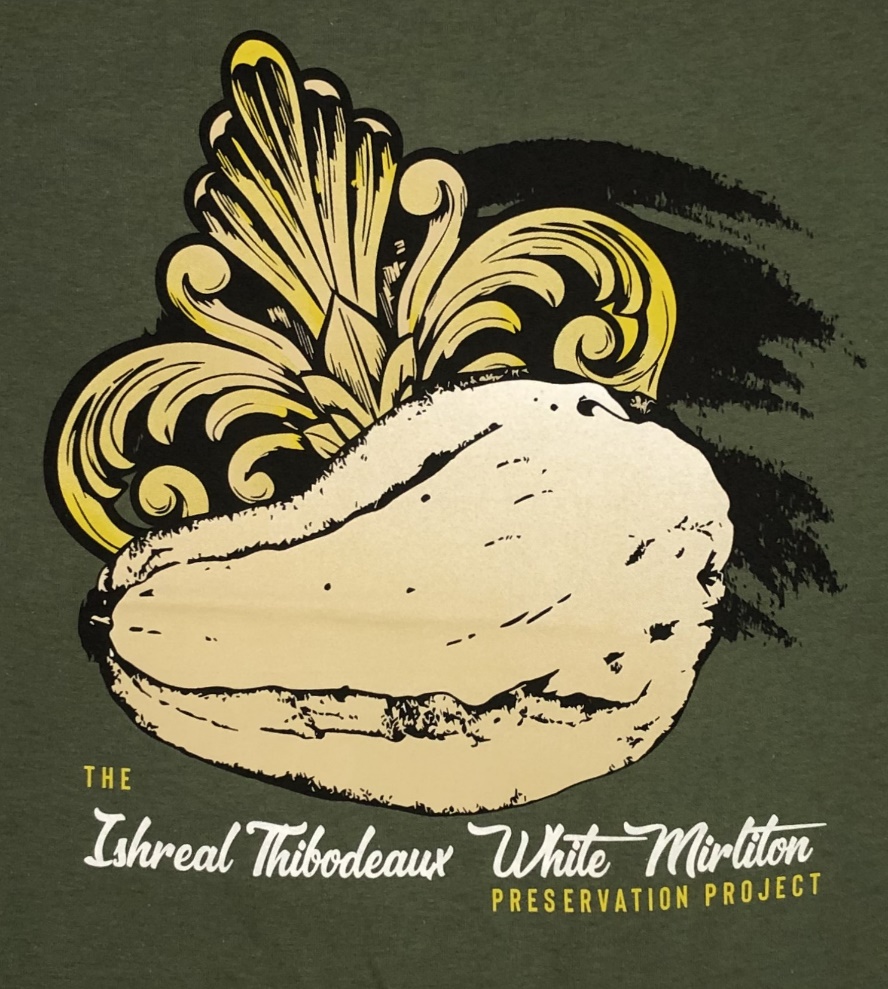
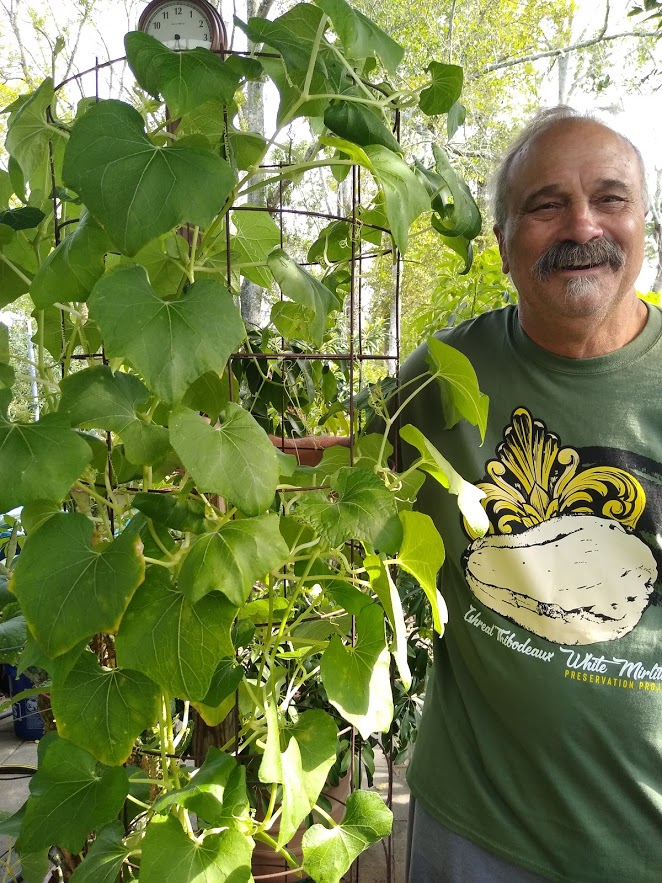
Grower James Cobb proudly sporting his Ishreal Thibodeaux White Mirliton Preservation Project Tee next to his Ishreal Thibodeaux vine.
Click the Mirlitons Classifieds to order.
by David Hubbell | Sep 26, 2020 | Mirliton
Update on the Ishreal Thibodeaux White Mirliton Preservation Project – August/September 2020
By David J. Hubbell
Background:
On June 20th, 2020, Mirliton.org announced the we were kicking off the Ishreal Thibodeaux White Mirliton Preservation Project in an attempt to bring back, from the brink of extinction, this rare ivory white variety of the mirliton grown and cared for over four decades by Opelousas, Louisiana’s Ishreal Thibodeaux. If you haven’t already check out the Update on the Ishreal Thibodeaux White Mirliton Preservation Project – July 2020 please do so here: https://www.mirliton.org/2020/08/10/update-on-the-ishreal-thibodeaux-white-mirliton-preservation-project-july-2020/ . It contains an in depth look at all of our growers and efforts for the start of the project.
Reports from the Field:
The month of August was basically one in which the growers were nurturing their potted mirlitons to encourage growth and good root development as well as protect against the summer elements…including hurricanes! In addition, the two Louisiana growers with vines in the ground also worked to protect these so that they could thrive despite the aforementioned elements. September was our anticipated month to have the mirlitons in the ground to shoot for a small fall crop.
First off, it was good to hear that our Carolina growers fared well with Hurricane Isaias.
Chris Smith’s sprouts in Ashville, North Carolina were coming along nicely in early August and was hoping to be on course for the September planting. However, he noted on September 23rd, the mirliton were still “alive but small and still in containers. We’ve hit a low of 40F here already so I’m taking precautions. I’ve taken a cutting and sent it to a heated greenhouse in Charlotte where it should overwinter quite happily. I’ll keep mine in containers and move them inside as well as taking extra cuttings as the vines grow. The ‘season’ here is to grow early in spring, set out in summer and harvest in fall. Hopefully we’ll see that pattern in 2021…”

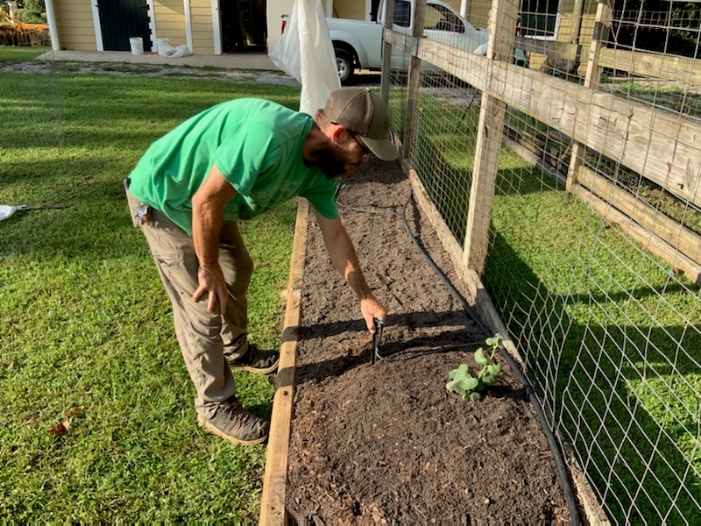
Image 1. The first of two potted mirliton Chris Smith and his group are nurturing.
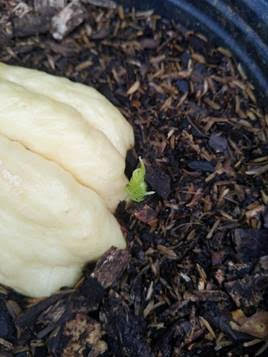
Image 2. The second of Chris’ two potted mirliton. This one was just starting to sprout.
At the end of August, Keith Mearns plants were also doing great in Columbia, South Carolina. He reports “Both my plants are doing well. One started later than the other and is about 12” long. The large one is now beginning to branch from lower buds. “
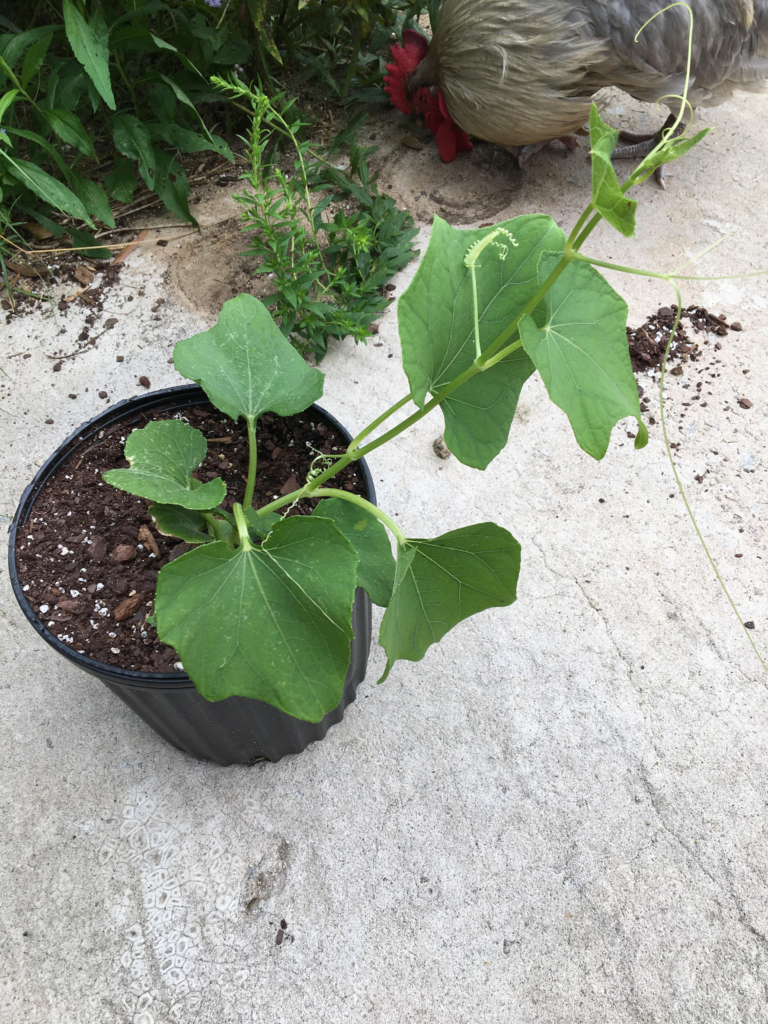
Image 3. The first of two potted mirliton Keith Mearn’s and his rooster are nurturing.
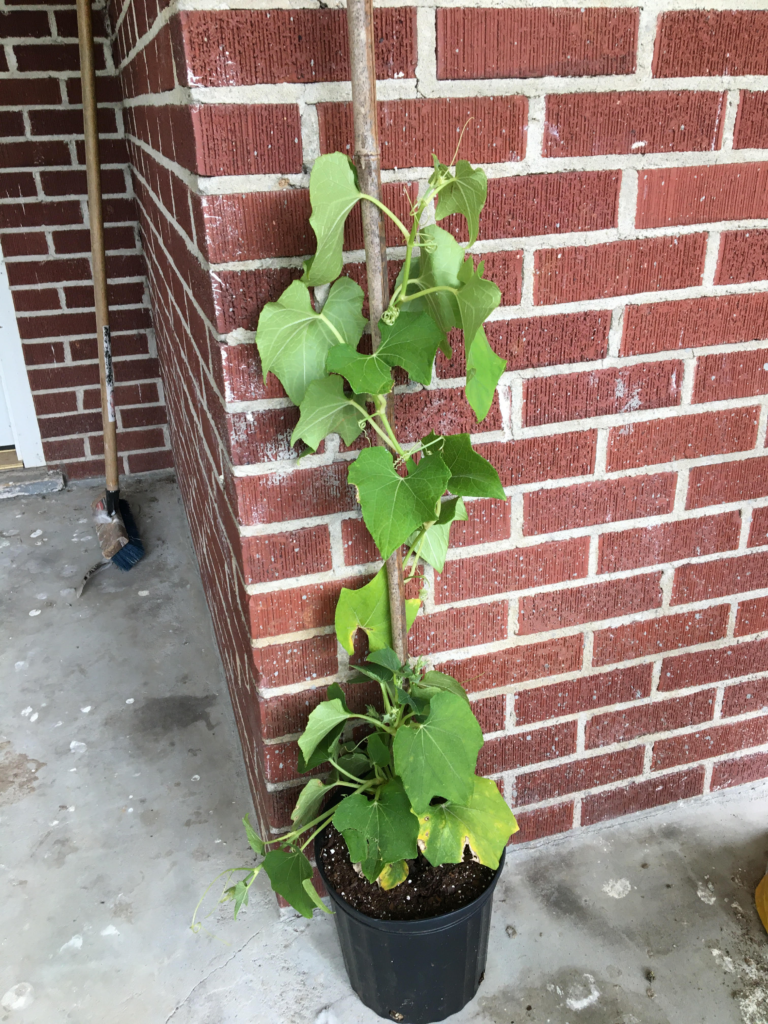 Image 4. The second of Keith’s two potted mirliton. This one is doing well!
Keith reported the following on September 16th, “In anticipation of some decent rain, I planted one of my plants today on one of the trellises I sent photos of. I’m thinking that I’m going to up-pot the other plant into a 15gal pot and keep it in my heated cold frame greenhouse. I’ve also just stuck a few cuttings to see how they do.”
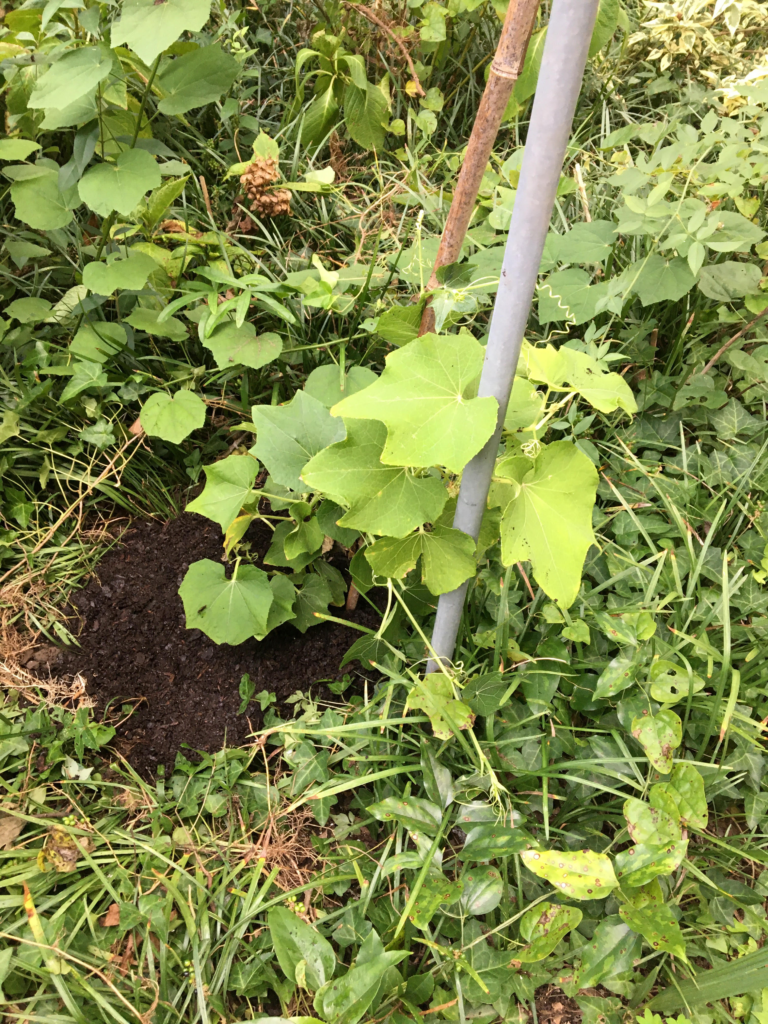 Image 5. Keith’s planted mirliton.
James Cobb’s vines in Houma were really thriving at the beginning of August and he states this one is in a “10 gallon nursery pot and the top of the cage is 6′. Tallest plant is now at the 4′ ring or about 3-1/4′ above the soil. The fruit on that one is still very firm. The other fruit basically rotted but the plant itself is doing well, but not as tall as the other, but does have a couple of new shoots coming up from the bottom.”
Image 6. James’ potted mirliton doing well in early August.
Then our Louisiana growers had to deal with a double whammy the last week of August: Marco and Laura. While Marco seemed a relative non-event to some, Laura did some major damage to the west side of the state. One of the Ishreal Thibodeaux growers not in the first group of official growers unfortunately lost hers during Laura.
In an effort to protect his plant, James lashed himself to the plant during the storm as seen here. 😉 In reality he was showing the incredible growth his vine had seen in a three-week period.
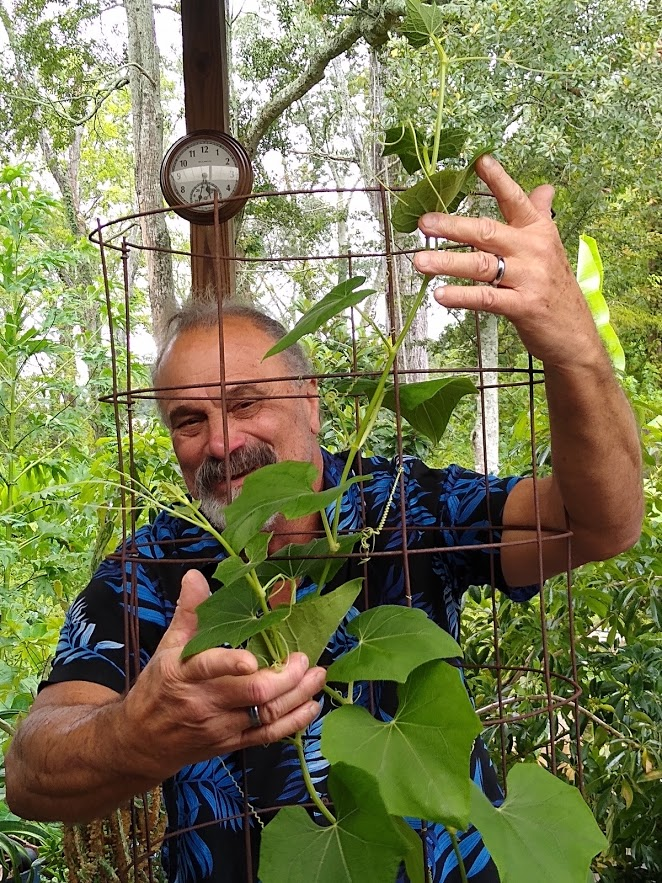
Image 7. James’ “lashing” himself to the potted mirliton before the arrival of Laura.
Luckily for us, Paul D’Anna and Chef John Folse didn’t see any damage on their ends from the storms.
Chef John, shared these updates early in August on his plants in the pots that were also looking fantastic.
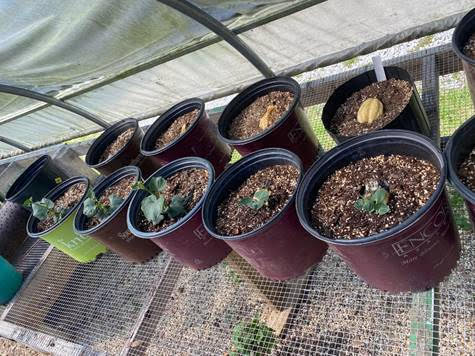
Image 8. John Folse’s potted mirlitons in his greenhouse in Baton Rouge.
By September 6th, Chef John and his Gardener Brian Ainsworth had planted a few more Ishreal Thibodeaux’s at White Oak Estates and Gardens.
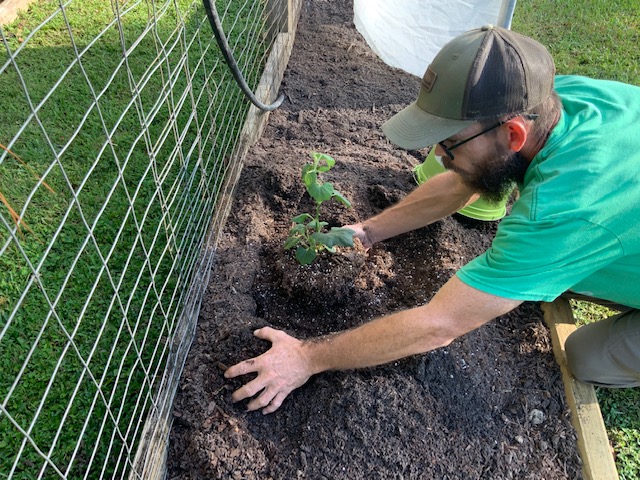
Image 9. Brian Ainsworth planting more mirlitons at White Oak Estates and Gardens in Baton Rouge.
The newly planted mirliton from earlier in the summer were also doing quite well on September 22nd in Baton Rouge.
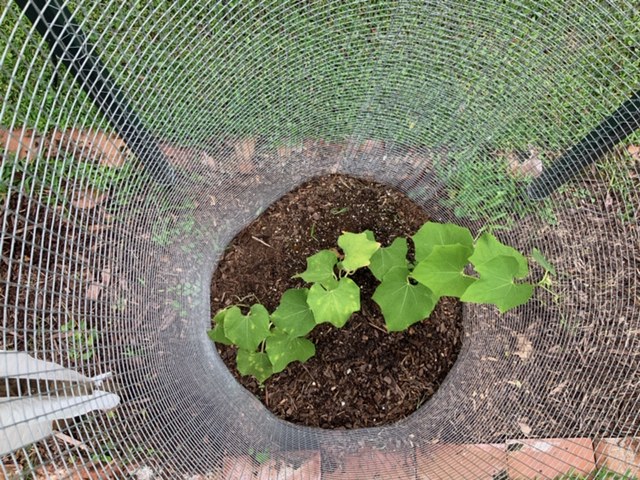
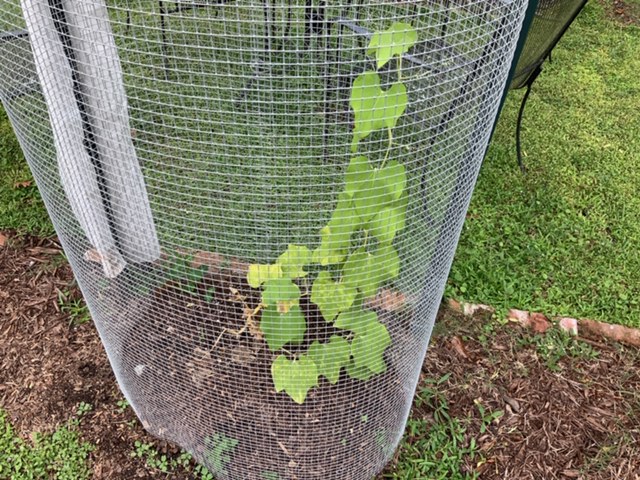
Image 10. The Ishreal Thibodeaux mirlitons planted earlier this summer at White Oak Estates & Gardens.
From my end, my seed mirliton started to drop the “embryo”, and while I expected to see sprouting, none occurred. Lance Hill noted that “The tendency for spring mirlitons to not sprout was first identified by Ervin Crawford. This is a little-understood quality called “parthenocarpy”: a fruit that sets and grows but does not contain a fertilized seed “embryo”). There is almost nothing in the literature on this but it means we best wait for fruit to sprout before we give them out as seed.
I assumed that it was a fluke, but I just read that some plants deliberately produce parthenocarpic fruit to distract herbivores. Animals prefer fruit that has not sprouted because sprouted fruit is filled with roots that consume moisture. “
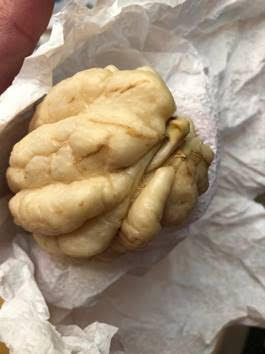
Image 11. David Hubbell’s seed mirliton not doing so well in early August.
Since mine wasn’t looking too great, I received one of the extra potted vines from Chef John to plant in Mobile by the first week of October.
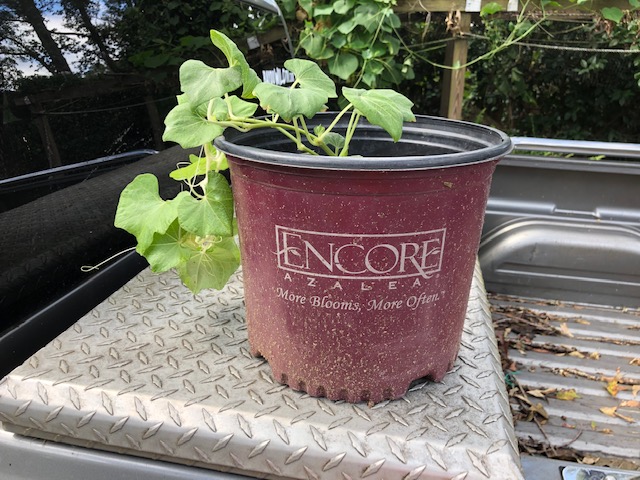
Image 12. Potted vine to be planted in Mobile.
Education and Inspiration Through Food:
Chef John and I had planned to do some more videos in August, but unfortunately the dual hurricanes caused us to delay this effort. However, a friend of mine, Jaime Callahan of Buddy’s Cajun Spice did release his Cajun Stuffed Mirleton Slipper recipe on Youtube that looks pretty good. Please check it out:
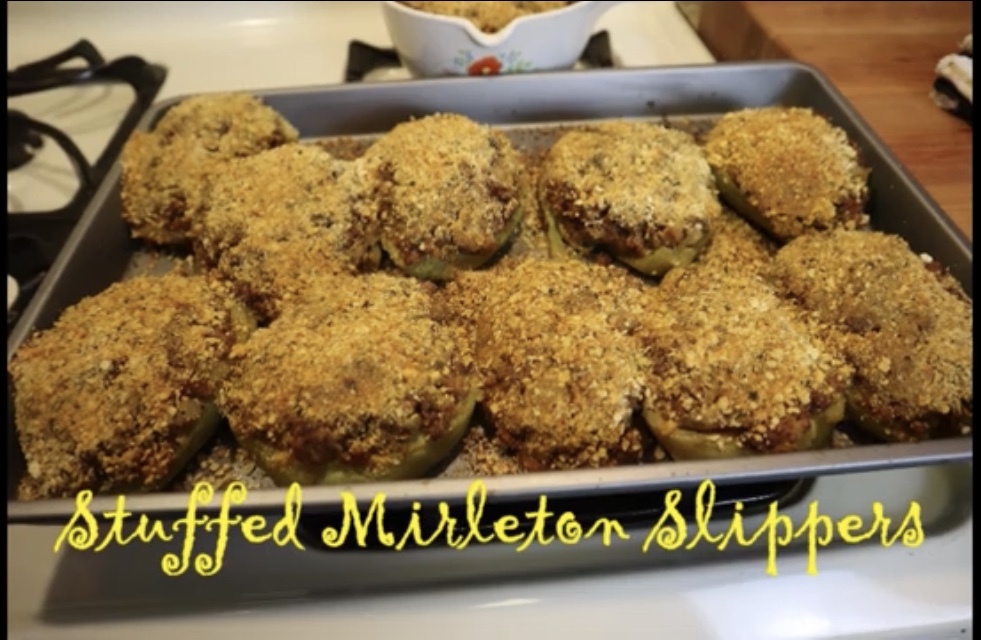
Image 13. Jaime Callahan’s Cajun Stuffed Mirelton Slippers https://youtu.be/6Goqi8ncJMM
Closing Thoughts for Effort So Far:
This second update hopefully showcased the efforts needed to nurture and protect potted mirlitons against the elements for a Fall planting. As I write this in late September, we know that the heat and humidity are just starting to let up along the Gulf Coast. Hopefully the next report will detail further updates and showcase more of the planted efforts of the various growers as the vines adjust being in the soil and focus on hopefully what will be a successful but possibly small first crop.
If you have any comments, questions, or suggestions, please send them to me David J. Hubbell at rpcajun2r@gmail.com. Thank you.
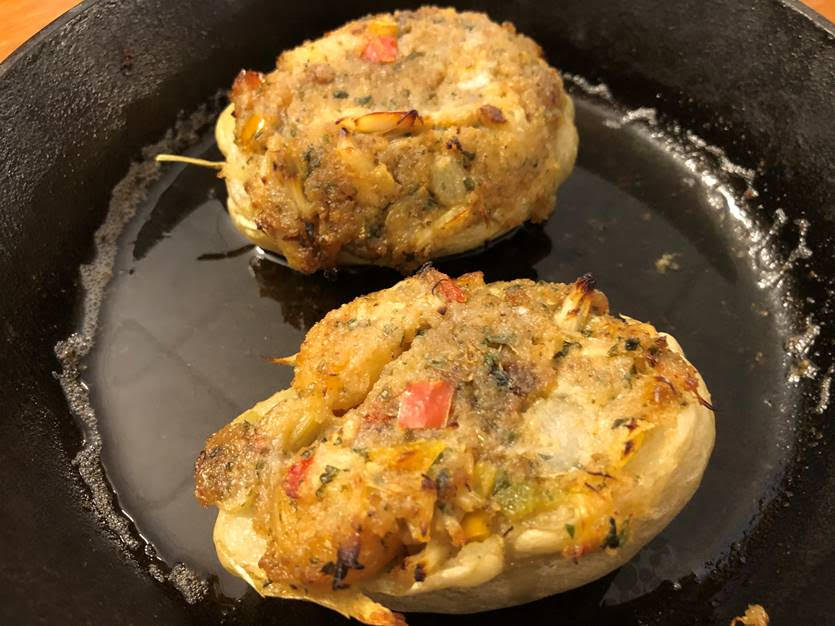
by David Hubbell | Aug 10, 2020 | Mirliton
Background:
On June 20th, 2020, Mirliton.org announced the we were kicking off the Ishreal Thibodeaux White Mirliton Preservation Project in an attempt to bring back, from the brink of extinction, this rare ivory white variety of the mirliton grown and cared for over four decades by Opelousas, Louisiana’s Ishreal Thibodeaux. Since that time, the Phase 1 growers have been continuing toward our goal of both growing and educating the public on this variety as well as the project in general. Originally this venture had four official growers agreeing to adhere to the strict guidelines that were put forth in the preservation plan. ( https://www.mirliton.org/wp-content/uploads/2020/06/Ishreal_Thibodeaux_White_Mirliton_Preservation_Project.pdf)
They are: Keith Mearns with the group Historic Columbia in Columbia, South Carolina; Chris Smith with The Utopian Seed Project in Asheville, North Carolina; Paul D’Anna a long-time independent grower in Metairie, Louisiana; and Chef John Folse growing these at his White Oak Estate and Gardens in Baton Rouge, Louisiana. In addition to these, two other long-time independent growers were added to the official group: James Cobb in Houma, Louisiana and myself, David J. Hubbell in Mobile, Alabama. In addition to the official group, a few pots of sprouted Ishreal Thibodeaux mirlitons were made available to some experienced mirliton growers with the hopes they will also report in on their independent progress.
One thing that may not have been clearly stated is what we will consider success for the Ishreal Thibodeaux White Mirliton Preservation Project? One goal is to re-establish 20-30 sustainable vines that can endure for 5 or more years with long term committed growers willing to dedicate the “rest of their life” to caring for the vines or being the “keeper of the flame”. They would be connected via a network to be able to resupply each other should one lose their crops, plus we could have some guidelines that they maintain to improve their chances going into the future as well as finding someone else to take over for them at some point. Lance Hill has also suggested: “I think a goal of an initial five growers and each year after then, double that number (each grower recruits another grower.) “This plan will surely put us on a path to get to 20-30 growers in just a few years. The key to this will be to also adequately educate the new growers to hopefully plan for issues in the future.
Distribution:
The seed mirliton for the project were provided by Paul D’Anna and Chef John Folse. On June 29th, Chef John carefully packaged four sprouted seed mirliton to send to our growers. These mirliton were wrapped loosely in bubble wrap and placed two to a box, then shipped second day UPS to our Carolina growers.
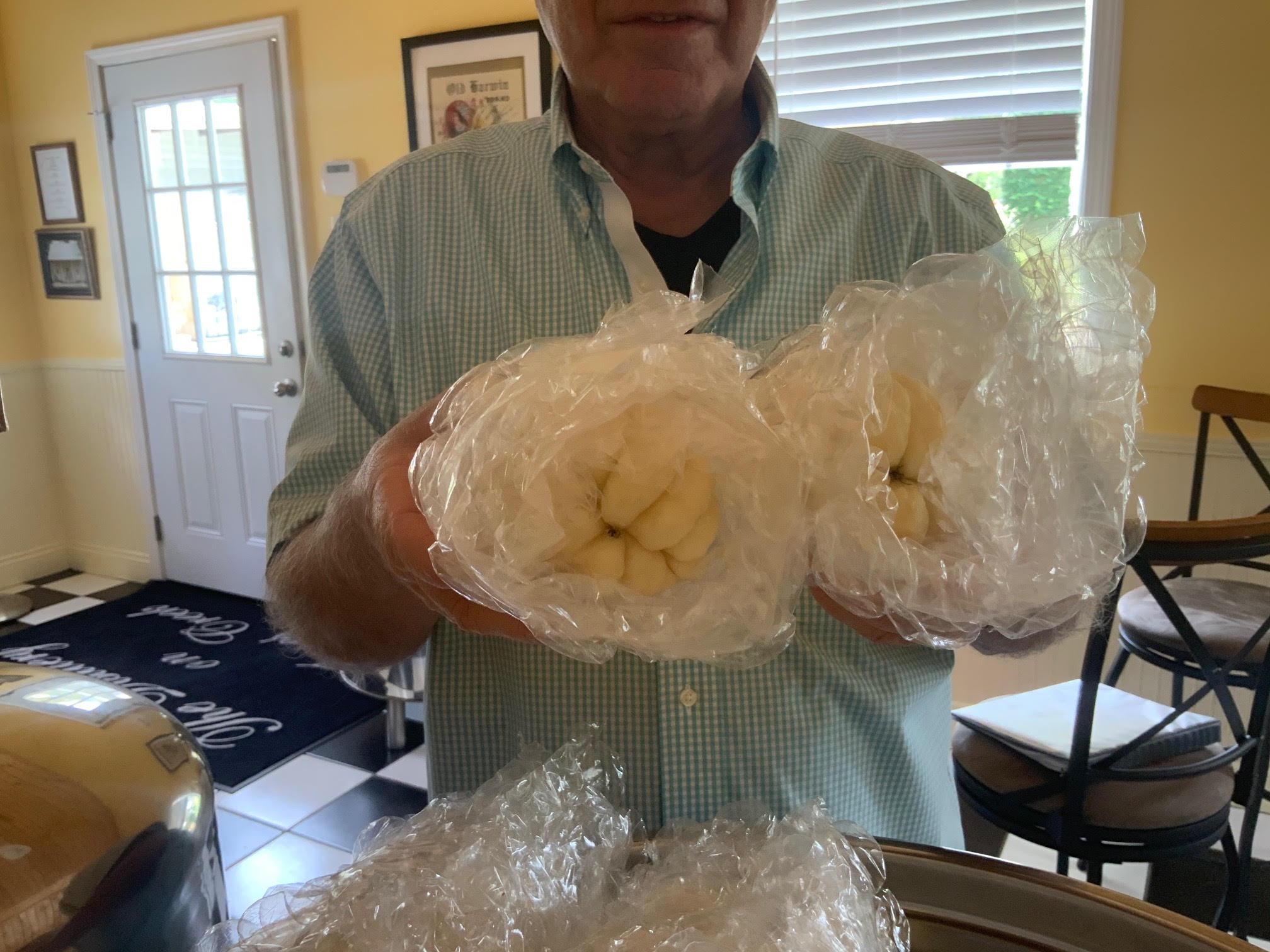
Image 1. Chef John Folse showing the meticulously wrapped mirliton for shipping.
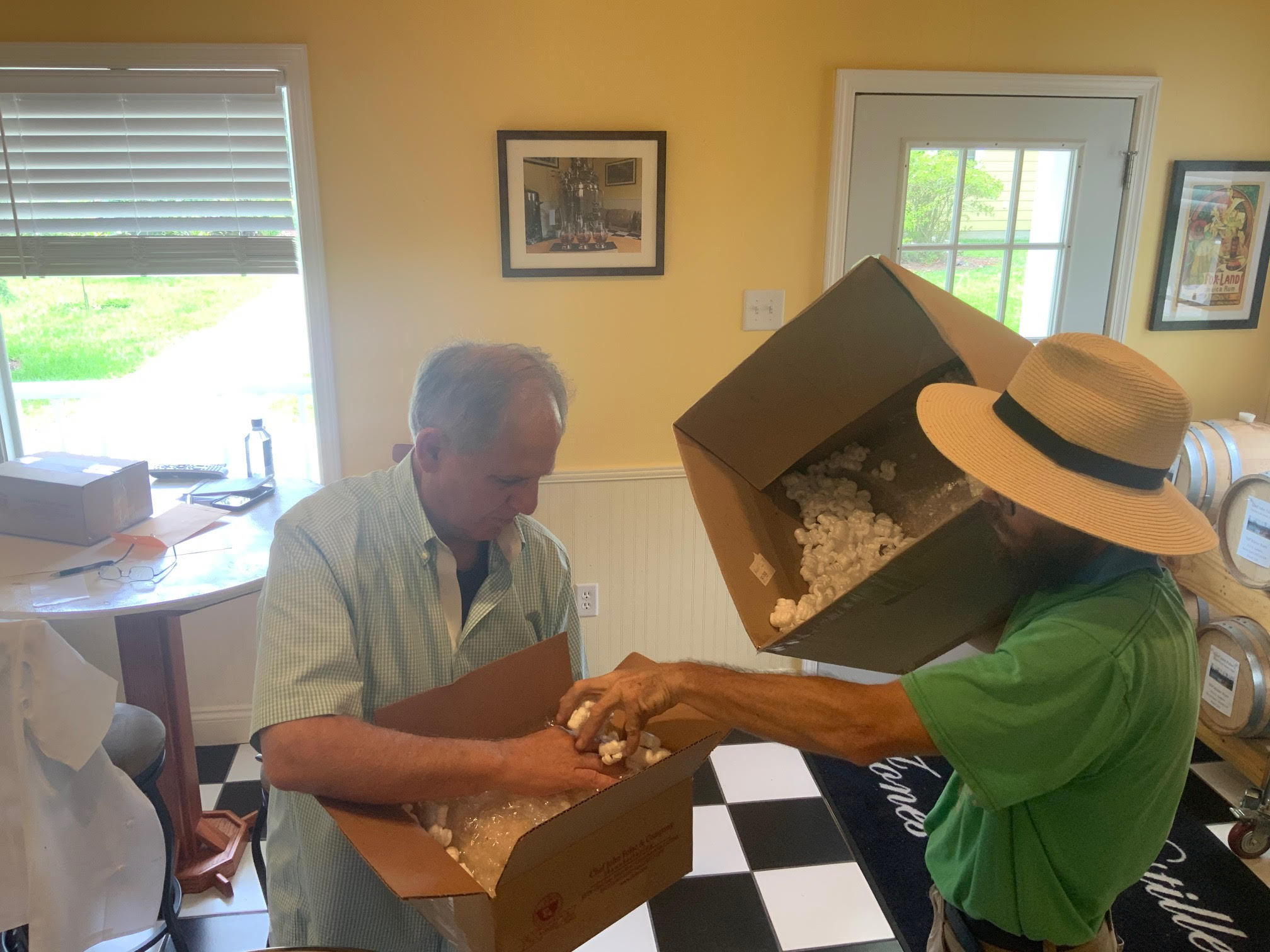
Image 2. Chef John Folse and White Oak Gardener Brian Ainsworth finishing the packaging the seed mirliton to be sent to the Carolina growers.
They were successfully received in great shape on July 1st and 2nd, where they were unwrapped and potted in 3-gallon pots with a mixture of good potting mix. 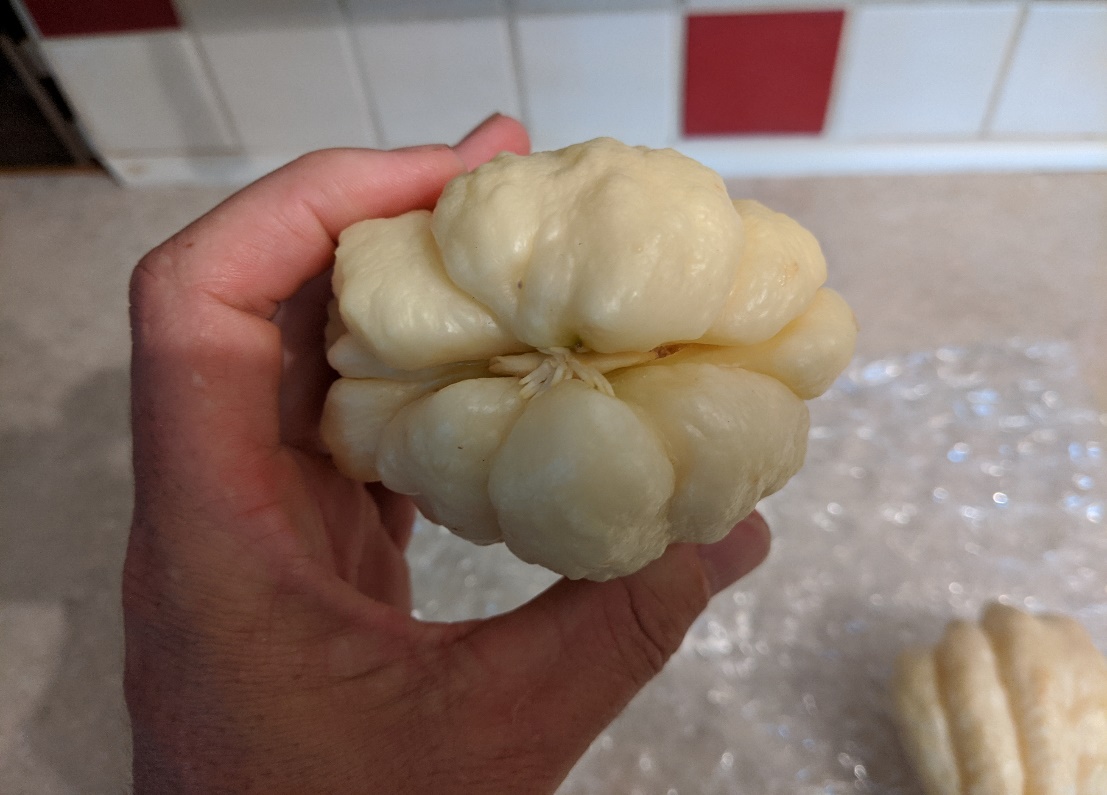
Image 3. Recently unpacked white mirliton from Ashville, North Carolina grower, Chris Smith.
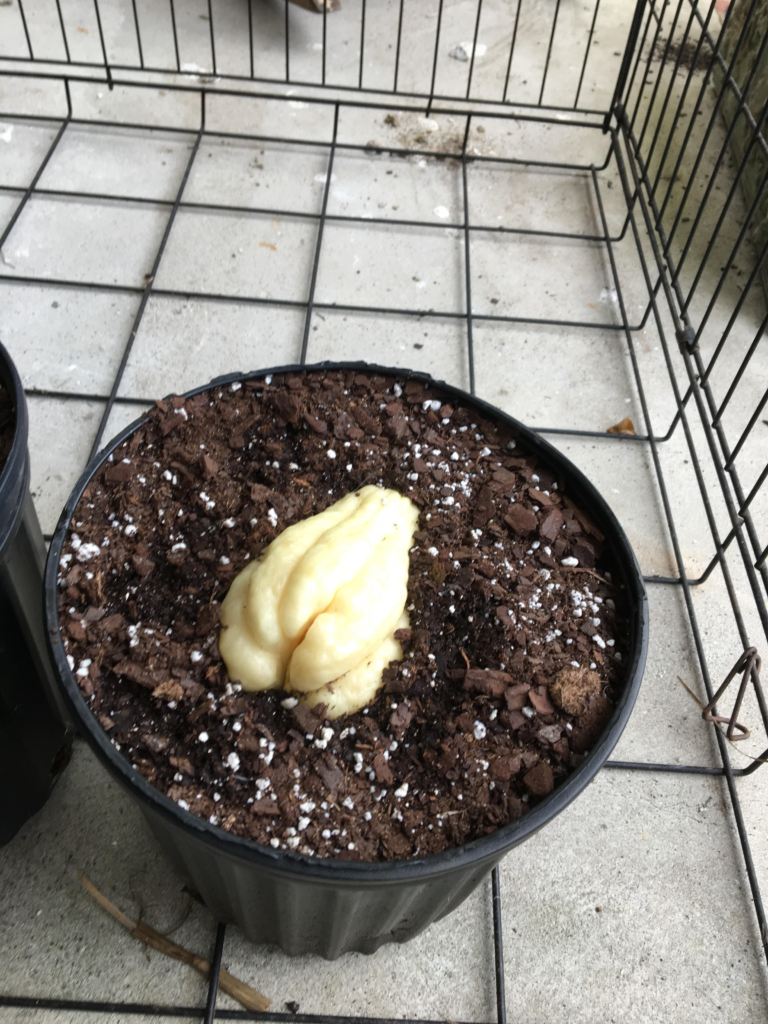
Image 4. Potted white mirliton from Columbia, South Carolina grower, Keith Mearns.
Around this same time, Houma grower James Cobb picked up his potted mirliton from Paul in Metairie.
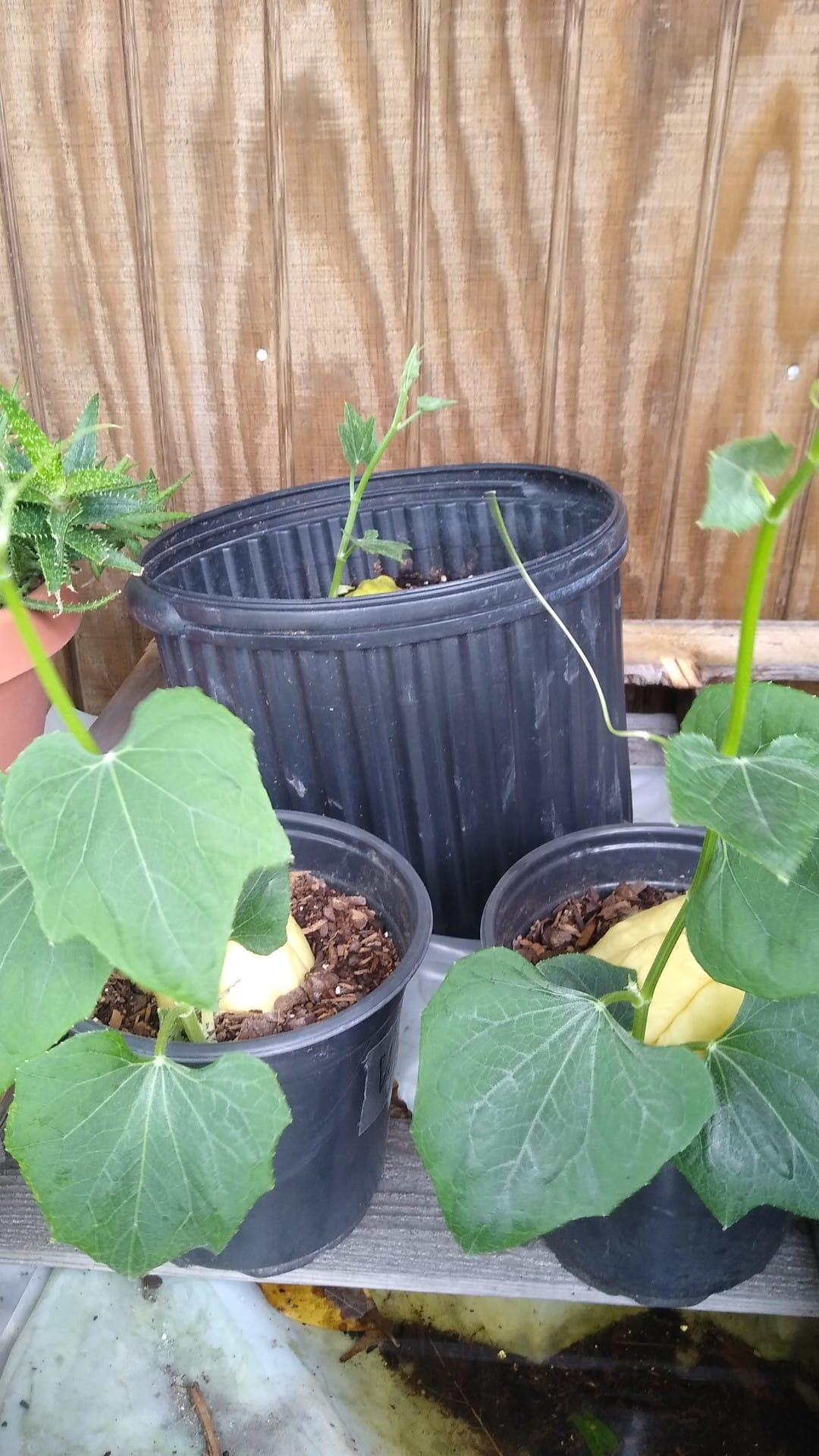
Image 5. Potted white mirliton from Houma, Louisiana grower, James Cobb.
In addition to their distribution efforts, both Paul and Chef John had potted a few of their sprouts to add to their respective gardens to further improve the 2020 Fall yields.
Additionally, Chef John and Brian put together a video to the growers in the Ishreal Thibodeaux White Mirliton Preservation Project which included a mini lesson in history and how to properly pot these seeds mirliton to ensure success.
Insurance and Experimentation:
By July 7th, the core group of first round growers had all received their mirlitons. Since there were some sprouts still remaining, it was decided these would be potted as a bit of insurance in case we encounter any issues before September. If all goes well, any remaining plants not needed in September will be sold to the next round of growers.
Due to the extra sprouts that they had saved, both Paul and John decided to experiment with direct planting into the ground, but both took added precautions to ensure success the intense 98-100 degree heat south Louisiana has been experiencing. In Paul’s case, he planted his in a partially shaded area of yard. John and Brian installed a shade cloth to protect against the heat and their efforts have paid off with three vines having sprung up thus far. Chef John notes “The intense heat has definitely played havoc on the new plantings and we really have to nurse and protect them daily from getting burned up.”
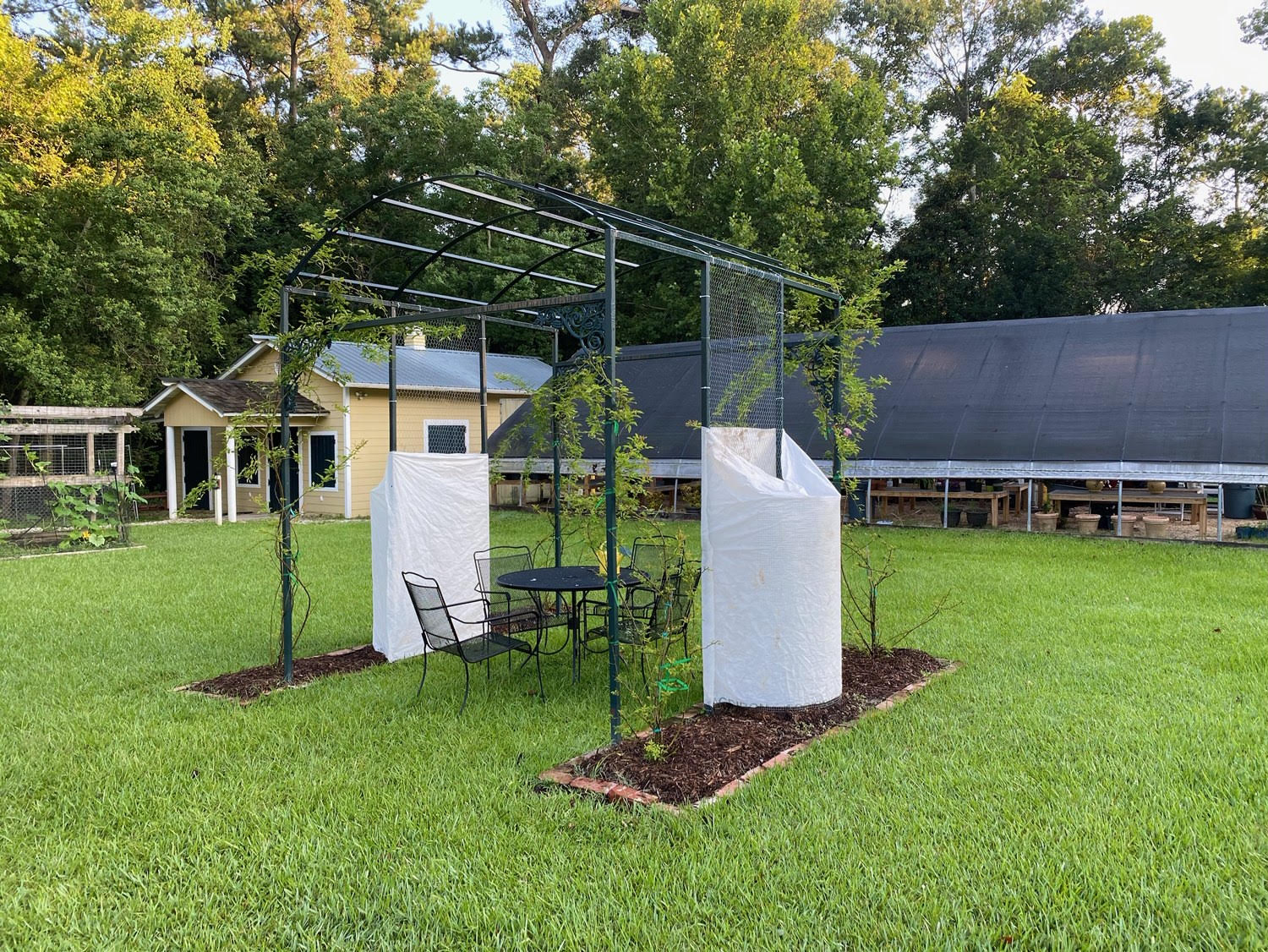
Image 6. Direct planted white mirliton with protective shade cloth at White Oak Estate and Gardens in Baton Rouge.
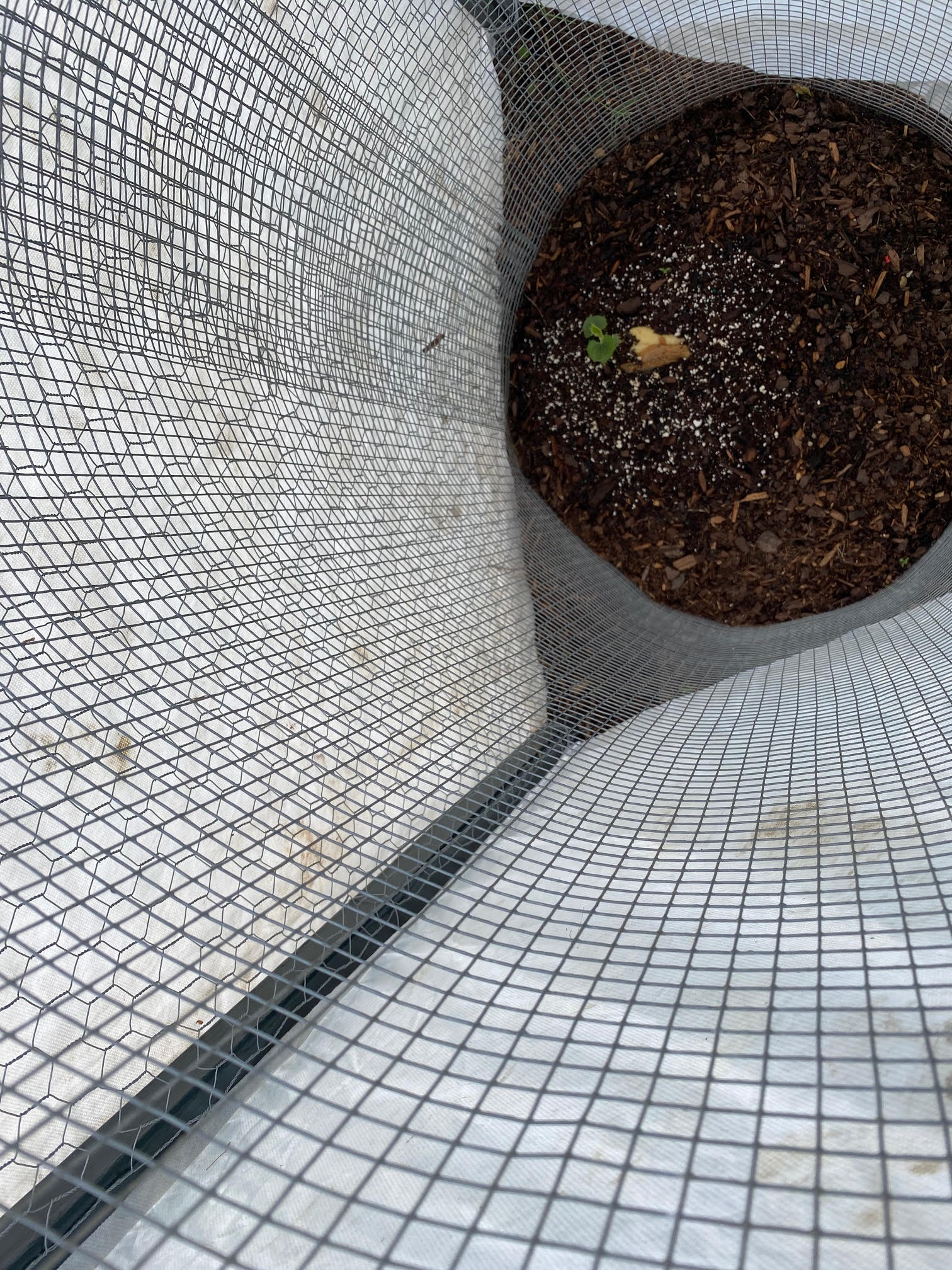
Image 7. Direct planted sprouting white mirliton with protective shade cloth at White Oak Estate and Gardens in Baton Rouge.
Some additional growing notes I would like to pass on from Chef John are “The White mirliton is definitely affected by the late June to mid-August heat. The mirliton seems to whiter and develops brown spots and begins to rot in this high heat. The mirliton once picked really needs to sit in a cool dark space (I put them in my bottom desk drawer to stay cool and dark until I started to see roots and vine sprout.) I then moved them out for planting. Next year however, I will definitely not rush this process. I’ll leave them in a cool, dark space until I have a nice vine growth 6-10 inches them plant under shade cloth to help establish a healthy plant.”
Education and Inspiration Through Food:
Shortly after we announced the Ishreal Thibodeaux White Mirliton Preservation Project, I was invited to appear on the local Mobile gardening radio show about the planned efforts. Mobile’s horticulturist, Bill Finch, is a great supporter of the traditional Gulf Coast vegetables and is very interested in mirliton. I am including the link to the show for those interested. The discussion starts around 23 minutes in:
https://fmtalk1065.com/podcast/plain-gardening-show-with-bill-finch-6-21-20-hour-1
This was then followed by an invitation to appear on July 5th on another Mobile radio show, Sip and Chew with Mike and Stu to discuss the project, as well as to learn more about mirliton in general. To help with the discussion, I brought them some food samples to help “educate their palates” on mirliton. Once again, if interested here is the link to the show as well as one of the dishes I prepared for them. The discussion lasts from 15-34 minutes:
https://audioboom.com/posts/7625135-sip-and-chew-7-05-20?fbclid=IwAR2zMJ2-FxvKrJXvvUp1BhnBh4qfAiCxMch0O0DNrf-bRQGD6dYssIetQmo
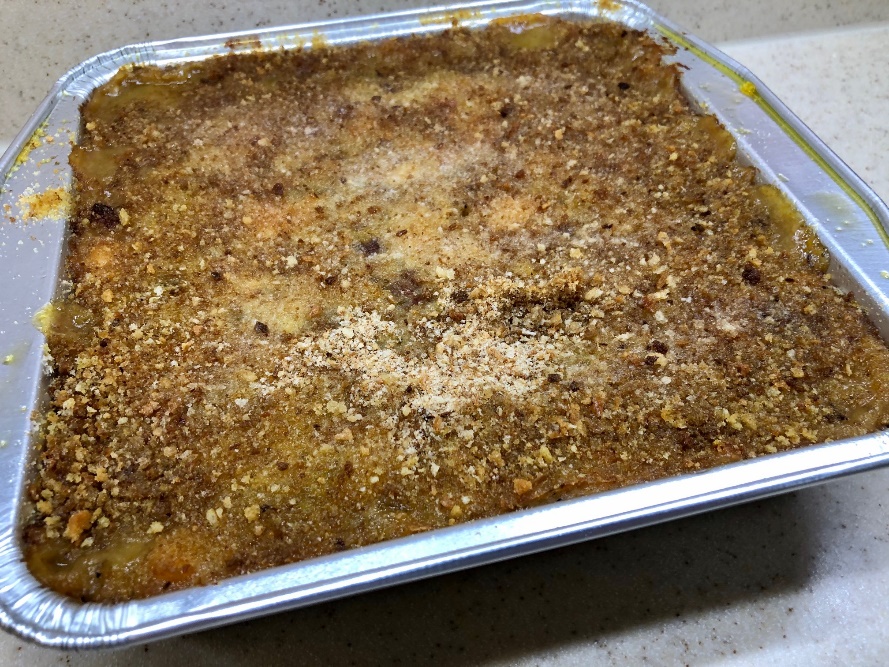
Image 8. Mirliton, Andouille, & Gulf Shrimp Dressing ala Mobile, Alabama. Recipe in link https://youtu.be/g14oA1nmJ7Y
Finally, on July 24th, my family and I visited Chef John at White Oak to check on the progress of his original vine and see how the potted seed mirlitons were doing. In addition, he and I took one of his few remaining Ishreal Thibodeaux white mirlitons from this spring harvest and prepared one of his classic mirliton recipes. Attached is the link to the video of our work so the readers can see why we get so excited about preserving the white mirliton and mirlitons in general. https://youtu.be/trMlF_fu_CE
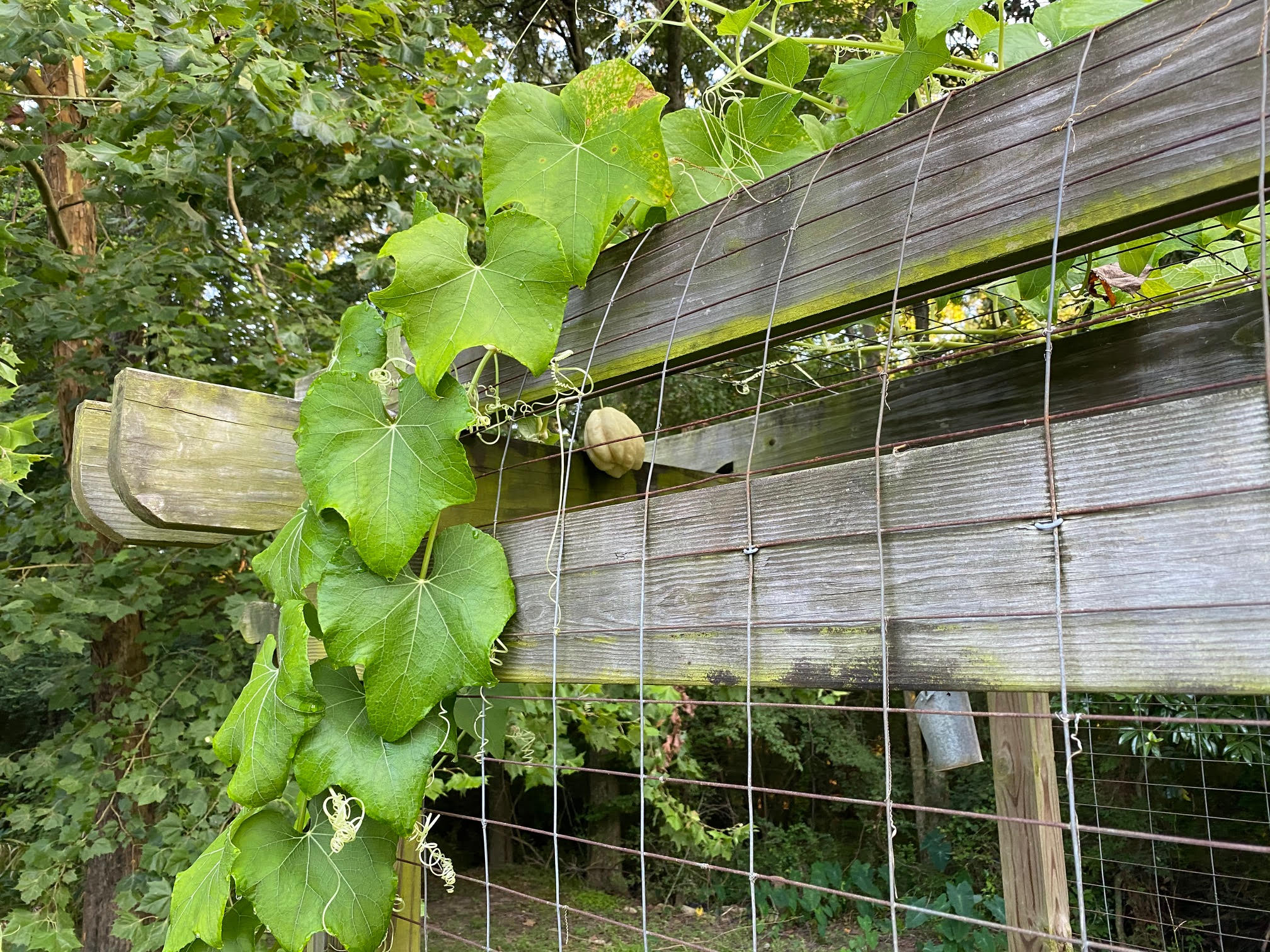
Image 9. The original white mirliton vine at White Oak Estate and Gardens in Baton Rouge is still continuing to thrive through the hot July weather.
Image 10. Chef John Folse’s Crabmeat- and Shrimp-Stuffed White Mirliton https://youtu.be/trMlF_fu_CE
Closing Thoughts for Effort So Far:
This update will be the first of many to come, hopefully monthly, to detail the subscribers to Mirliton.org on the progress being made to restore the Ishreal Thibodeaux variety. As you can see, the team of growers have been quite busy since we announced the project. As we go into August, we along the Gulf Coast will be especially on guard to protect these plants to ensure they make it through perhaps the hottest and most brutal month for us. Rest assure that all on the project will do their utmost to get through this time so that we are able to transfer the potted vines into the soil and focus on hopefully what will be a successful but possibly small first crop.
If you have any comments, questions, or suggestions, please send them to me David J. Hubbell at rpcajun2r@gmail.com. Thank you.
by Lance Hill | Dec 6, 2019 | Mirliton
The following blog was submitted by David Hubbell from Mobile. I asked him to explain how he saved his family heirloom mirliton from the recent early freeze, the worse one in 112 years. Every year we are losing locally grown varieties because of climate changes; droughts, early frosts, intensive precipitation events and flooding. If we are going to preserve out heirloom varieties, we need to plan for these challenges. David started from the beginning with a trellis he could easily and quickly protect from the frost or freeze. The old saying was that mirlitons take care of themselves; they use to, but not anymore.
Lance
Freeze Protection for Mirlitons
By David Hubbell
To say I was a bit concerned when I received an email titled “Frost Alert…” from mirliton.org on November 8th is a bit of an understatement. In Mobile, Alabama the typical first frost dates are November 21st-30th, which is what I have typically experienced over the past 10 years of growing mirlitons here. However, to get down below freezing for more than 6 hours and nearly two weeks early was almost unprecedented. Of course, we have had similar predictions in the past that would change as the forecast got closer to the predicted date, however, the local experts were telling us this one was serious.
On the following Sunday, I tuned in to the Plain Gardening with Bill Finch, our local gardening guru on the radio, to get his take on the forecast. Just like mirliton.org, Bill was extremely concerned on what was going to happen to the fruits, vegetables, and ornamental plants of the area should we see the predicted 12 hours of 25-29 oF temperatures. Bill is also a great supporter of the mirliton effort and we have spoken frequently over the last several years on the subject. In fact, he even lamented on the air “what was David Hubbell going to do with his mirliton?”
So, what was I going to do? Well, evaluating the situation and looking over my experience of the last 10 years I figured I had at least three possible options:
-
Cut the vine back to 2” above the surface and cover with mulch
-
Try the sprinkler method suggested by Lance Hill at mirliton.org or
-
Try to provide enough cover and heat
Since I had only picked two mirliton and had a lot of blooms with plenty of growing time left, I decided against option 1. While option 2 made logical sense to me, the area of my structure and the types of sprinklers I had didn’t lend themselves to this method; plus, due to the proximity to my driveway I may actually be creating a slipping hazard with the water. Therefore, I decided by default to go for option 3. I had some previous attempts at this over the years with mixed success and I had somewhat designed my mirliton support structure for such an enhancement.
Preliminary Steps
Before even considering protecting against a freeze, I had planted my vine in a well-drained location about 25 feet away from a big water oak with a decent canopy. This location is also heavily shaded by some of the neighboring trees and even three navel orange trees I planted nearby around the same time. Unbeknownst to me at that time, this probably has provided a bit of an infrastructure needed to help keep heat released from the ground trapped beneath the canopy and warm the mirliton vine. The first few years of growing mirliton was basically trying to mimic visions I had of old T-pole clothes lines I thought I remembered seeing mirliton grow on as a kid. I did this with a nice, but inadequate trellis and a long rope tied to the water oak. After the massive amount of plant growth during the first few years I realized I needed a “beefier” structure. Seeing pictures of similar structures created from folks in the New Orleans area I choose to create a system with six 4×4 posts separated by 1×4-12 planks lengthwise and 1×4-8 widthwise, and using reinforcing wire and small 1×2 railing pieces on top (see Figure 1.) The main advantages of this structure for me was a place for the vines to grow across the top while allowing the fruit to hang down so I could easily walk under it and inspect and pick. Plus I know had a structure that could now be easily reinforced with coverings and heater/heat lights if needed.

FIGURE 1. Mirliton Structure
Materials Used for Freeze Protection
-
20 ft. x 25 ft. Clear 4 mil Plastic Sheeting – quantity 2
-
Old flannel King Size Bedsheets -quantity 4 (more preferable)
-
Heavy Black Yard Bags full of leaves – quantity 5 (more preferable)
-
Incandescent Heat Lamp – quantity 1 (2 or 3 may be preferable)
-
Halogen Lamp – quantity 1
-
360 Surround Indoor Heater Black 1500W – quantity 1
-
Swimming Pool Cover – 15 foot diameter – quantity 1 (3 or more preferable)
-
½” thick plywood -enough to cover top
-
Clamps of various size
Freeze Protection Steps
Two Days before predicted frost:
-
Rake all of the leaves and loose material away from the mirliton structure. This will allow as much heat to absorb into the ground, which will in turn be released back at night during the freeze.
-
Fill as many black plastic yard bags as possible and allow them to absorb the heat from the sun.
-
If your vine has grown beyond the structure, pick any mirliton that are of a useable size on that part of the vine, then pull all of the vines up under the structure. In my case this basically killed this portion of the vine, but the plan is to protect the main plant as much as possible, so for me this turned out to be somewhat of a sacrificial act.
Day before predicted frost:
-
Place black plastic bags around the base of the vine to form an insulating barrier from the cold.
-
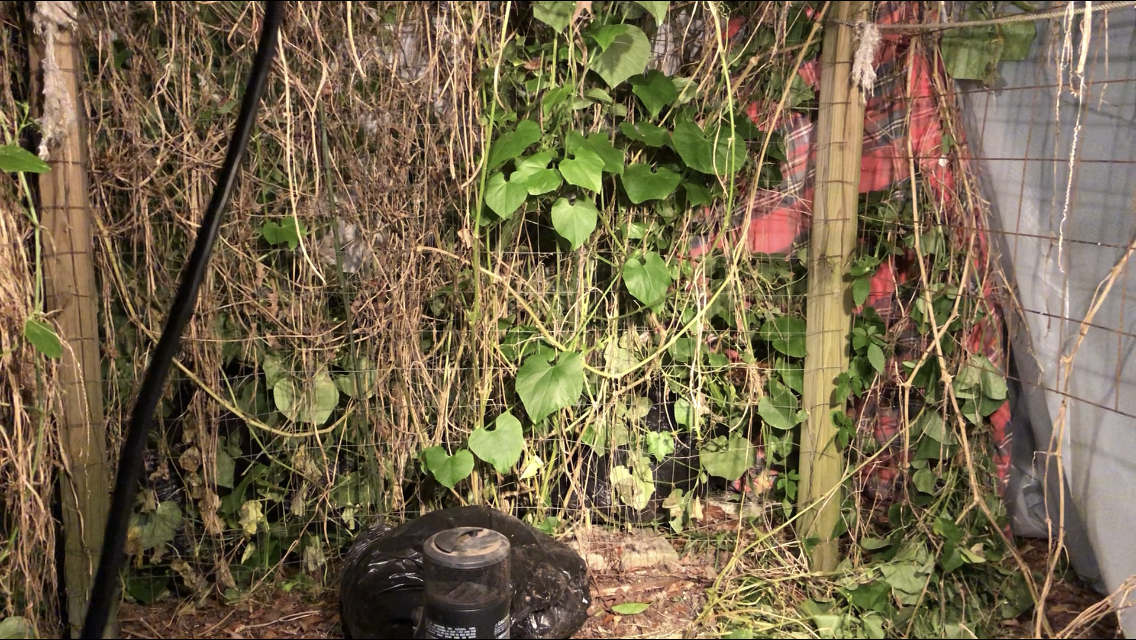
Cover leaves and vines with as much flannel or thick cloth as possible. NOTE: You don’t want the plastic material to directly touch the leaves. There will still be damage without the cloth and only the plastic.
-
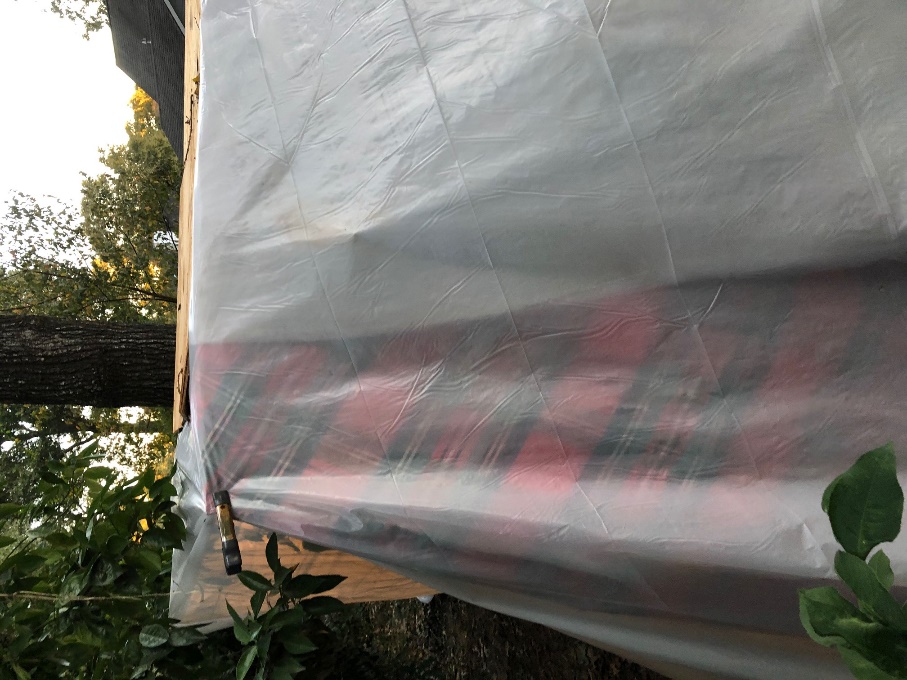
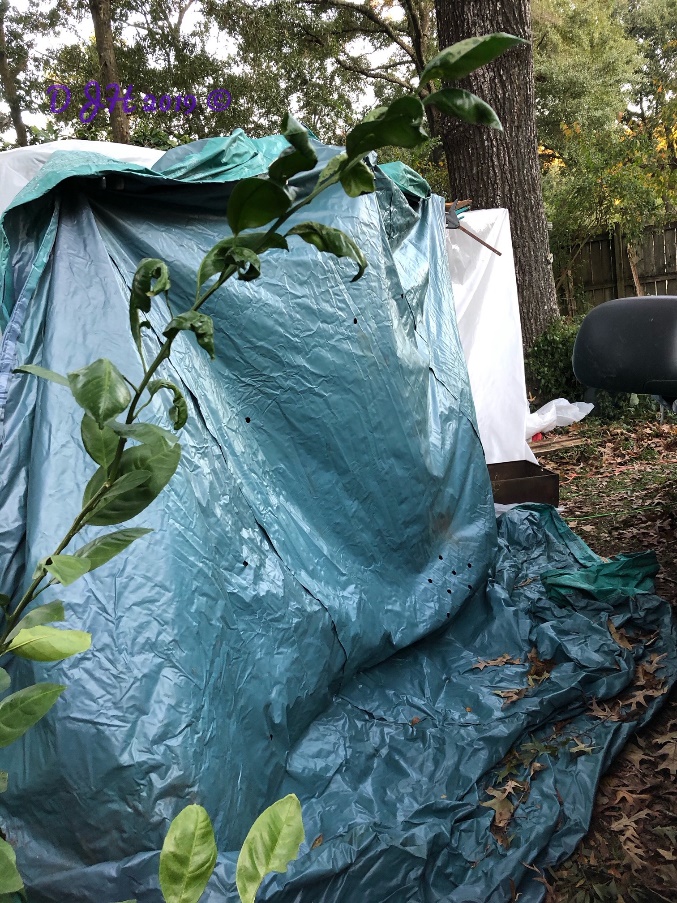
With assistance, take one of the 20 ft. x 25 ft. clear plastic sheeting and cover the cloth allowing about a 2 foot over lay onto the ground to prevent a way for the cold air to “short circuit” the protective barrier. Use as many clamps as possible to secure to the wooden structure.
-
Repeat with other roll of plastic in a similar manner. NOTE: If your structure is bigger, you may need more rolls.
-
Once again with an assistant’s help, cover the structure with the pool cover(s) especially if you didn’t have enough sheets to cover the plants.
-
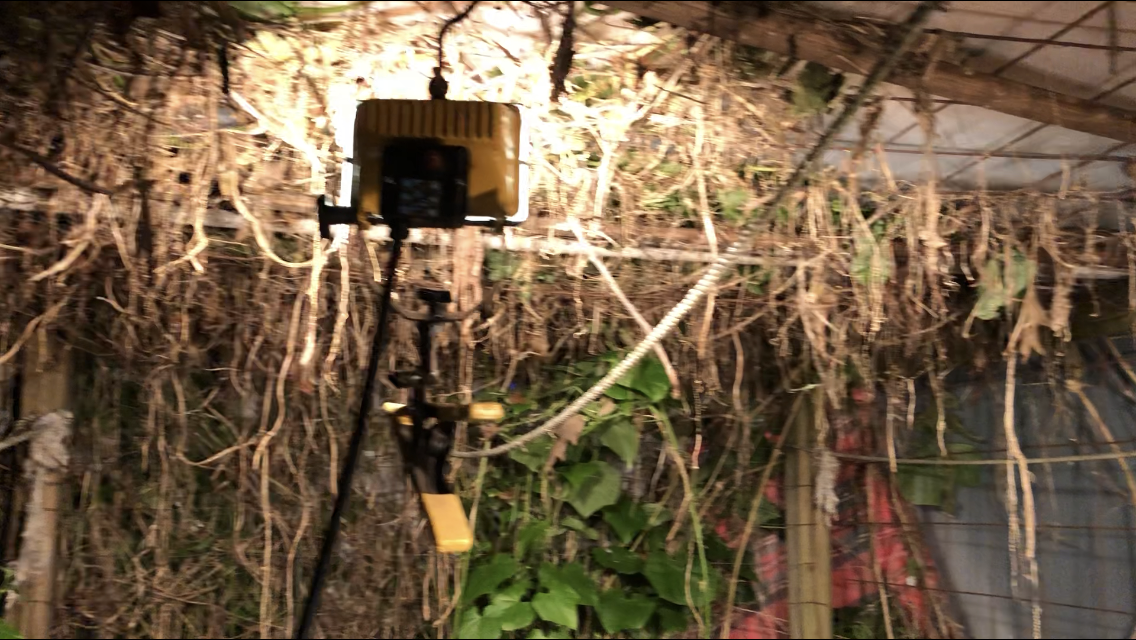
Position heat lamp(s), light(s), and heater. NOTE: Do not place them directly against and cloth, plastic, vegetation, or dried vegetation. This could cause a fire to the structure or heat damage to the plant.
-
Place plywood on top of the structure. This serves three purposes:
-
Added insulation
-
Traps in heat from lamps/heater.
-
Protection from rain. In my case, rain was predicted with the incoming cold front. In years past I learned that the rain will collect on the plastic and cause the barrier to be breached thus thwarting all of your efforts.
-
Finally, place heavy objects such as pots full of dirt, bricks, cinder blocks, etc. around the over hanging plastic to ensure the winds doesn’t gust up underneath. Also secure any openings where the cords going to the lights or plastics overlap with smaller clamps. Try to make the covering as secure and tight to prevent any breaches of cold air.
Day after predicted frost:
-
Once freezing temperatures have passed and outside conditions get in the mid-30s oF, unplug heat sources.
-
Remove as much as covering as possible so as not to damage the plant now that danger of frost and freezing has passed. At a minimum open up enough to allow ventilation of the mirliton vine.
-
Inspect the plant for damage.
-
Water the vine and apply a gallon of a water-soluble vegetable fertilizer.
Final Thoughts
The previously describe method was based off of my 10 years of mirliton growing experience. I feel I was quite fortunate to have escaped any significant damage. I would like to add that if the freezing temperatures would have been predicated for more than 12 hours, I would have been hard pressed to try either methods 2 or 3. While it is nice to extend the growing season for the mirliton, I feel it is more important to preserve the Louisiana heirloom varieties as best as possible. In the case of prolonged freezing weather or after the typical fruiting season has passed (mid December) that means method 1. While it is always a sad day at the Hubbell Household when I have to cut the mirliton vine back, I know that by March I will start to see sprouts returning and if I am lucky will be treated to a small springtime crop.
Thanks for taking to time to read my thoughts and please feel free to contact me at rpcajun2r@gmail.com.
Recent Comments