
by Lance Hill | Feb 15, 2026 | How To, Mirliton, Uncategorized
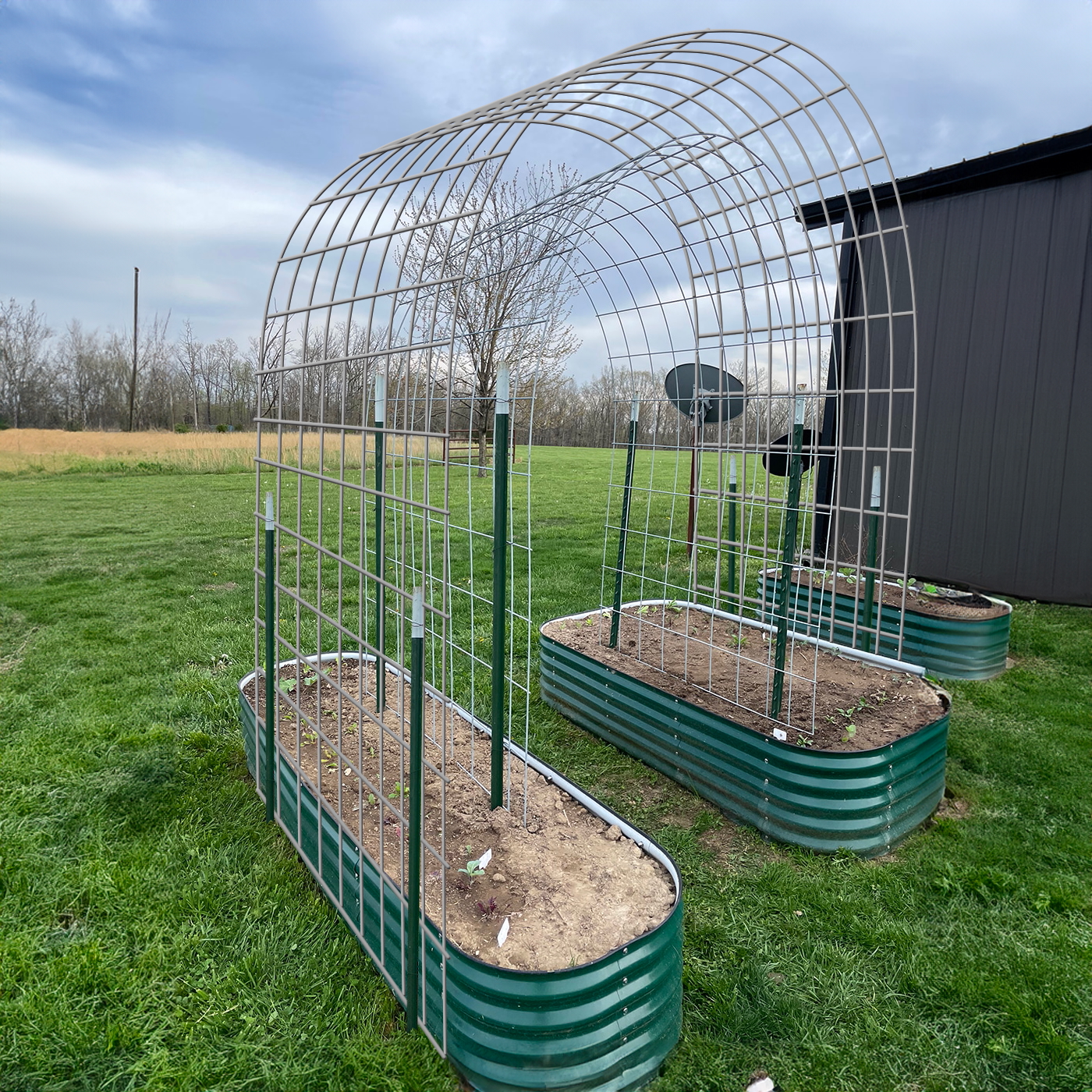
1. A cattle panel trellis with a Vineguard arch installed above it.
Here’s an idea. Design an arched trellis structure to protect mirlitons from excessive rain, solar radiation, and cold. I call it a Vineguard. It can be used to shunt rain away from the beds, shield the vine from intense heat, and protect it from frost.
One structure–three purposes.
We invite you to design and test the concept. (post your ideas and results on the Facebook group)
The concept is simple: An arching structure that you mount above the trellis, similar to the shade cloth structure that many of you already use–but sloped. During periods of heavy rainfall, place a single sheet of clear 6-mil plastic on top to divert the water away from the bed and prevent waterlogging. The single clear sheet will allow sunlight through and air circulation through the sides. In the summertime, replace it with a shade cloth to protect from the sun. In winter, you cover the entire trellis with plastic and enclose the vine to prevent frost damage.
The Vineguard can be built several ways. If you are already using an arched cattle panel, arch another one a few feet above it. If you’re using a horizontal cattle panel trellis, install a PVC pipe arch overhead that slopes to direct rainfall away from the bed (see photo). Or you can construct a similar pitched wooden frame with a pitched roof.
The Vineguard will work for both raised-bed and ground plantings, but it works especially well against waterlogging in tall raised beds. That’s because raised beds provide more control over soil moisture. Tall raised beds are less likely to wick moisture from the rest of the yard when it becomes saturated.
We will be experimenting with Vineguards this year, and I invite all you Mirliton Wizards out there to create designs that provide the simplest, most effective, and least expensive model.
Special thanks to R. Ranjith at the Nesamony Memorial Christian College for his advice on soil hydrology and managing intense rainfall.
Thanks to Buster Avera for the photo of his shade-cloth arch, which can also serve as a rain guard.
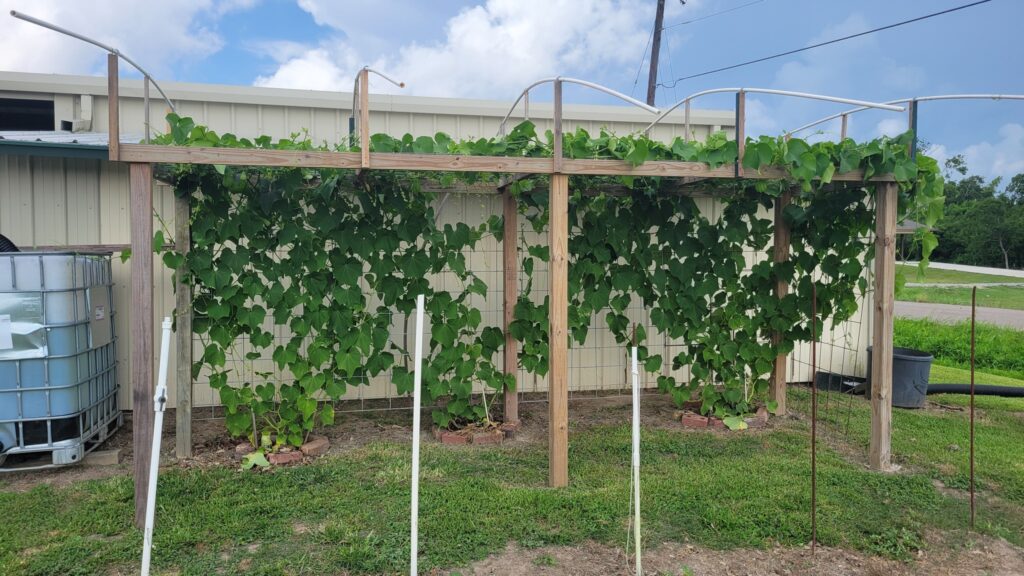
2. Buster Avera’s arched shade cloth structure could also easily double as a rain guard.
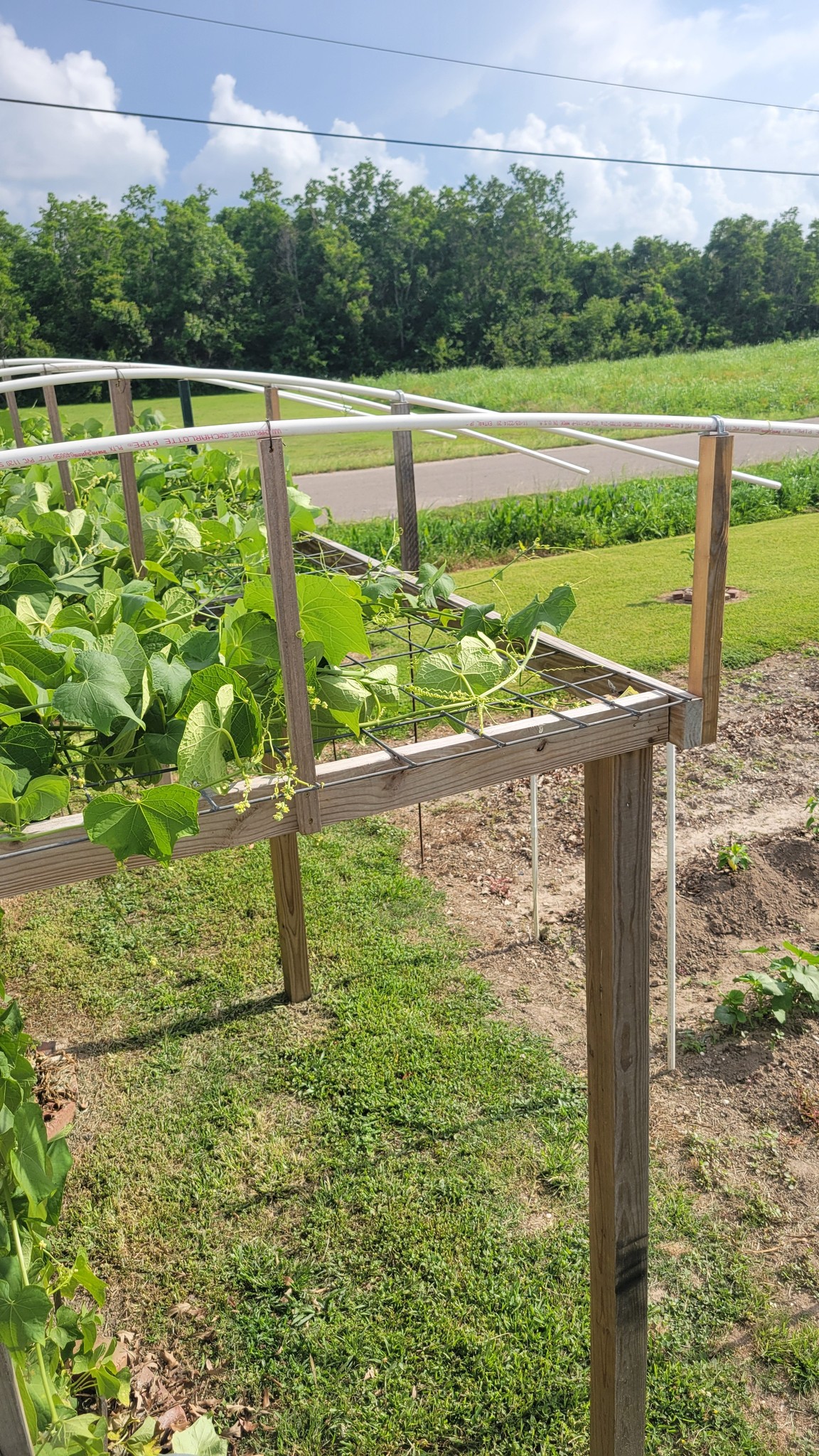
3. Corner view of Buster Avera’s arched shade cloth structure.
by Lance Hill | Dec 19, 2025 | How To, Mirliton, Uncategorized
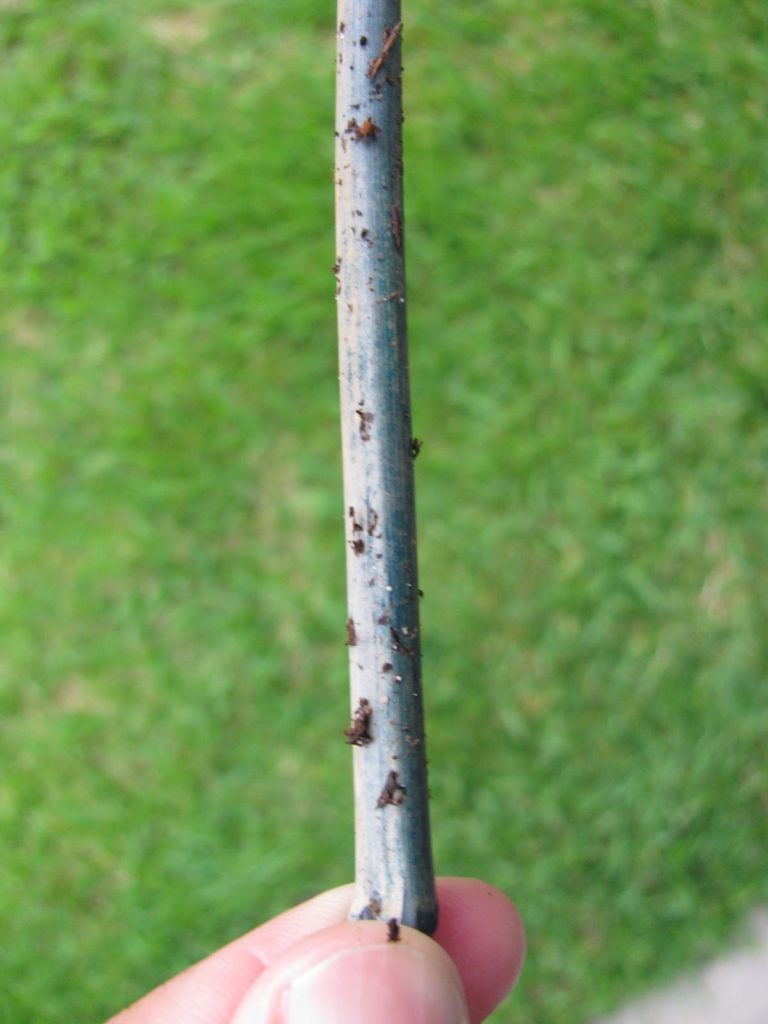
Evenly distributed flecks (crumbs) of soil indicate good soil moisture at all root zone levels. No need to water.
An old tomato stake can be used to measure soil moisture and prevent waterlogging. We generally recommend using a metal soil sampler, but the bamboo stake will work in a pinch. Click on each photo in this link to read the instructions about how to use it. Click here how to use a metal soil sampler.

by Lance Hill | Dec 13, 2025 | How To, Mirliton, Uncategorized
It’s that time of the year when desperate gardeners in search of an Heirloom Mirliton see one at a garden store and snatch it up. But garden stores are notorious for selling mirliton plants without naming the variety or grower. They may well be an authentic Louisiana heirloom variety, but if you buy from a garden store, eBay, or Facebook Marketplace, you are taking a risk. That’s why we advise people to only purchase seed and plants from members of this group because we verify that they are selling authentic, certified heirlooms.
But, if you buy from a garden center, we recommend checking the plant label to confirm it is a named Certified Louisiana Heirloom Variety. All the named varieties are in the post below. If the label says it’s an “unnamed variety”, ask the store owner who sold them the seed. You will also find a list of all the people growing and selling unnamed varieties in the post. If it has no label and the store owner won’t tell you where they got it, turn around and go home.
We are the only organization in the U.S. that certifies heirloom mirlitons, and we do so to ensure people receive a variety that grows well in our region.
See the list of named varieties and the list of people selling unnamed varieties here.
by Lance Hill | Apr 23, 2025 | How To, Mirliton, Uncategorized

The spring harvest of mirlitons has increased in recent years due to advancements in growing techniques. The question is: How do we plant them?
There are two options: container-grown plants or planting them directly in the soil.
First, in either case, the fruit needs to be spouted. This ensures the seed is viable, and a sprouted mirliton means the roots and shoots are ready for soil and will quickly root and grow. You can expedite sprouting by incubating the fruit. If kept warm, they will sprout within 7 to 14 days. Read how to do it here. (We encourage growers to also incubate their sprouts before selling or gifting them, for the same reasons.)
Once the seed has sprouted:
Container planting: Plant it in a 3-gallon container and keep it outside in the shade for the summer. Use a small tomato cage for a trellis. Mirlitons can be easily pruned back to maintain a compact shape if desired. Transplant them into the ground in September, after the danger of the heatwave has passed. Cut it back and mulch it in November, or tent and heat it for the entire winter. Either way, you’ll get a good spring crop. Use the bamboo stake technique for gauging watering needs.
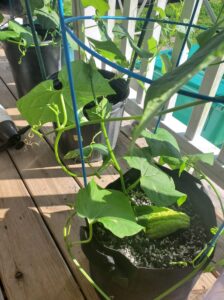
Mirlitons trellised on tomato cages.
Direct planting: This is a little more tricky. You can plant sprouts in May or June, but they will need to be initially shaded from the heat of direct sunlight. Place a milk crate over the plant, covering it with a 40% shade cloth or a piece of cardboard to protect it from the sun’s rays. After it starts to grow foliage, remove the crate and shade. Read about shading it here. Use the standard methods for bed preparation in the quick guide
by Lance Hill | Mar 28, 2024 | How To, Mirliton, Uncategorized
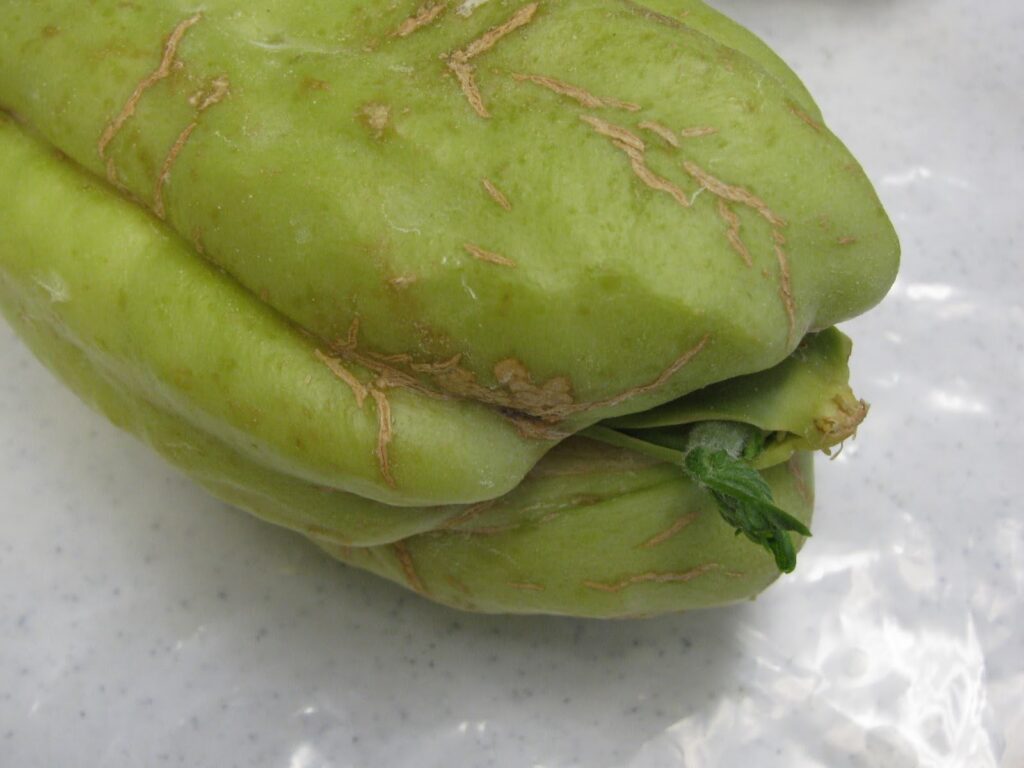
Did you ever notice the brown lines on some mature mirlitons? They’re a fairly reliable way of knowing if the mirliton is a locally grown Louisiana heirloom. Dr. Jorge Cadena Iñiguez, a leading world expert on chayote (mirlitons), recommends we use the term Corking or Cork lines for the brown, cork-like lines that sometimes appear on the skin surface of mirlitons.
Corking in mirlitons is a form of “lignification” and is composed of lignin, the same substance that comprises bark cell walls. It probably develops to protect the fruit from pests and disease. What is important for us is that only mature mirlitons develop cork. So, if someone is selling or gifting a mirliton with cork lines, it was probably locally grown. (Imported chayote is never left on the vine long enough to develop cork lines.)
Not all locally grown mirlitons will have cork lines; they may have been picked fresh off the vine. But if you see corking, it’s another reason to believe it’s an authentic Louisiana Heirloom mirliton.
Recent Comments