by Lance Hill | Dec 19, 2025 | How To, Mirliton, Uncategorized
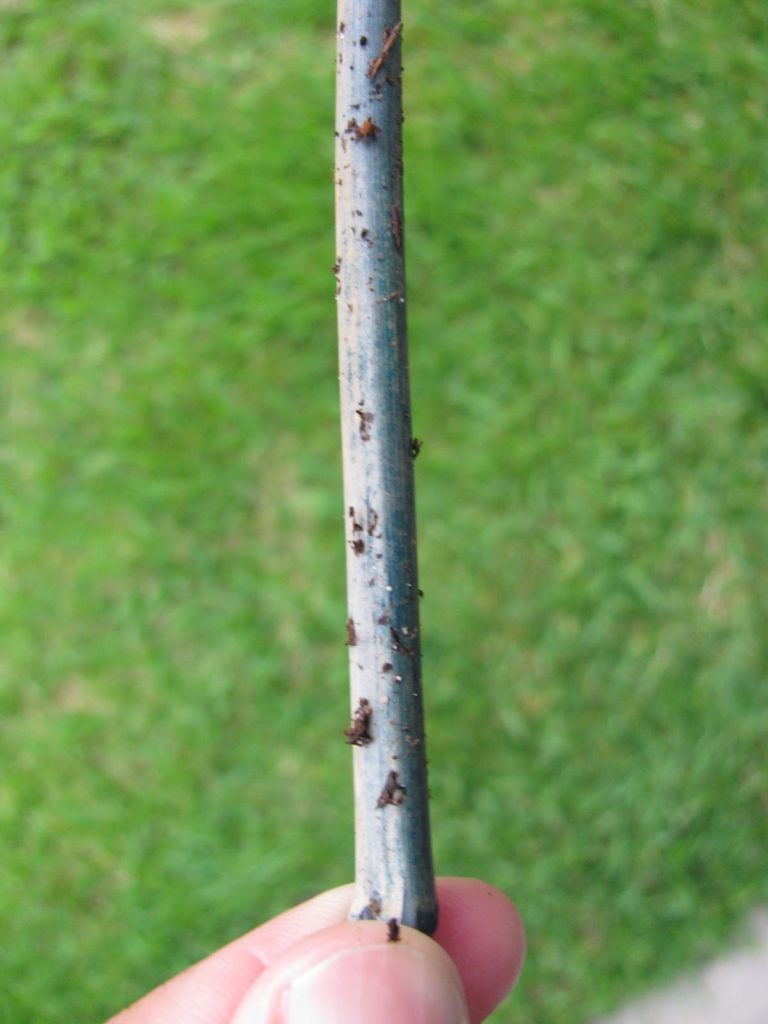
Evenly distributed flecks (crumbs) of soil indicate good soil moisture at all root zone levels. No need to water.
An old tomato stake can be used to measure soil moisture and prevent waterlogging. We generally recommend using a metal soil sampler, but the bamboo stake will work in a pinch. Click on each photo in this link to read the instructions about how to use it. Click here how to use a metal soil sampler.

by Lance Hill | Dec 13, 2025 | How To, Mirliton, Uncategorized
It’s that time of the year when desperate gardeners in search of an Heirloom Mirliton see one at a garden store and snatch it up. But garden stores are notorious for selling mirliton plants without naming the variety or grower. They may well be an authentic Louisiana heirloom variety, but if you buy from a garden store, eBay, or Facebook Marketplace, you are taking a risk. That’s why we advise people to only purchase seed and plants from members of this group because we verify that they are selling authentic, certified heirlooms.
But, if you buy from a garden center, we recommend checking the plant label to confirm it is a named Certified Louisiana Heirloom Variety. All the named varieties are in the post below. If the label says it’s an “unnamed variety”, ask the store owner who sold them the seed. You will also find a list of all the people growing and selling unnamed varieties in the post. If it has no label and the store owner won’t tell you where they got it, turn around and go home.
We are the only organization in the U.S. that certifies heirloom mirlitons, and we do so to ensure people receive a variety that grows well in our region.
See the list of named varieties and the list of people selling unnamed varieties here.
by Lance Hill | Dec 11, 2025 | How To, Mirliton

FOR THOSE LOOKING FOR HEIRLOOM MIRLITONS: PLEASE READ BEFORE POSTING
By David Hubbell
Currently we are receiving excessive requests for “searching for” or “anybody have any” heirloom mirlitons in _____, Louisiana/Mississippi/Alabama posts. From our past history with the page, it has been found these posts easily get lost in the shuffle and are not effective.
As such we are not approving those posts.
We have found the better alternative is to use the “Search” function (magnifying glass icon) to type in terms such as “for sale”, variety name, or a name of a nearby location. At this point you can find a grower close to you and comment on their post and arrange to exchange a direct message.
NOTE: most growers aren’t set up to mail sprouts so you have to be willing to drive or arrange for someone to pick up the sprouts or pots. We expect sprouts to be available from various growers soon and potted vines in January.
Thank you for your understanding and cooperation.
by Lance Hill | Nov 16, 2025 | How To, Mirliton

How can you get a spring harvest from a newly planted mirliton?
Try a little Wizardry–trick the sprout!
We learned last year that people who plant fall sprouts in containers can get a crop as early as the next spring. How did they do that? They made the sprout think it had been planted in the ground for several months.
Here’s how it works:
The reproduction clock on a mirliton starts the day it senses that it’s in soil. Then it will flower and fruit 110 days later.
Do the math.
If you container-plant a sprout in November and then transplant it into the ground in March, it has been in soil for 110 days by the following May. That’s why so many people who container-planted their fall sprouts last year got a small spring crop.
That won’t happen if you use the old method of overwintering your sprouts in paper bags underneath your sink. No soil, no reproductive clock.
An academic scientist did not discover this trick. Mirliton growers discovered it.
Congratulations!
Normally, newly planted mirlitons don’t flower and fruit until the following fall. But if you overwinter them in a container, they will develop a strong rootball to help them thrive once transplanted, and you will likely get a spring harvest as well as a fall harvest.
So, plant that sprout in a 3-gallon plastic or cloth container and get ready for both a spring and a fall crop!
by Lance Hill | Sep 28, 2025 | How To, Mirliton

Ants over the mirliton flower
There’s a popular myth going around that spraying sugar water on your mirliton vines will attract pollinators. Not only won’t sugar water attract pollinators, but it may also damage your vine.
The main pollinators for mirlitons are bees and wasps. Sugar mainly attracts ants, not bees, and ants are poor pollinators for mirlitons. Here’s why:
- Physical characteristics: Unlike bees, ants have smooth bodies that don’t retain and transfer pollen as well as bees.
- Chemical defenses: Many ant species secrete a natural antibiotic on their bodies to protect against bacteria and fungi. This substance can also destroy pollen grains, making successful pollination less likely.
- Nectar robbing: Ants often act as nectar robbers, consuming nectar from the flowers without effectively transferring pollen from the male to the female flower’s reproductive parts.
Moreover, spraying sugar water on mirliton vines can actually damage them by promoting mold and bacterial growth.
If you don’t see bees and wasps, which are effective pollinators, hand-pollinate instead of spraying sugar water on it
Here’s an academic article on chayote (mirliton) pollinators in Mexico
by Lance Hill | Sep 27, 2025 | How To, Mirliton

Extend Your Harvest Season: Protect Your Mirliton Vine on Frost Nights.
The old tradition of cutting back your mirliton vine in November was based on old weather patterns. The weather is changing, and we need to change with it. Intensive summer rains, fall heatwaves, and droughts have delayed flowering and fruiting. As soon as the vines start to fruit, a frost comes along and wipes out the vine. You don’t have to let that happen. With a little preparation, you can beat the frost and harvest fruit all the way through December.
In horticulture, this is known as extending the season, which involves using techniques to prolong the growing season beyond its natural limits. In 2024, several people used tenting and heating methods that allowed vines to produce fruit all the way through December.
All that it takes to protect your vine from an early frost is to temporarily tent your vine with a FEMA tarp or a clear plastic sheet. Secure the bottom of the cover with weights to trap the ground heat and prevent the cover from blowing off. That will trap enough ground heat to prevent most frost damage.
If you use a tarp, you will need to take it down the next day when the temperature warms up–the vine needs sunlight. Clear plastic is much better because you can leave it up for a day or two, but loosen the bottom so that airflow is maintained and the vine doesn’t overheat. Keep the ground below the vine clear of debris and moist to enable the soil to absorb daytime heat, which will radiate into the tent at night.
This tenting technique requires some extra effort — watching the weather forecast and putting up and taking down the cover — but it will extend the harvest season by several weeks.
We can get a damaging frost anytime the temperature is forecast to fall below 42°. So use that as a sign to cover the vine.
Tarps and 6-mil plastic will trap enough ground heat to protect a vine from frost at temperatures in the low 30s. Make sure you seal the bottom with bricks to keep the wind out and the heat in. If you add a small space heater on nights, it will protect the vine at temperatures below 32 degrees, and you can probably harvest fruit in January–and have a vine with a full canopy ready for a spring harvest.
Here are the tools to use to extend the growing season. Buy them now so you will be prepared:
6-mil plastic sheeting
Portable Heater (electric, propane, or heat lamp)
A remote thermometer is not absolutely necessary, but it can be useful for monitoring the temperature inside the tent.
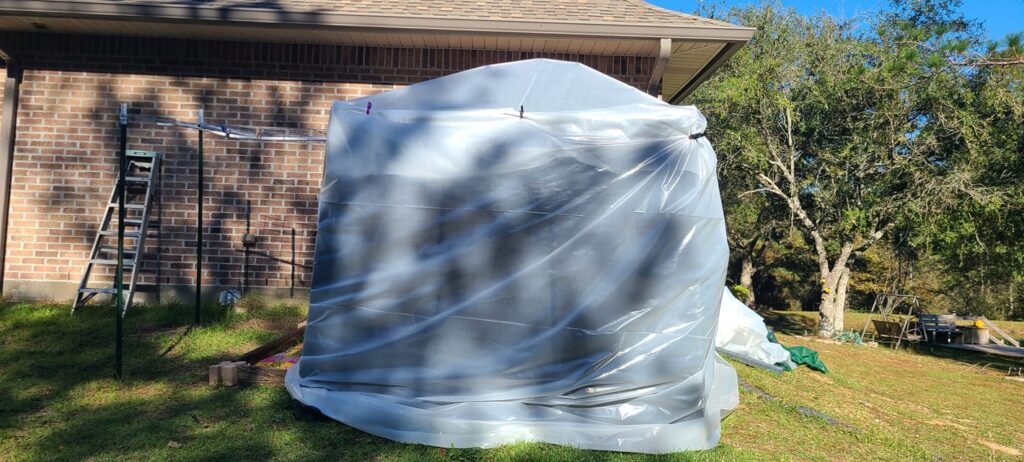
Deb Sepulveda’s tented vine
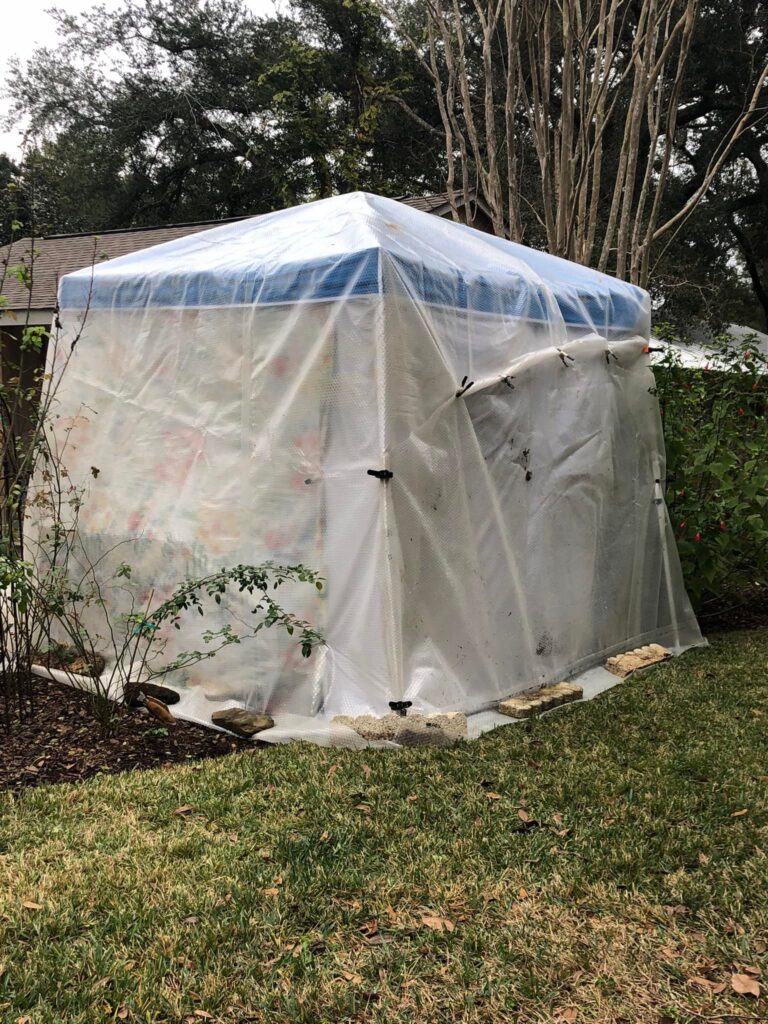
Nancy Wolfe’s camping tent enclosure.
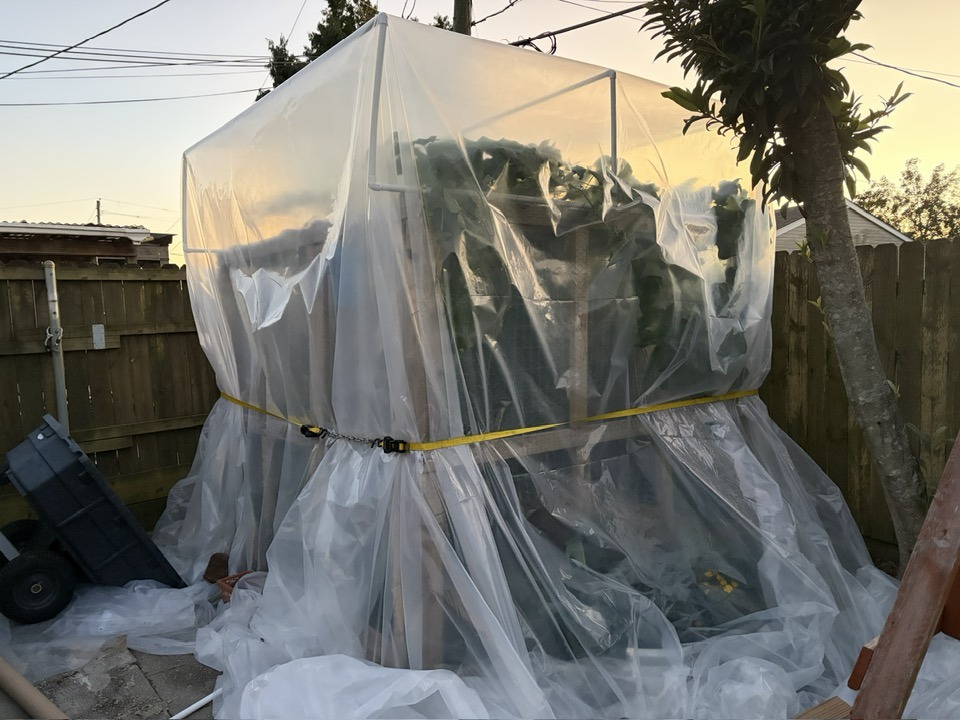
Paige Dyer’s 6-mil plastic tent.
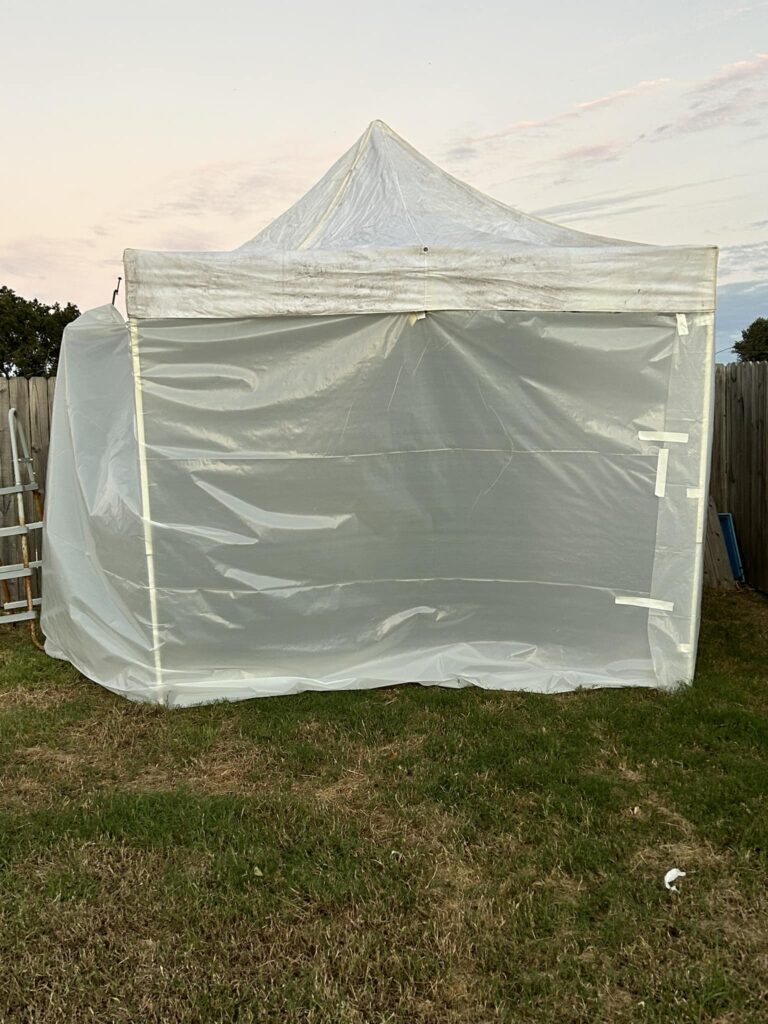
Lee Segrura’s tented vine with pipe frame.
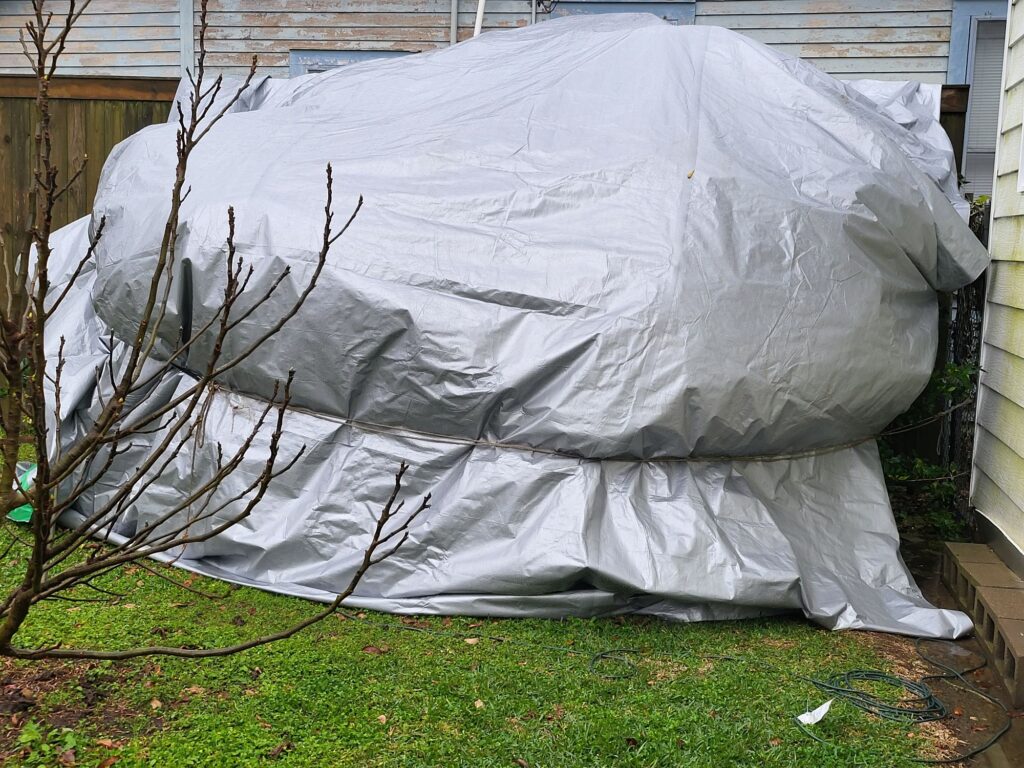
Melissa Minevielle’s tented vine with heater.
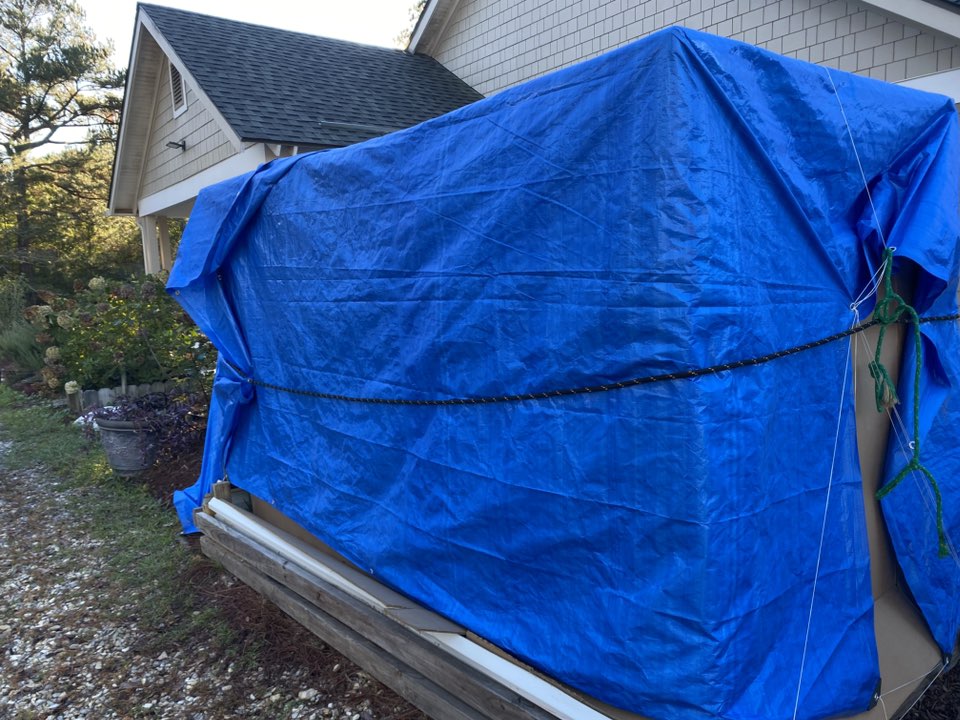
Walter Livaudais’s tarp frost cover.
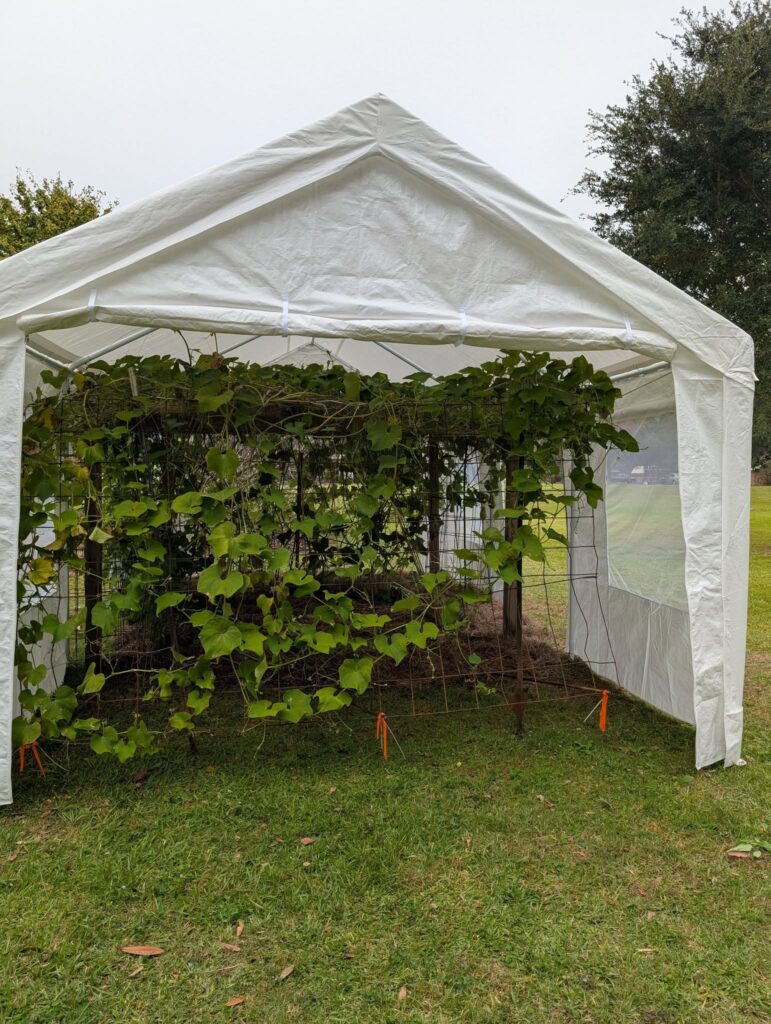
John Dauzat’s Tent of pipe frame. He encloses the entire vine and heats it.
Recent Comments