Alternaria Leaf Spot/Blight in Mirlitons (Chayote)

Alternaria Leaf Spot and Alternaria Leaf Blight are two related plant diseases that affect mirlitons (chayote).  The fungus Alternaria cucumerina causes leaf blight, and the fungus Alternaria alternata f. sp. cucurbitae causes leaf spot. 

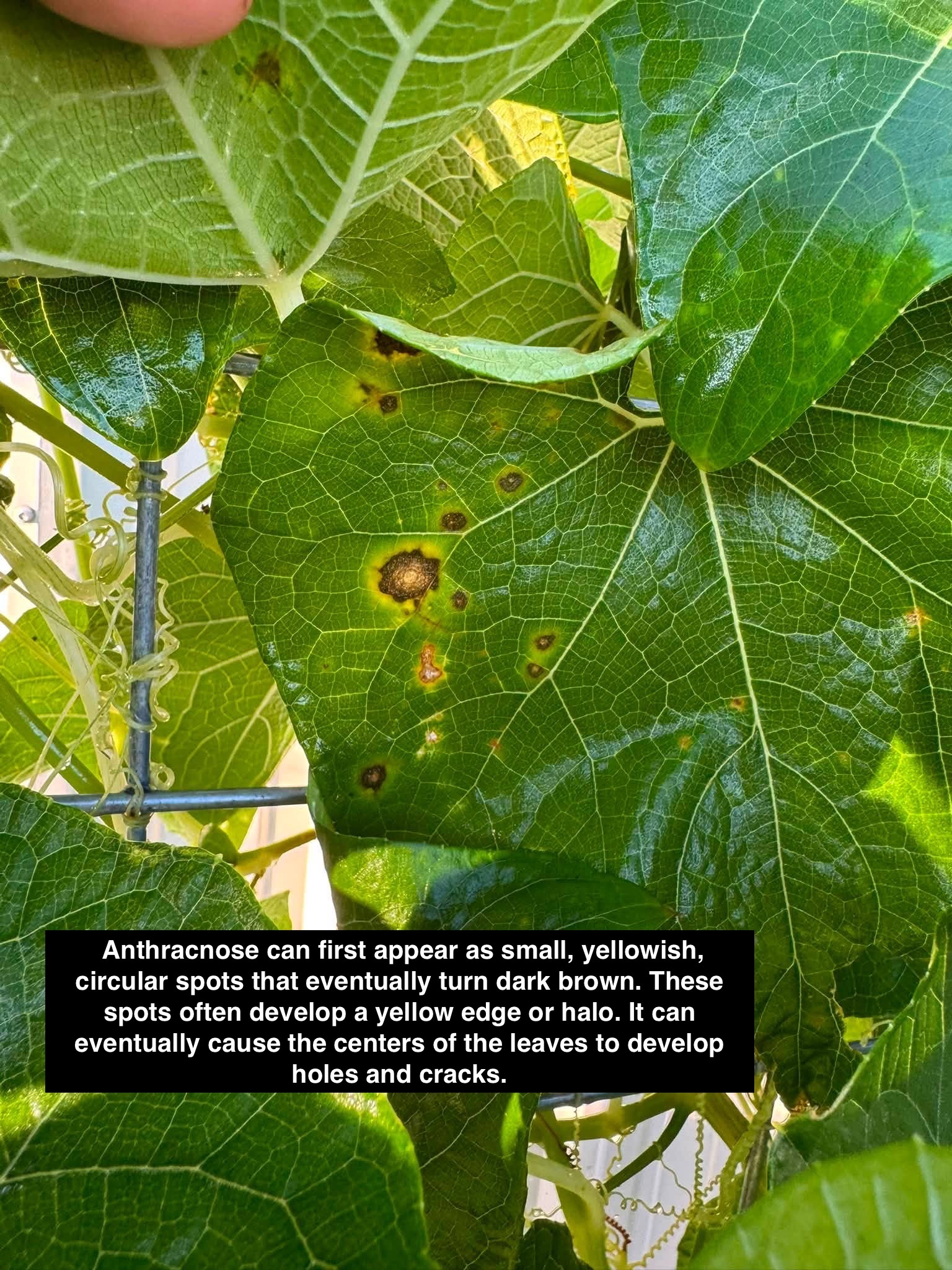
Alternaria leaf spot.

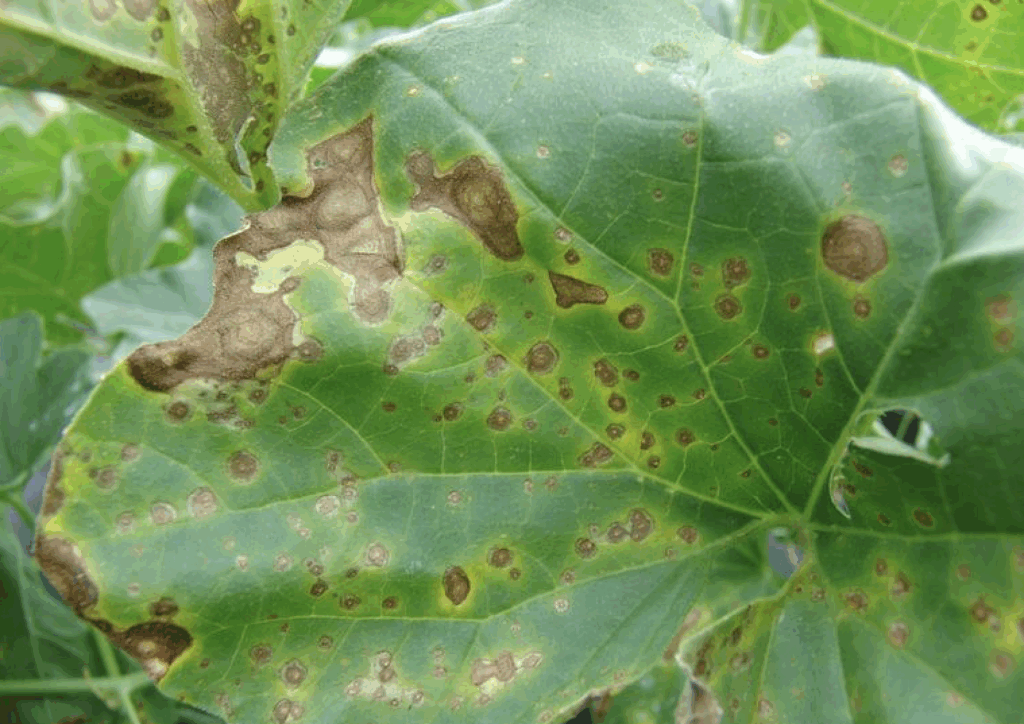
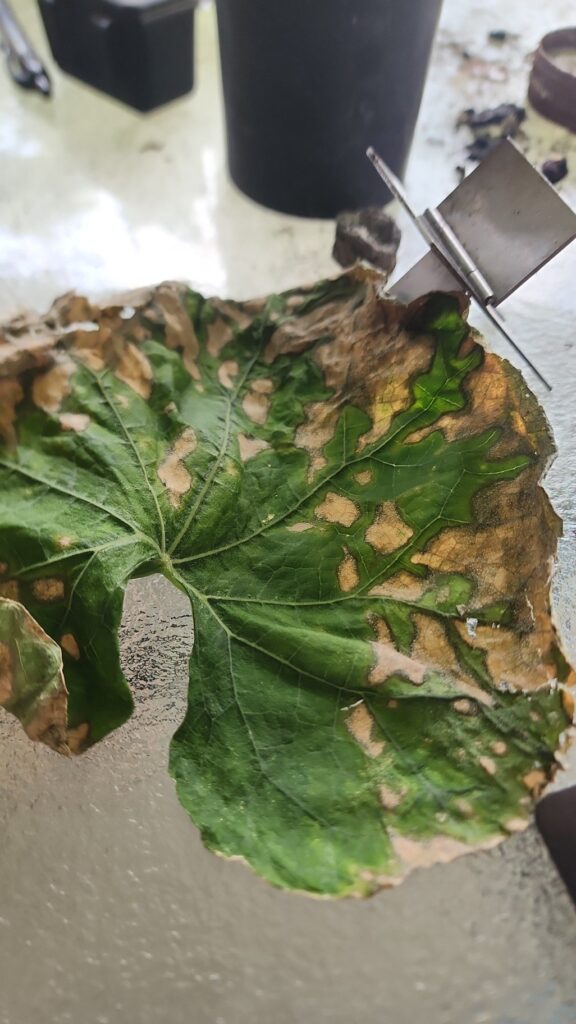
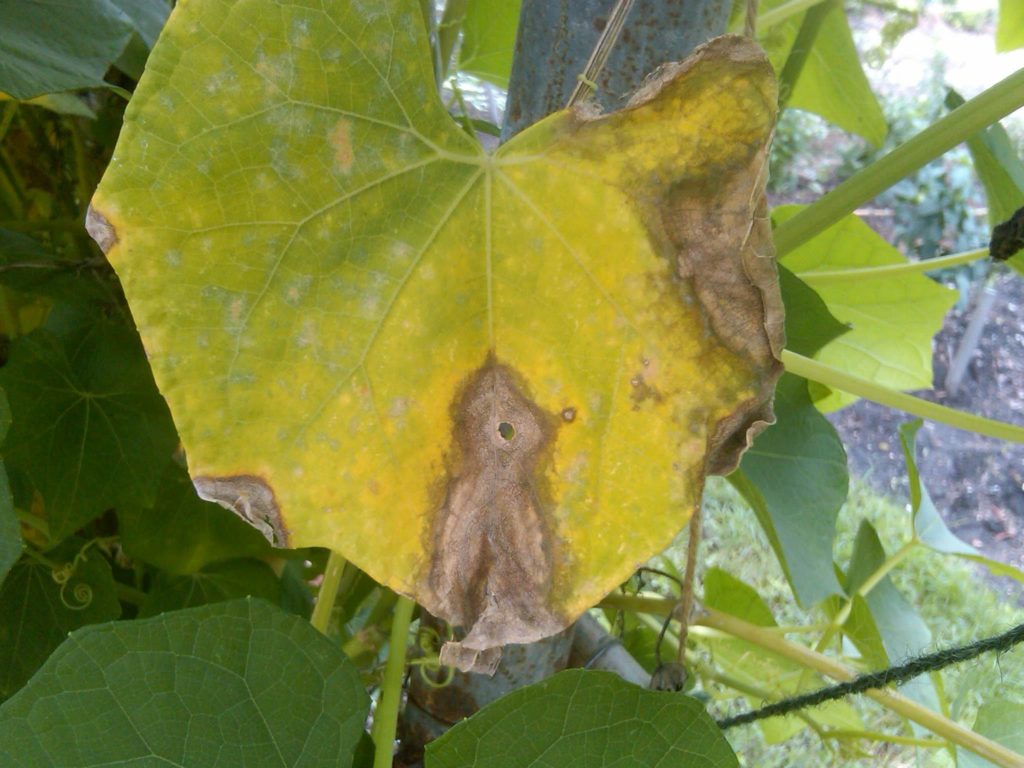
The disease first appears as brown leaf spots with a yellow halo, and as the spots coalesce, they can turn the entire leaf brown (necrotic) and cause it to die. At that stage, it’s referred to as “leaf blight.

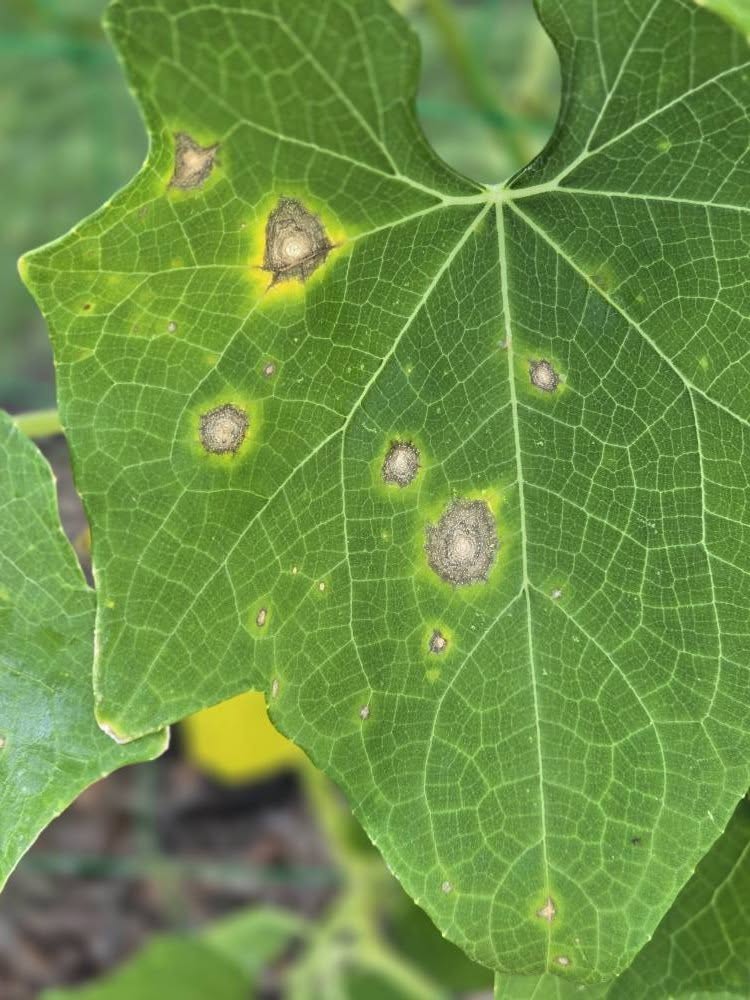
Leaf spot starts with concentric black rings that often have a yellow (chlorotic) halo around margins. Although the disease primarily affects leaves, it also causes brown lesions on the stems.  Unlike anthracnose, alternaria does not penetrate the stems and block the flow of nutrients and moisture, so it won’t kill entire shoots and stems as does anthracnose.  The vine will lose leaves, but usually survives the disease and produces in the fall.

There is no known fungicide that can be used to treat it if the temperatures exceed 88℉.  Copper-based fungicides do prevent and eradicate the fungus, but they are phytotoxic in hot weather and can kill the plant.  There are products like Daconil that coat the plant with a film, making it difficult for the fungus to establish itself on the vine. However, it must be applied from spring forward, and there’s no scientific study that indicates it’s effective as a preventative on mirlitons.  Mirltion.Org is currently experimenting with a new biofungicide to test its effectiveness.

Treatment:

Do not water the vine from the top down–that will only spread the disease, as it also does with anthracnose. Remove all the dead leaves.

Because the disease primarily affects the leaves, the vine will continue to replace dead leaves with new ones. As a result, the vine will normally survive the summer and produce a crop in the fall.

Here is a link to several images of the disease on different crops.

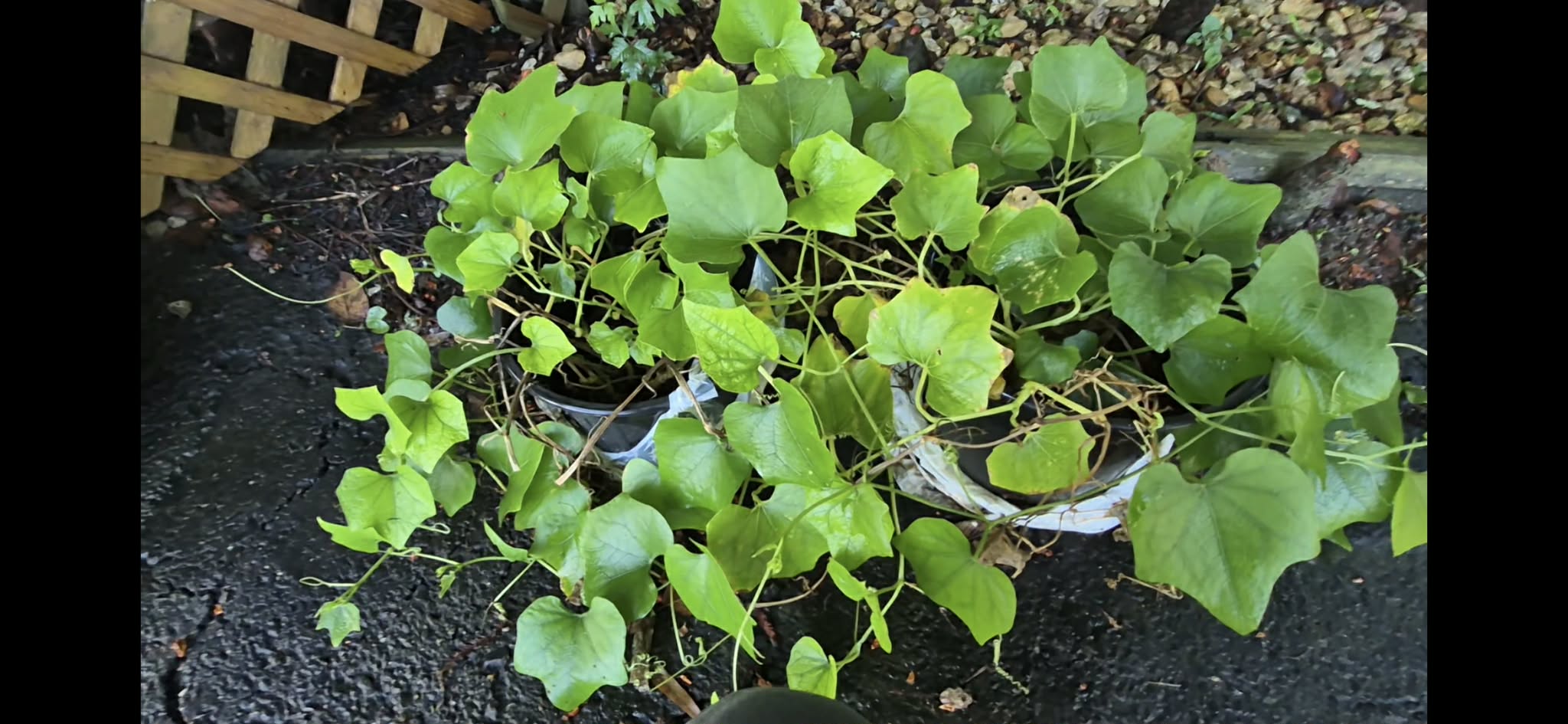
Alternaria Leaf Spot. Early stage.

Advanced alternaria leaf blight. Soon, the entire leaf will become brown.


The Smoking Gun: Diagnosing Anthracnose

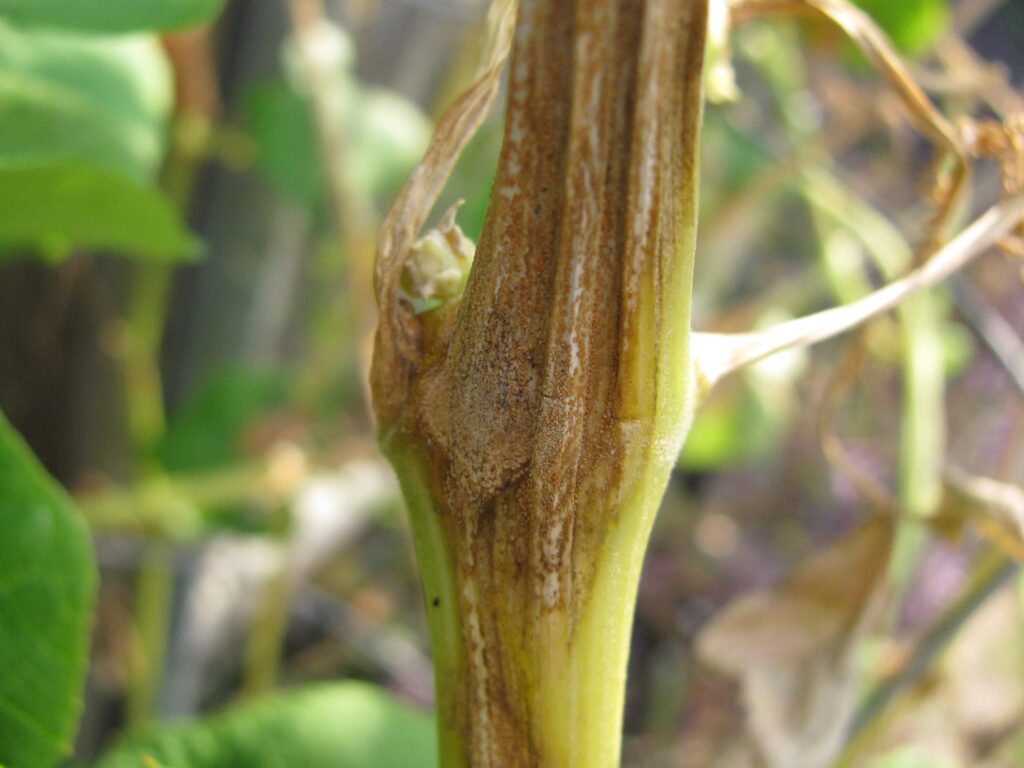
Lesion with salmon-colored fruiting bodies (acervuli)

Tim Dill recently posted a photo of his mirliton vine that looked like it was on its last leg. Many people weighed in on what they thought the problem was: squash vine borers, insufficient fertilizer, drainage, and plant disease. However, the long view of his vine did not provide enough information to diagnose the problem, so we requested close-ups of the vine, and Tim delivered.

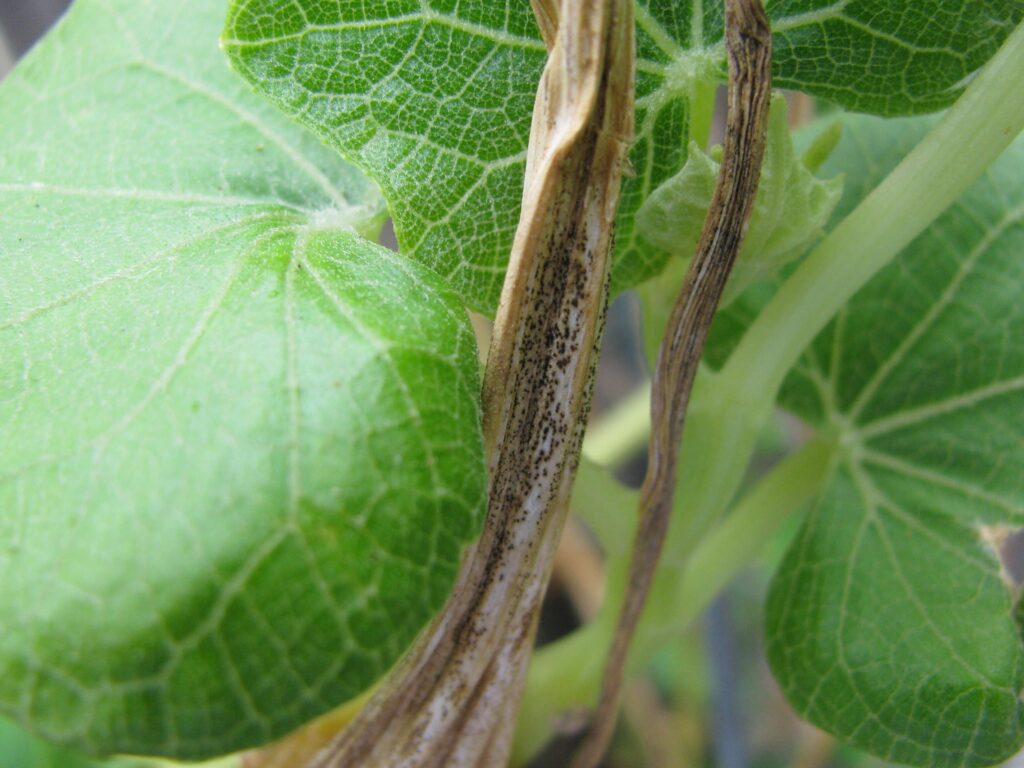
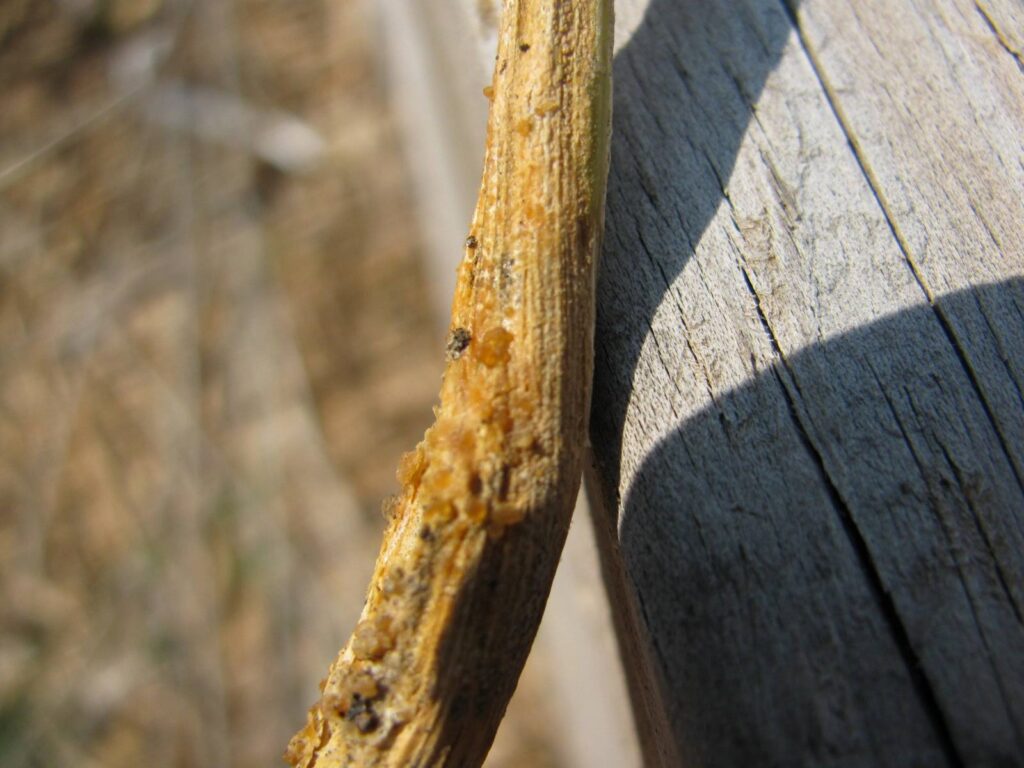
The photo clearly shows the early stages of anthracnose. This is what is known as a lesion, and the black spots are referred to as “fruiting bodies” (acervuli), which contain spores that spread the disease. The fruiting bodies start as salmon-colored dots and then turn black as the disease progresses. Additionally, small gummy drops of exudate will eventually appear, and the stem will split open. The leaves will have yellow wedges, and in the final stages, they will develop “rifle shot holes” in the brown, dead tissue. That’s because the fungal pathogen that causes anthracnose is necrotrophic, meaning that after it kills the plant cells, it can feed on dead tissue as well.

Tim’s problem was not caused by too much or too little water, too much sun, or insufficient fertilizer. And all the remedies for those causes would not have helped and probably would have done more harm.

So the first question we should always ask is for good close-up photos of the leaves and stems. Most smartphones can take a photo that can be magnified if needed. Videos are better than nothing, but only photos permit a close examination of the leaf and stem symptoms.

You can learn how to diagnose anthracnose for yourself and others by viewing this photo album of anthracnose signs (click on the first photo in the series to enlarge the images).

https://www.mirliton.org/photo/anthracnose-damage-to-mirliton-plant-parts/

We used to never see anthracnose this early in the season. However, the periodic rains and warm nights create a perfect storm for the fungus; it thrives in the nighttime heat, and then rainfall ruptures the fruiting body, splashing the spores throughout the plant during the day (or top-down watering).

There’s no cure for anthracnose once it takes hold. Daconil is often prescribed for anthracnose, but it is not a fungicide and can’t kill the fungus that causes anthracnose; it simply coats the plant with a film that makes it more difficult for the fungus to attach to the stem and leaves. It’s a preventative, not an eradicant, and would have to be applied from the time the vine was planted and throughout the season.

We are testing a new biofungicide, Timorex Act, and will report on our findings when the trials are complete.

The good news is that normally, the vine will recover from an attack and produce in the fall–and will have acquired natural resistance to the disease.


Advanced lesion with black fruting bodies (acervuli)

Lesion with salmon-colored fruiting bodies (acervuli)

Gummy edudate.

Perfect example of anthracnose wedge-shaped sign on leaves–including the “rifle shot” hole. The fungus first feeds on living tissue, and then lives on dead tissue.

Alternaria Leaf Blight in Mirlitons

Alternaria Leaf Blight

Alternaria leaf blight in mirlitons, caused by the fungus Alternaria alternata, occasionally occurs in the U.S.A. The disease manifests as yellow, irregular spots that appear on leaves, often with a brown center. It’s often a secondary infection when the vine becomes stressed and weakened by excessive rains. It frequently affects new mirlitons in the early stages of growth. 

Since it primarily affects leaves, it is not lethal and the vine will survive, but it can reduce the canopy. 

It’s a waterborne fungus, so rain and overhead watering will spread it.  Avoid overhead irrigation and remove and destroy infected plant material promptly to reduce the source of inoculum.


Eat’em–Just Don’t Plant’em! Why Grocery Store Mirlitons (chayote) Shouldn’t Be Used as Seed.

Eat’em–Just Don’t Plant’em! Why Grocery Store Mirlitons (chayote) Shouldn’t Be Used as Seed.

By Lance Hill and Kevin De Santiago

Many people want to grow their own mirliton (chayote) vine but find it difficult to find locally grown mirlitons. Because of their frustration, some people try to grow mirlitons by purchasing and planting one from the produce department in a grocery store. There are two reasons why this is not ideal. 

First, all mirlitons sold in grocery stores and markets are imported varieties. They are grown and imported only as produce, just like all the other vegetables that you purchase. The USDA tried to grow these varieties a century ago and concluded that high-altitude plants have tremendous difficulty growing in low altitudes. This is because these varieties have adapted to the altitude, pests, diseases,  and ultraviolet exposure in their native environment. The patterns of light and temperatures influence when and if the variety will flower and fruit. Moreover, an imported variety may not have acquired resistance to diseases or disease pressures that occur in its new environment. 

All imported mirlitons will sprout and send up a shoot, but most imported mirlitons will not flower and set fruit. We have received reports of this problem from hundreds of growers over the years, and I had the same disappointing experience when I tried to use imported mirlitons to grow a vine.  

Second, even if you could grow an imported mirliton, you may introduce new diseases that have devastated mirlitons elsewhere. Local mirliton varieties that are adapted to conditions in the U.S. have been grown for over two centuries in Louisiana and California. These were originally brought from low-altitude coastal areas in the Caribbean and Central America. In horticulture, these local varieties are called landraces— cultivars that growers have improved by traditional agricultural methods. The Louisiana heirloom mirliton is the U.S. mirliton landrace that has adapted to the regional climate, diseases, and pests through generations of trial and error. They are a reliable and healthy variety. 

But they are vulnerable to new diseases from imported chayote sold as produce in grocery stores. Although no new mirliton diseases have been discovered in the U.S.A., it’s a widespread problem with other imported seeds, such as Tomato brown rugose fruit virus (ToBRFV) in tomatoes.  The recently discovered Chayote Mosaic Virus (CMV) can be transmitted inside infected mirliton fruit without any sign of infection (seedborne and sapborne diseases).  If you purchase infected imported mirlitons that carry the disease and then plant them, you may spread the disease to the Louisiana heirloom mirlitons. There is no cure for CMV, and you can potentially destroy all U.S. varieties.  Read about CMV here.

In Brazil, scientists have recently discovered new fungi that cause anthracnose disease in mirlitons–also another soilborne and sapborne disease that can be spread through imported chayote. Read about it here.

To summarize: Imported mirlitons may not grow and fruit in the U.S., and if they do, they may have disastrous consequences for U.S. mirlitons landraces. It is best to wait until you find one of the Certified Louisiana Heirloom Mirlitons available on Mirliton.Org.

Where Should I Plant My Mirliton to Get the Ideal Amount of Sunlight?

Where Should I Plant My Mirliton to Get the Ideal Amount of Sunlight?

The answer: Just about anywhere.

Mirlitons can be initially planted in partial shade or full sun. If planted in a well-shaded area, they will naturally send out shoots to the greatest amount of light. They are “sunseekers” in the sense that they will always grow from shade to full light. You can plant them in partial shade, and as long as the trellis guides them toward more sun, they will follow that. 

They can also be planted in full sun. But under the new weather conditions of heat domes and intense heatwaves, we have found that it is absolutely necessary to use a 40% shade cloth, especially when the temperature is excessively high — 95℉ for several successive days. That is why we advise growers to always build a structure along with the trellis where they can quickly and easily mount a shade cloth.

Many growers use shade cloths throughout the growing season.  While I don’t think it’s necessary to use them when the temperatures are in the low 90s, it may not hurt. But there are two downsides to using a shade cloth too early in the season. (1) It reduces the amount of light necessary for photosynthesis, which provides the vine with energy and drives new growth–particularly for a young vine.  And (2) shade cloths reduce the amount of ultraviolet light, which is a natural fungicide and helps combat fungal diseases. 

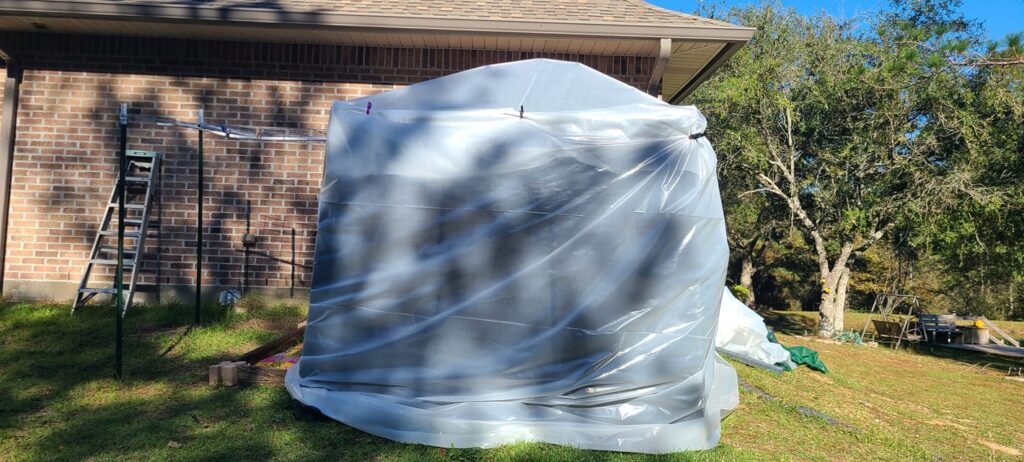
Bottom Line: You can start your mirliton in almost any available lighting. Just plan to protect it from too much light. Build a structure along with the trellis so they can quickly and easily mount a shade cloth, which can also double as a rain guard during excessive rainfall.


Angela Joan’s shade cloth draped over the vine, supported by poles.

Thumbnail Test for Mirliton Ripeness

Tedra Erikson Stanley performing the thumbnail test.

Mirlitons are typically ready to harvest when they reach approximately 8 ounces, although size and weight can vary. The most reliable method for testing for harvesting is the thumbnail test.

Start by pushing on the fruit skin with your thumbnail. If the fruit skin dents or even seeps a little moisture, the fruit is still immature and will be too watery. If it is firm and does not dent, you are ready to pick. The old growers used to say, “My mirlitons are hard now and ready to pick.”

See Tedra Stanley’s video on how to do the test here.

At the hard stage, they are also mature enough to sprout and or use as seed. But once they begin to sprout, they’re too tough to cook.

How Can I Plant Spring Mirlitons?

The spring harvest of mirlitons has increased in recent years due to advancements in growing techniques. The question is: How do we plant them?

There are two options: container-grown plants or planting them directly in the soil.  

First, in either case, the fruit needs to be spouted. This ensures the seed is viable, and a sprouted mirliton means the roots and shoots are ready for soil and will quickly root and grow. You can expedite sprouting by incubating the fruit.  If kept warm, they will sprout within 7 to 14 days. Read how to do it here. (We encourage growers to also incubate their sprouts before selling or gifting them, for the same reasons.) 

Once the seed has sprouted:

Container planting:  Plant it in a 3-gallon container and keep it outside in the shade for the summer. Use a small tomato cage for a trellis.  Mirlitons can be easily pruned back to maintain a compact shape if desired.  Transplant them into the ground in September, after the danger of the heatwave has passed. Cut it back and mulch it in November, or tent and heat it for the entire winter.  Either way, you’ll get a good spring crop. Use the bamboo stake technique for gauging watering needs.

Mirlitons trellised on tomato cages.


Direct planting: This is a little more tricky. You can plant sprouts in May or June, but they will need to be initially shaded from the heat of direct sunlight.  Place a milk crate over the plant, covering it with a 40% shade cloth or a piece of cardboard to protect it from the sun’s rays. After it starts to grow foliage, remove the crate and shade. Read about shading it here. Use the standard methods for bed preparation in the quick guide

How to test compost and manure for herbicide residue

Many gardeners attribute plant failure to manure or compost that may have been contaminated with Grazon or other herbicides.  A professional laboratory test is too expensive for the average gardener, but there is a simple, inexpensive test you can do at home.  You can do it before using the compost or manure, or after you have already planted:


Managing Spider Mites and Mealybugs

Female red spider mite.


Mealybug and nest.


Spider mites and mealybugs tend to plague mirlitons that are planted in containers, especially when kept indoors during overwintering. 

You can manage mealybugs by soaking a cotton swab with 70% isopropyl rubbing alcohol and dabbing it directly on the bugs. Alternatively, you can dilute the alcohol with water at a 1:10 ratio (one part alcohol to 10 parts water) and spray it on both the top and bottom of the leaves.  (Sevin claims to control mealybugs, but there’s evidence that it is not as effective as alcohol.)  If you are spraying the solution on an established plant outside, do a patch test first to ensure that the alcohol won’t harm the leaves (spray only a few leaves and then check the next day).  Additionally, spray the plant in the evening.

If the mites are on a seed, sprout, or container plant that you are keeping inside or not in direct sun, you can dust it with “flowable sulfur.”  It’s very effective, but it can damage the sprout/plant if applied outside in direct sunlight or heat, so be cautious with it. 

Mites can be controlled with the same alcohol spray, neem oil, or insecticidal soap (follow the instructions on the label).    


Sprays will only kill the living mites, so you may need to repeat the spraying process weekly for a few weeks.

Red spider mite clusters.


Click here for a short fact sheet on how to identify signs of mites.

Click here for a fact sheet on mealybugs.

Secure Your Vine From Winds and Hurricanes With Netting

Secure Your Vine From Winds and Hurricanes With Netting

Strong winds and hurricanes can shred a mirliton vine and stress it enough to delay or even stop flowering. 

Michelle Impastato Glore discovered an ingenious way to inexpensively and quickly protect the vine from winds: netting. It’s the most effective way to protect your vines from wind damage–even in hurricane winds.

With young plants, she sandwiches them between two layers of netting and secures it to the trellis on both sides with clips.  She pushes the tips of the clips through both sides so they hold the vine snugly but not so tightly that it breaks the stems. 

To protect her large, mature vine, she wraps the entire vine with netting on both sides and secures it with velcro and or plastic tape.

Both vines survived gusts of 20 mph, and the large vine should have sustained gusts up to 70 mph.

The netting comes in many sizes at Tractor Supply and other stores, including this large roll for big vines.

Watch the video here of Michelle’s vine after 70 mph gusts. The vine had grown through the netting, so she had to cut holes in it before removing it. 

New plant sandwiched in with netting clipped to trellis.

Netting wrapped around large vine.


Garden netting.

Recent Posts

Alternaria Leaf Spot/Blight in Mirlitons (Chayote)

Alternaria Leaf Spot and Alternaria Leaf Blight are two related plant diseases that affect mirlitons (chayote).  The fungus Alternaria cucumerina causes leaf blight, and the fungus Alternaria alternata f. sp. cucurbitae causes leaf spot.  The disease...

The Smoking Gun: Diagnosing Anthracnose

Tim Dill recently posted a photo of his mirliton vine that looked like it was on its last leg. Many people weighed in on what they thought the problem was: squash vine borers, insufficient fertilizer, drainage, and plant disease. However, the long view of his vine did...

Alternaria Leaf Blight in Mirlitons

Alternaria leaf blight in mirlitons, caused by the fungus Alternaria alternata, occasionally occurs in the U.S.A. The disease manifests as yellow, irregular spots that appear on leaves, often with a brown center. It’s often a secondary infection when the vine becomes...

Where Should I Plant My Mirliton to Get the Ideal Amount of Sunlight?

Where Should I Plant My Mirliton to Get the Ideal Amount of Sunlight? The answer: Just about anywhere. Mirlitons can be initially planted in partial shade or full sun. If planted in a well-shaded area, they will naturally send out shoots to the greatest amount of...

Thumbnail Test for Mirliton Ripeness

Mirlitons are typically ready to harvest when they reach approximately 8 ounces, although size and weight can vary. The most reliable method for testing for harvesting is the thumbnail test. Start by pushing on the fruit skin with your thumbnail. If the fruit skin...

How Can I Plant Spring Mirlitons?

The spring harvest of mirlitons has increased in recent years due to advancements in growing techniques. The question is: How do we plant them? There are two options: container-grown plants or planting them directly in the soil.   First, in either case, the...

How to test compost and manure for herbicide residue

Many gardeners attribute plant failure to manure or compost that may have been contaminated with Grazon or other herbicides.  A professional laboratory test is too expensive for the average gardener, but there is a simple, inexpensive test you can do at home.  You can...

Managing Spider Mites and Mealybugs

          Spider mites and mealybugs tend to plague mirlitons that are planted in containers, especially when kept indoors during overwintering.  You can manage mealybugs by soaking a cotton swab with 70% isopropyl rubbing alcohol and...

Secure Your Vine From Winds and Hurricanes With Netting

Strong winds and hurricanes can shred a mirliton vine and stress it enough to delay or even stop flowering.  Michelle Impastato Glore discovered an ingenious way to inexpensively and quickly protect the vine from winds: netting. It's the most effective way to...