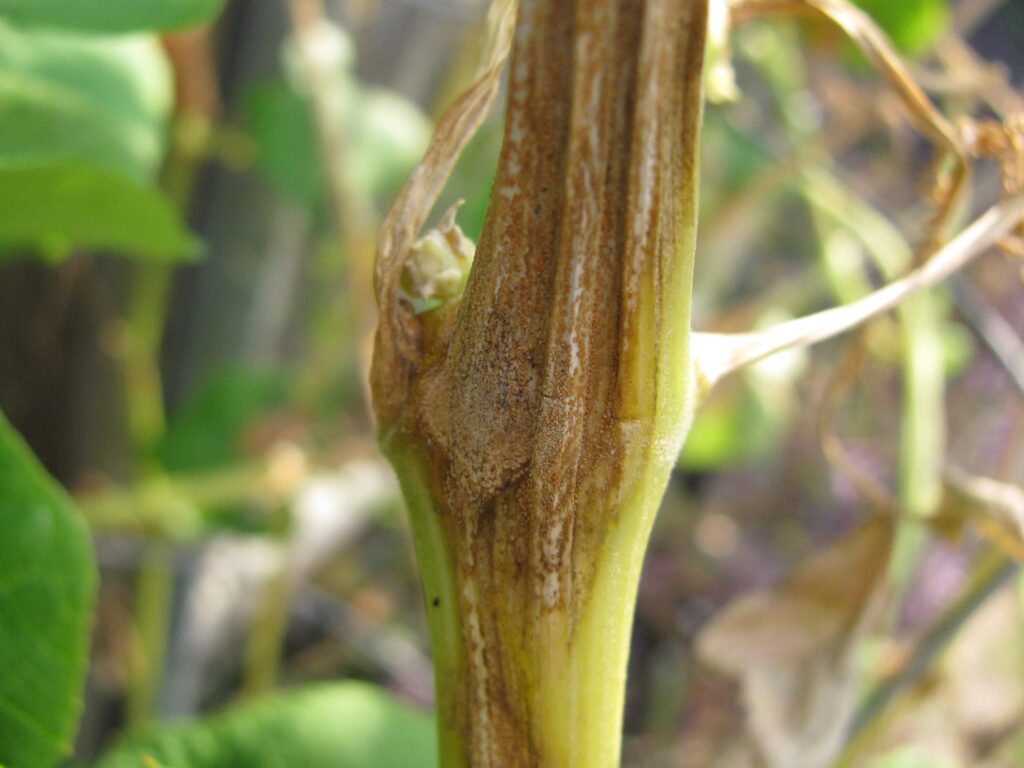
Lesion with salmon-colored fruiting bodies (acervuli)
Tim Dill recently posted a photo of his mirliton vine that looked like it was on its last leg. Many people weighed in on what they thought the problem was: squash vine borers, insufficient fertilizer, drainage, and plant disease. However, the long view of his vine did not provide enough information to diagnose the problem, so we requested close-ups of the vine, and Tim delivered.
The photo clearly shows the early stages of anthracnose. This is what is known as a lesion, and the black spots are referred to as “fruiting bodies” (acervuli), which contain spores that spread the disease. The fruiting bodies start as salmon-colored dots and then turn black as the disease progresses. Additionally, small gummy drops of exudate will eventually appear, and the stem will split open. The leaves will have yellow wedges, and in the final stages, they will develop “rifle shot holes” in the brown, dead tissue. That’s because the fungal pathogen that causes anthracnose is necrotrophic, meaning that after it kills the plant cells, it can feed on dead tissue as well.
Tim’s problem was not caused by too much or too little water, too much sun, or insufficient fertilizer. And all the remedies for those causes would not have helped and probably would have done more harm.
So the first question we should always ask is for good close-up photos of the leaves and stems. Most smartphones can take a photo that can be magnified if needed. Videos are better than nothing, but only photos permit a close examination of the leaf and stem symptoms.
You can learn how to diagnose anthracnose for yourself and others by viewing this photo album of anthracnose signs (click on the first photo in the series to enlarge the images).
https://www.mirliton.org/photo/anthracnose-damage-to-mirliton-plant-parts/
We used to never see anthracnose this early in the season. However, the periodic rains and warm nights create a perfect storm for the fungus; it thrives in the nighttime heat, and then rainfall ruptures the fruiting body, splashing the spores throughout the plant during the day (or top-down watering).
There’s no cure for anthracnose once it takes hold. Daconil is often prescribed for anthracnose, but it is not a fungicide and can’t kill the fungus that causes anthracnose; it simply coats the plant with a film that makes it more difficult for the fungus to attach to the stem and leaves. It’s a preventative, not an eradicant, and would have to be applied from the time the vine was planted and throughout the season.
We are testing a new biofungicide, Timorex Act, and will report on our findings when the trials are complete.
The good news is that normally, the vine will recover from an attack and produce in the fall–and will have acquired natural resistance to the disease.
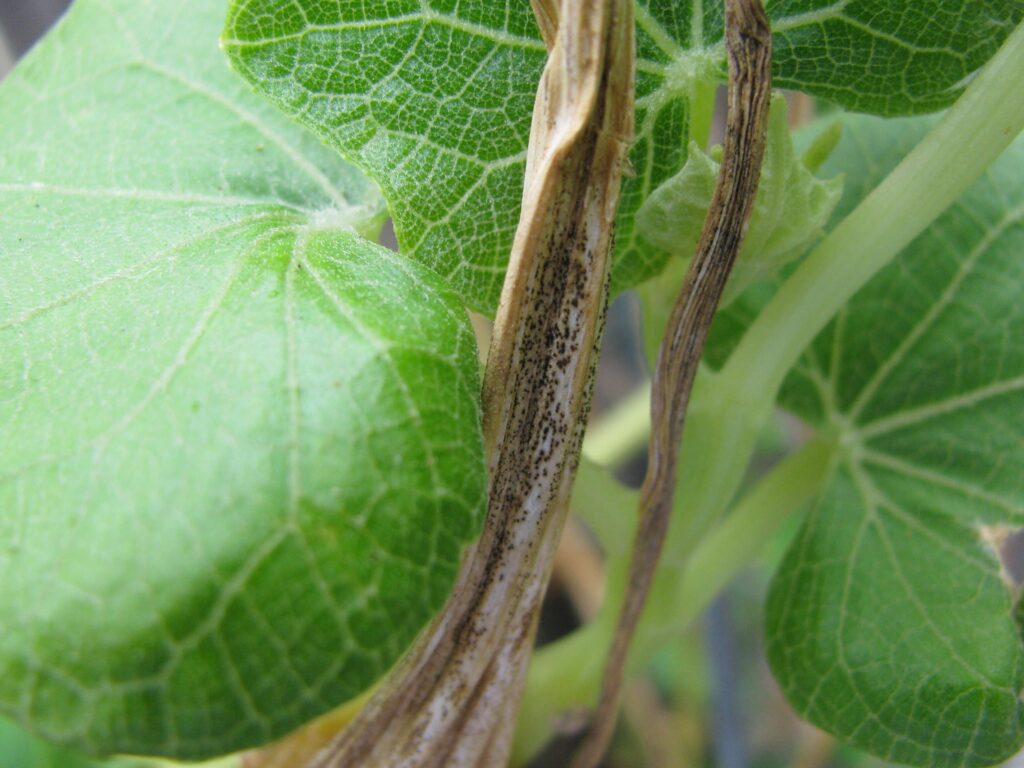
Advanced lesion with black fruting bodies (acervuli)
Lesion with salmon-colored fruiting bodies (acervuli)
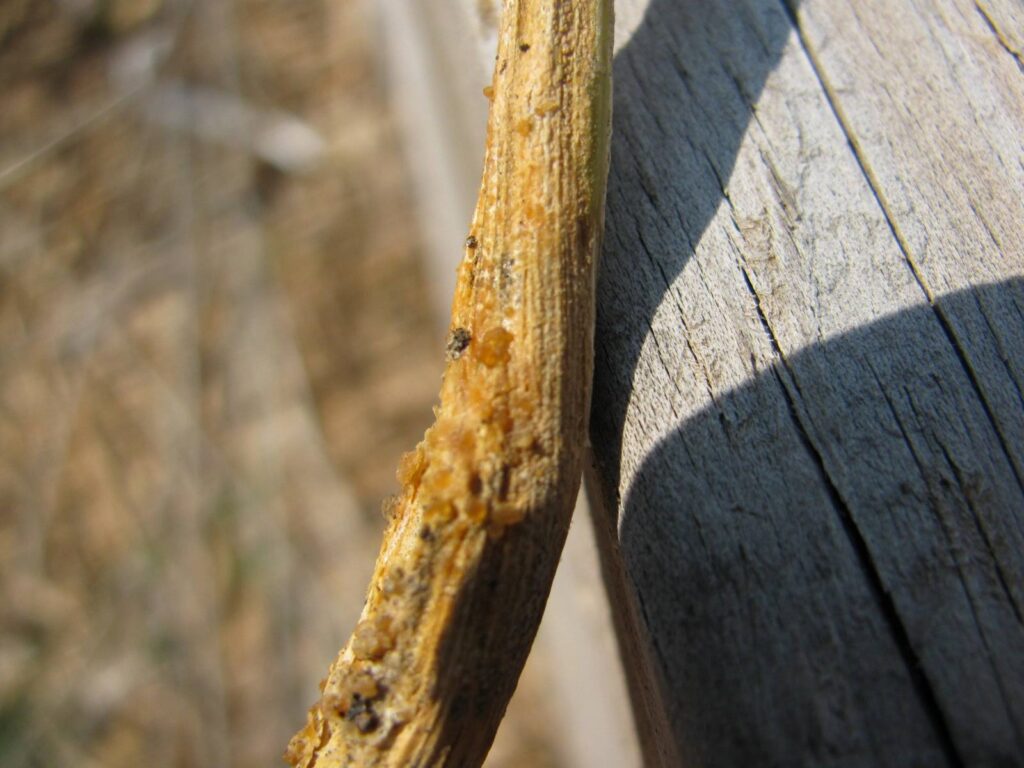
Gummy edudate.
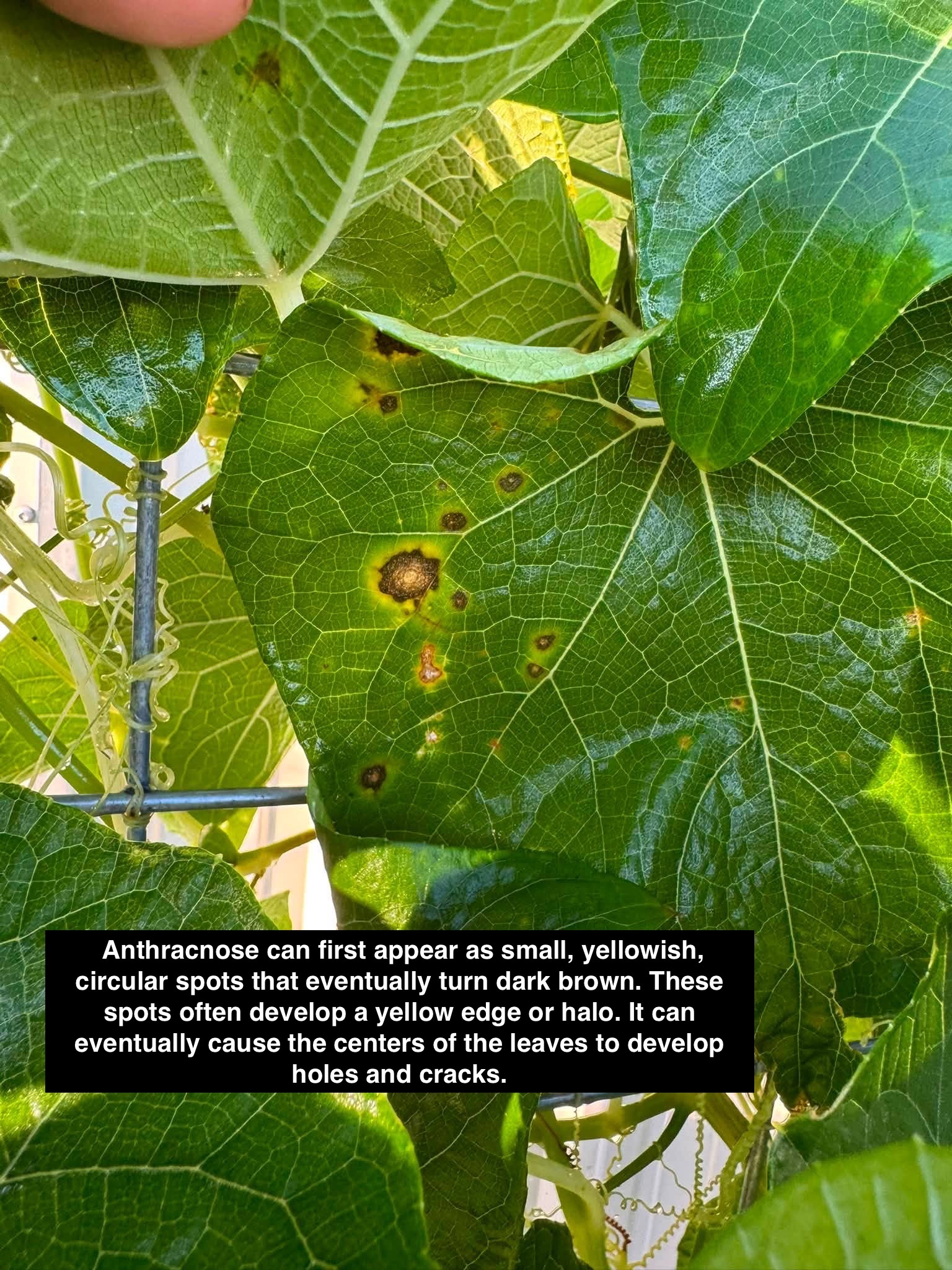
Anthacnose leaf spots.
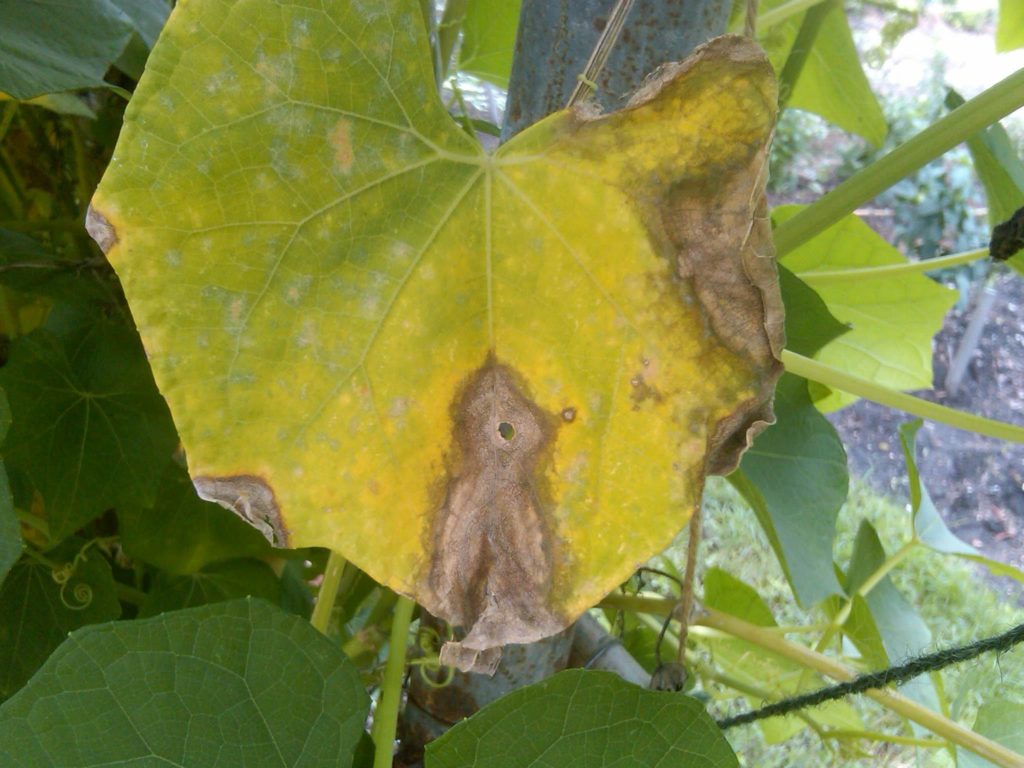
Perfect example of anthracnose wedge-shaped sign on leaves–including the “rifle shot” hole. The fungus first feeds on living tissue, and then lives on dead tissue.