
By Lance Hill and Kevin De Santiago
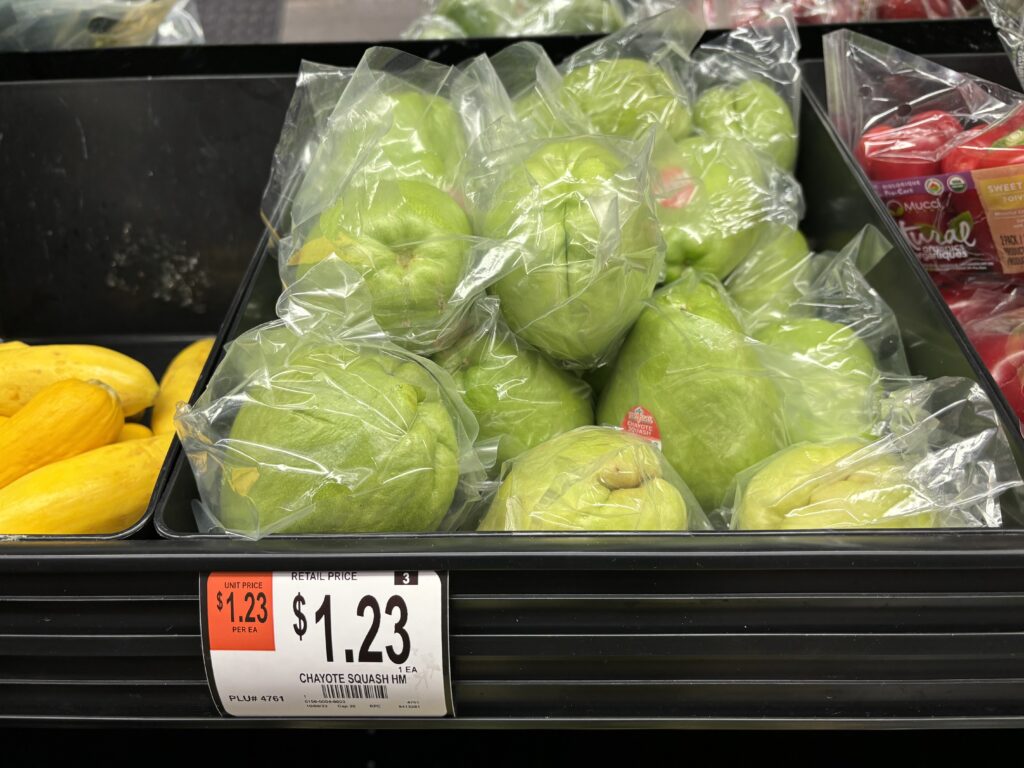
Many people want to grow their own mirliton (chayote) vine but find it difficult to find locally grown mirlitons. Because of their frustration, some people try to grow mirlitons by purchasing and planting one from the produce department in a grocery store. There are two reasons why this is not ideal.
First, all mirlitons sold in grocery stores and markets are imported varieties. They are grown and imported only as produce, just like all the other vegetables that you purchase. The USDA tried to grow these varieties a century ago and concluded that high-altitude plants have tremendous difficulty growing in low altitudes. This is because these varieties have adapted to the altitude, pests, diseases, and ultraviolet exposure in their native environment. The patterns of light and temperatures influence when and if the variety will flower and fruit. Moreover, an imported variety may not have acquired resistance to diseases or disease pressures that occur in its new environment.
All imported mirlitons will sprout and send up a shoot, but most imported mirlitons will not flower and set fruit. We have received reports of this problem from hundreds of growers over the years, and I had the same disappointing experience when I tried to use imported mirlitons to grow a vine.
Second, even if you could grow an imported mirliton, you may introduce new diseases that have devastated mirlitons elsewhere. Local mirliton varieties that are adapted to conditions in the U.S. have been grown for over two centuries in Louisiana and California. These were originally brought from low-altitude coastal areas in the Caribbean and Central America. In horticulture, these local varieties are called landraces— cultivars that growers have improved by traditional agricultural methods. The Louisiana heirloom mirliton is the U.S. mirliton landrace that has adapted to the regional climate, diseases, and pests through generations of trial and error. They are a reliable and healthy variety.
But they are vulnerable to new diseases from imported chayote sold as produce in grocery stores. Although no new mirliton diseases have been discovered in the U.S.A., it’s a widespread problem with other imported seeds, such as Tomato brown rugose fruit virus (ToBRFV) in tomatoes. The recently discovered Chayote Mosaic Virus (CMV) can be transmitted inside infected mirliton fruit without any sign of infection (seedborne and sapborne diseases). If you purchase infected imported mirlitons that carry the disease and then plant them, you may spread the disease to the Louisiana heirloom mirlitons. There is no cure for CMV, and you can potentially destroy all U.S. varieties. Read about CMV here.
In Brazil, scientists have recently discovered new fungi that cause anthracnose disease in mirlitons–also another soilborne and sapborne disease that can be spread through imported chayote. Read about it here.
To summarize: Imported mirlitons may not grow and fruit in the U.S., and if they do, they may have disastrous consequences for U.S. mirlitons landraces. It is best to wait until you find one of the Certified Louisiana Heirloom Mirlitons available on Mirliton.Org.