Buyer Beware! How to Sell and Buy Mirliton Seeds, Sprouts, and Plants
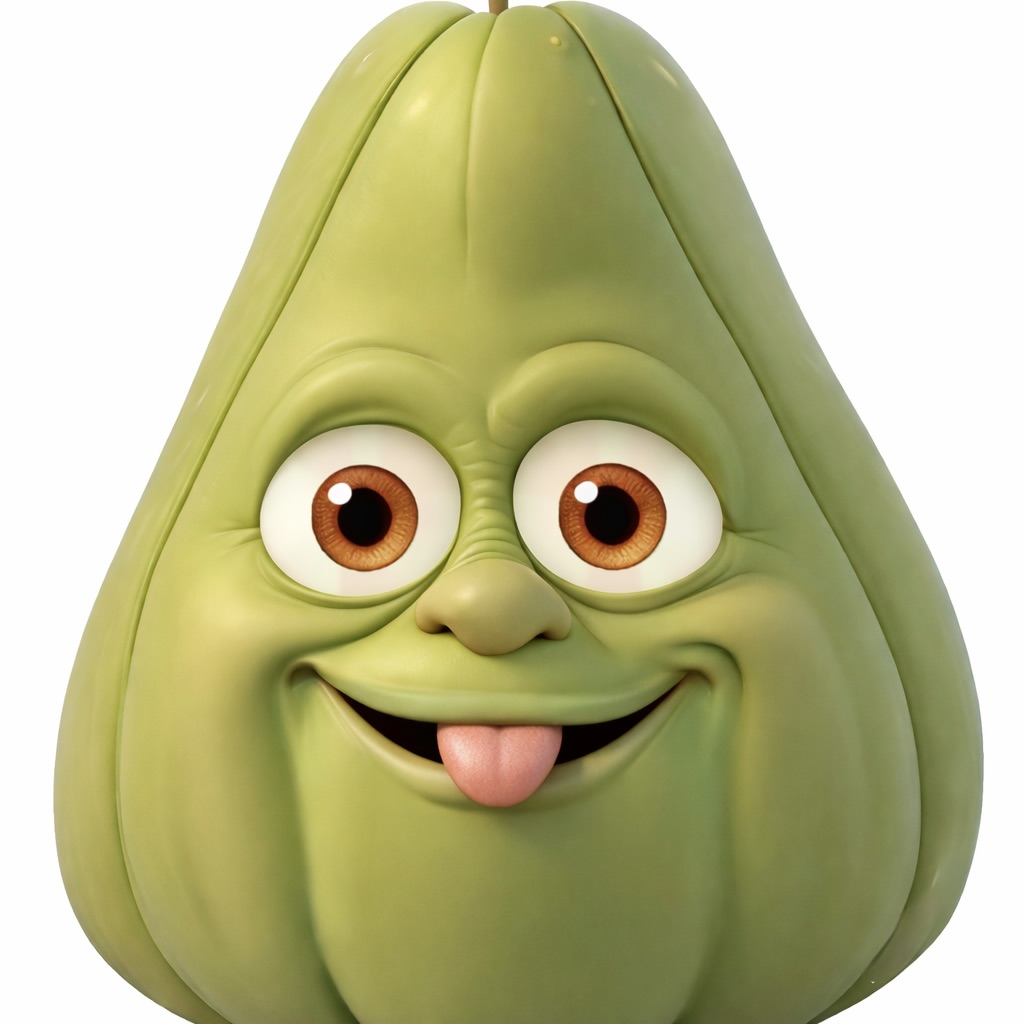
The Mirliton.Org Facebook group serves as a market for people to sell or gift mirliton seeds and sprouts. We want to ensure that only viable seeds are transferred so that people are guaranteed a successful growing experience. We don’t want to mandate standards and prefer to make recommendations, with the hope that people will cooperate.
Buying Seeds and Sprouts:
We categorize mirlitons advertised on the Facebook site as either seeds or sprouts. Seeds are defined as the normal unsprouted mirlitons that you use for cooking. In contrast, sprouts are defined as fruit that has begun to sprout— to extrude the soft inner seed through the large end of the fruit. This is commonly referred to as “sticking its tongue out.” The “tongue” is where all the roots and shoots will grow from.
Not all mirliton seeds are viable. They may look like mature, healthy seeds, but vines can bear fruit that lacks the inner soft seed that would produce a new plant. We call this a “parthenocarpic” fruit. It occurs when a female flower is not successfully pollinated and has an unfertilized ovary. The seed will never germinate, and if you get one of these, you will be getting a dud. Only sprouted seeds are viable and will grow into an entire plant.
That’s why we recommend that, if you are selling or buying a seed, use only sprouts — the ones with their tongues sticking out.
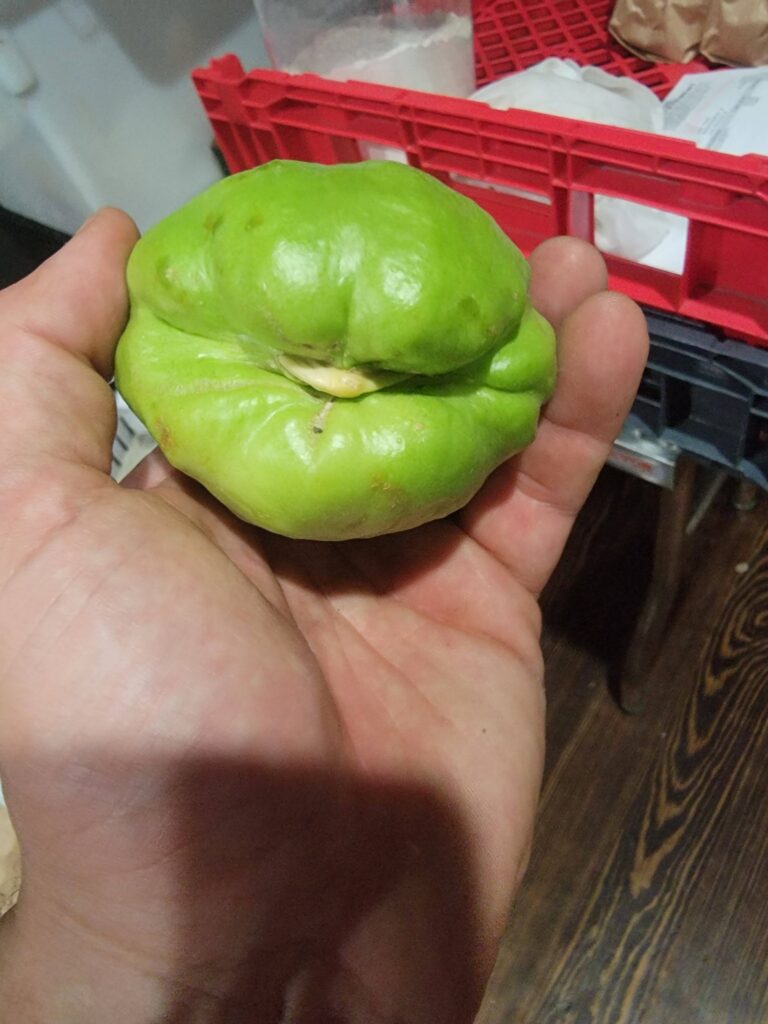
A mirliton sprout. The soft inner seed has begun to extrude and is “sticking its tongue out.” This means it is a viable seed and will produce a mirliton vine. (Andres Barcelo photo)
Buying Certified Varieties:
We are the only organization in the U.S.A. that certifies mirlitons as Louisiana heirlooms. We maintain a list here of both named and unnamed varieties, along with their sellers. If you have any questions about whether the variety you are buying is a certified heirloom, contact lance@mirliton.org.
Buying From Garden Stores or Online?
Don’t do it. Garden stores generally refuse to disclose the origin of their sprouts or plants. They’ve been known to sell imported chayote as Louisiana heirlooms. Only buy one if the store provides you with the name of the certified variety and the grower’s name. Online purchases are even riskier.
Here’s a list you can check to determine if the store is selling officially certified heirloom mirltions.
No Guarantees:
If you buy a seed online from the Mirliton.Org Facebook group, the site does not guarantee any claims made by the seller. It is up to the buyer to verify that the seed is viable and a certified heirloom variety. The guarantee rests with the seller.
Recent Comments