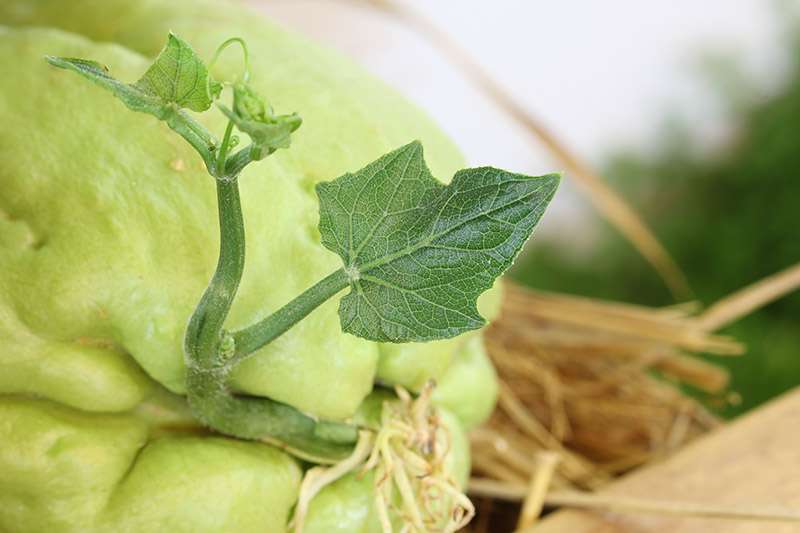
Sprouted Mirliton
Mirlitons (Sechium edule) in the United States south have two main fruiting seasons that begin after the spring and fall equinoxes, with flowering generally beginning in May for several weeks and again in October, lasting until December. The plant initiates flowering in response to leaf signals when leaves detect equal periods of light and darkness (photoperiodism). This stimulus is combined with temperature changes (thermoperiodism) in the fall: a cold snap after the equinox can help stimulate flowering. Spring crops are typically much smaller than fall crops.
This early crop has created an opportunity to use the winter/spring fruit for seed. But these cool-weather mirlitons can be a little cranky if planted in hot weather.
Spring fruit can be used as seed, but must be planted using special methods. The goal is to get the sprouts into the ground as soon as possible so they can develop a root structure sufficient to meet the water needs of the top growth when temperatures reach 90 °F as early as May. Unlike containerized plants or seeds that were planted the previous fall, these sprouts begin the summer with no root structure.
Spring fruit should be allowed to mature for at least three weeks on the vine and meet the “thumbnail test”: press your thumbnail into the skin and if the fruit flesh is soft and the nail leaves a dent, then the fruit is not ready to pick. Also, if you are familiar with the heirloom variety that you are growing, you will know the average size of a mature fruit. The fruit must be mature to germinate and sprout.
Hot Weather Planting of Sprouts:
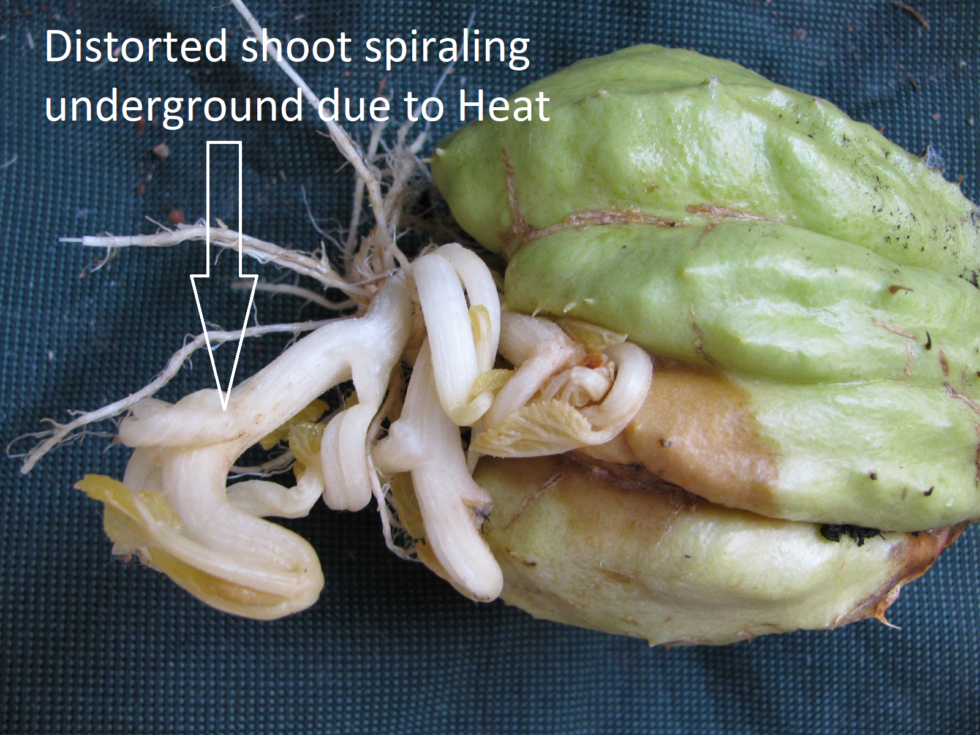
During normal growing cycles, the fruit may not be ready to pick until late May and won’t sprout until June or later. Temperatures over 90°F. can suppress shoot and root development and dehydrate the seed fruit that is exposed to the sun. I’ve done that in the past–planted a sprout in June and watched it sit there and do nothing. When I excavated it, I saw how distressed the seed had become by the scorching sun. Instead of coming up, the shoot stayed below ground and wound in a circle.
So sprout-planting in May and June should be done as you normally would, but place a milk crate or tomato cage over the planted sprout and cover it with shade cloth. This will protect it from the intense solar heat. The milk crate will also protect the mirlitons from squirrels and other rodents that like tender young fruit.
Once the shoot begins to grow, you can remove the shade and stake the vine.