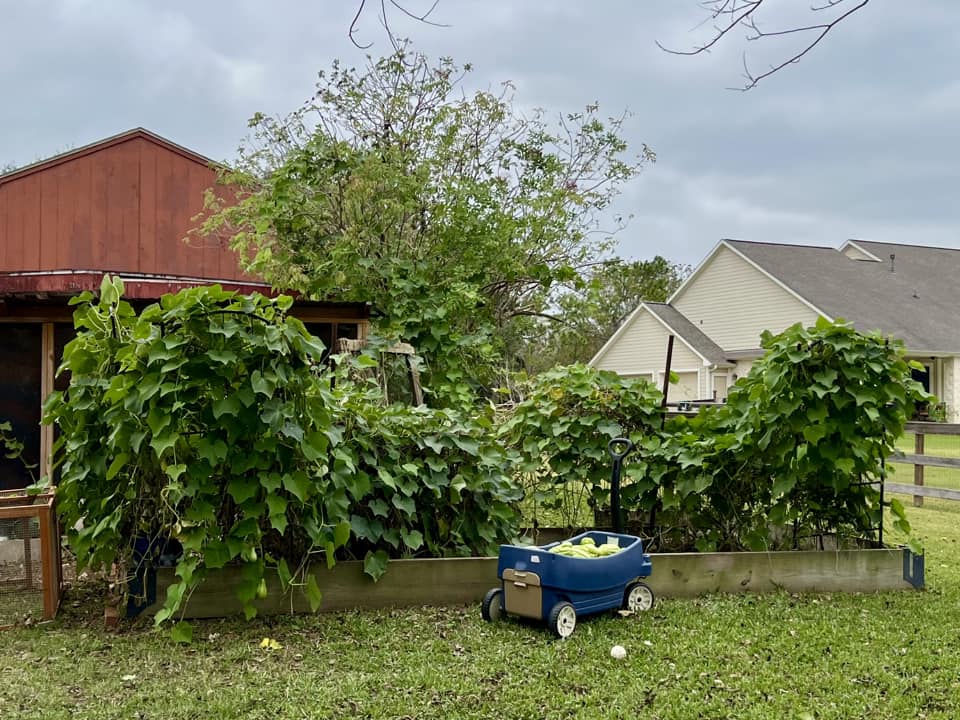
Tedra Erikson Stanley’s Raised bed
Many people’s yards have poor soil or soil with inadequate drainage which makes mirliton growing difficult. Either their soil gets overly saturated or has a high clay content and does not drain well. Raised beds are the solution.
But growing mirlitons in a raised bed requires special planning–it’s not like growing tomatoes or bell peppers. Mirlitons “hate to get their feet wet.” If the soil in the bed gets overly saturated, it will stress the vine, cause disease, and disrupt flowering and fruiting. They also get stressed by excessively dry soil.
The solution is a large, deep bed that moderates the changes in soil moisture and simulates ground planting. The ideal bed is a large, tall bed, 4’ X 8’ and 12-18 inches deep. Make sure to till the soil beneath the bed before installing it. You can make the bed with concrete blocks, wood, or galvanized steel. It doesn’t have to be quite as large as some of these images, but the larger and deeper the bed, the more likely that your vine will survive intensive rains and droughts.
Beds that sit on top of saturated or clay soil will not quickly drain into the soil, so you will need a lateral outlet so excessive rainfall moisture can drain out the sides. If you use a double stack of concrete blocks (below), it will allow the water to drain from the bed laterally. If you are using wood, it’s best to drill holes around the perimeter at about 4” above the soil line or leave a crack between the boards. Or you can bury a corrugated drain pipe in the bed and cut release outlets on the ends (photo below).
Finally, and most importantly, add a structure on top of the bed to place a shade cloth in the summer and tent the vine with a tarp in the fall to protect against frost/freeze. (photo below) If you are in an area that gets high winds, build the trellis and shade/tent structure so that it is relatively secure and the vine does not get traumatized.
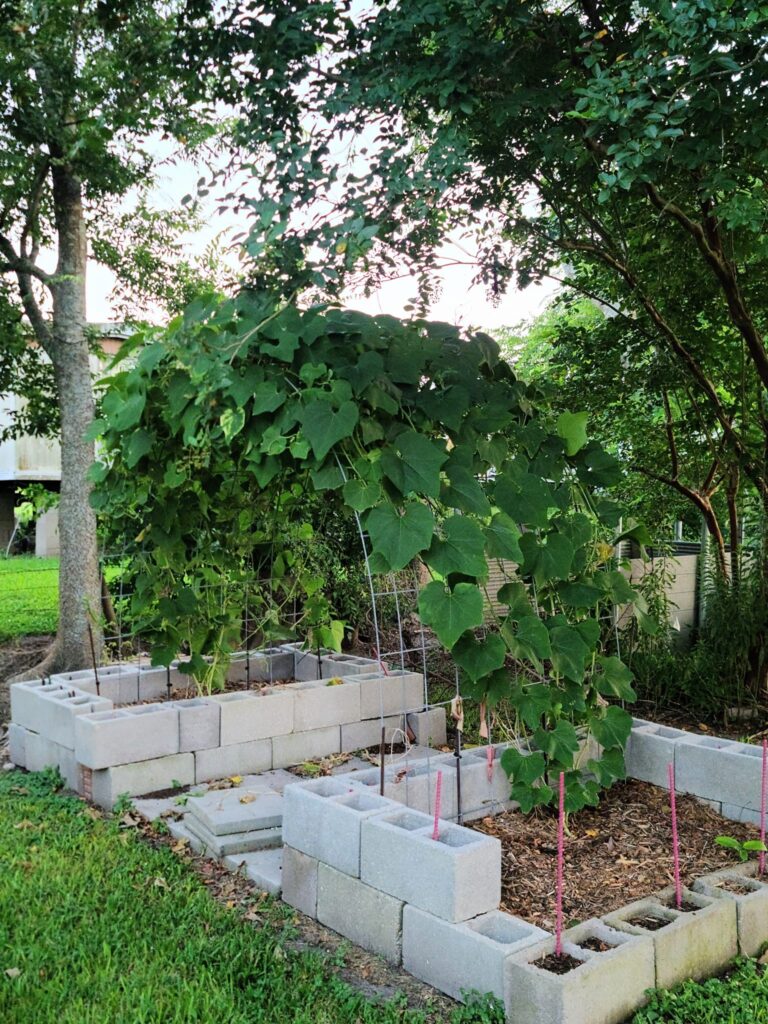
Concrete block raised bed by Michelle Landry
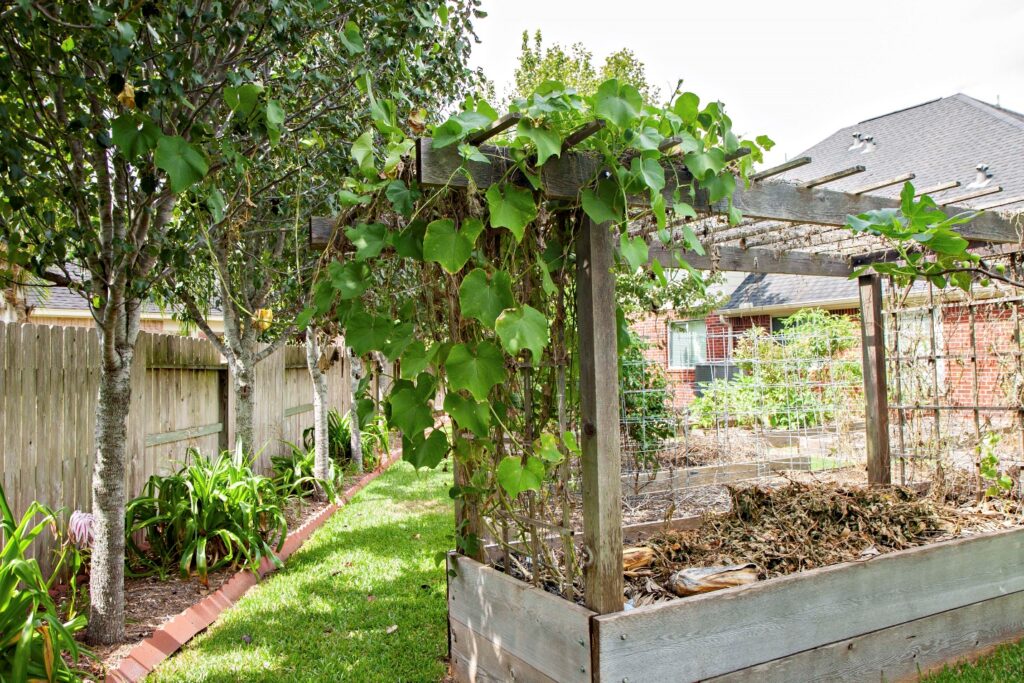
Mirliton raised bed.
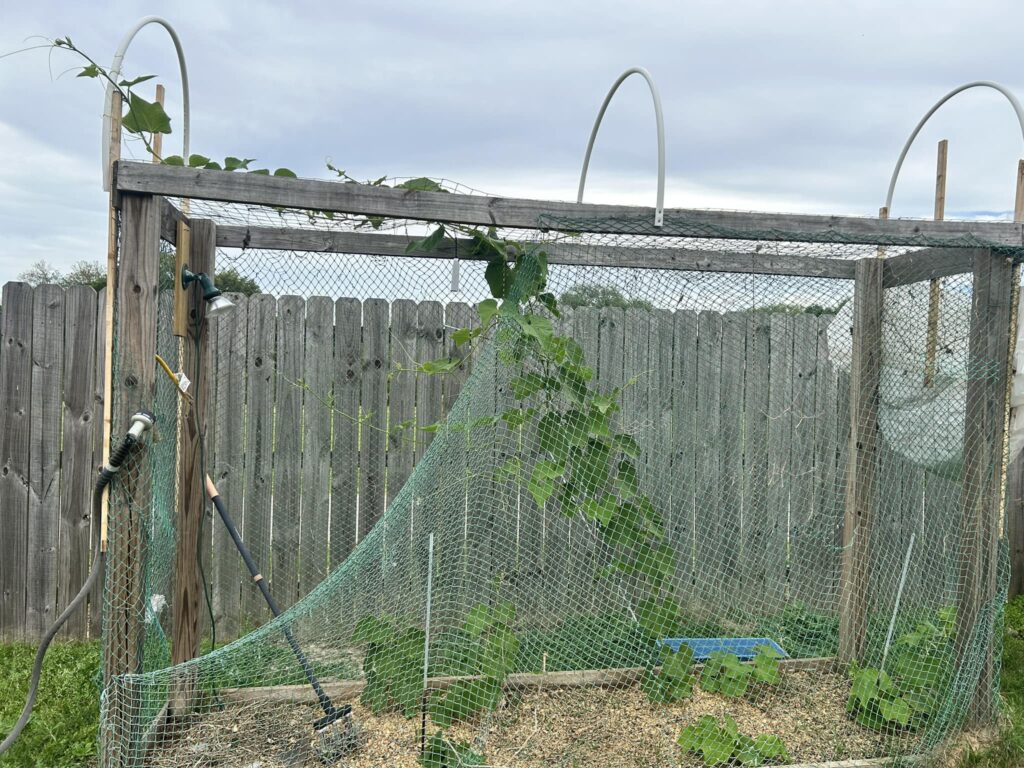
Raised bed with hoops for shade and tarps
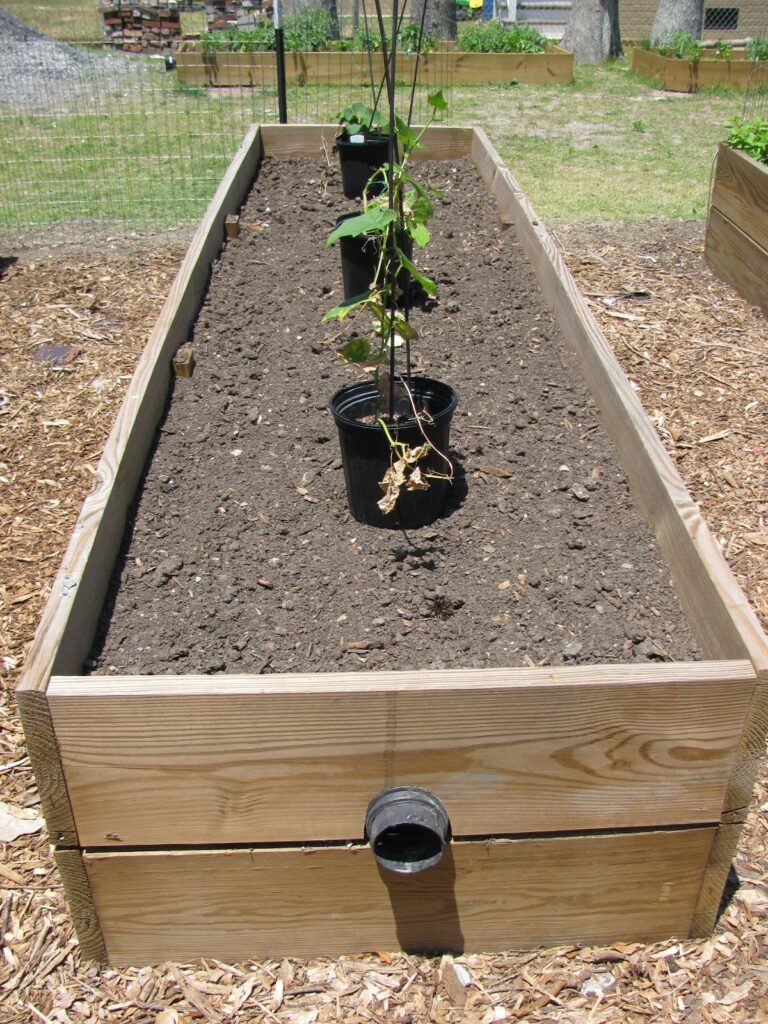
Raised bed with corrugated pipe drain
Tedra Erikson Stanely’s Raised bed
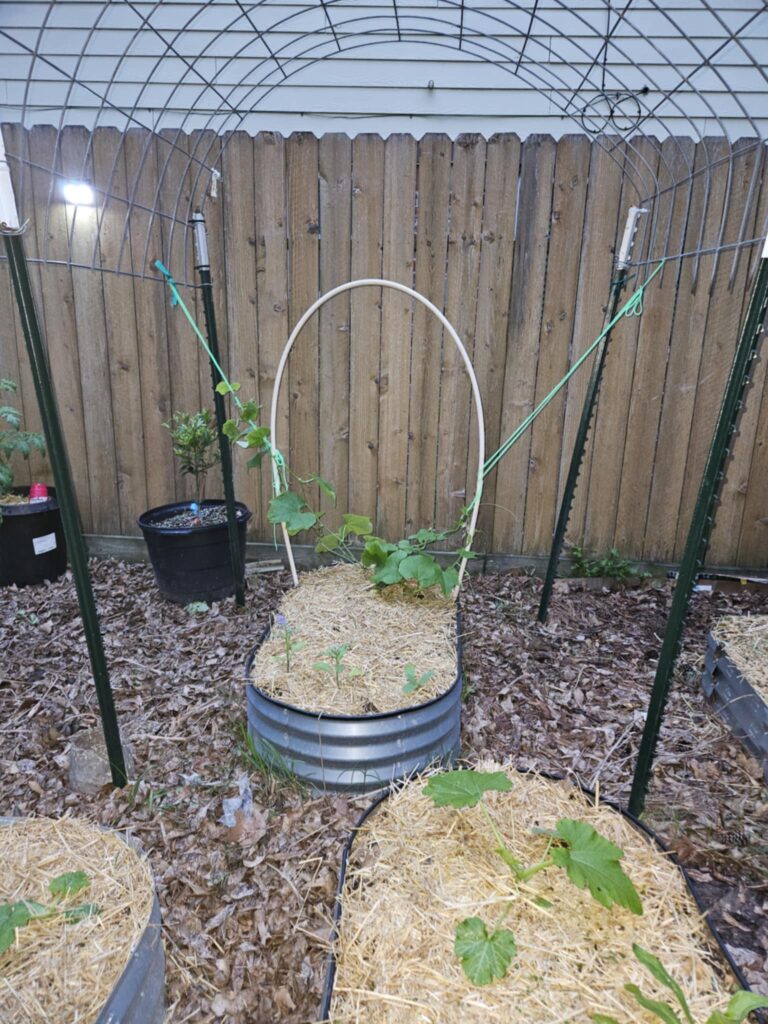
Aisha Elwood’s metal raised bed with shade structure