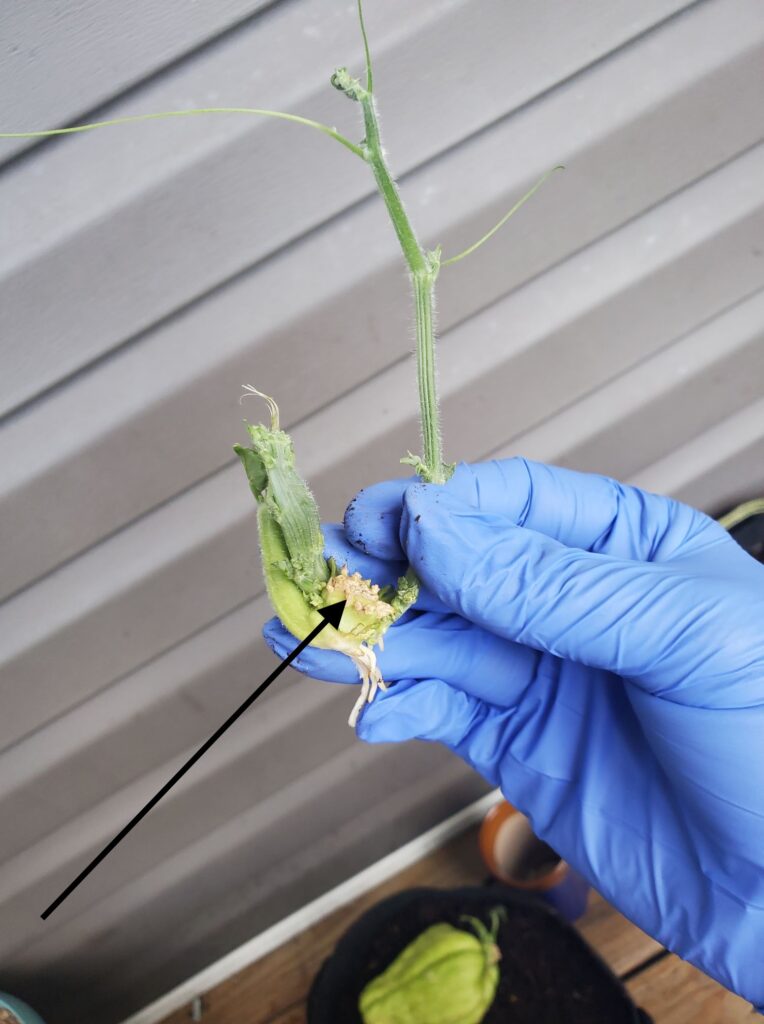
Young mirliton sprout removed from the container. The arrow points to the plant radicle (rooting organ)
The photo shows that although the root radicles (white, bumpy protuberances at the top) are pointing upward, yet the roots themselves have begun to grow downward into the soil. The radicle is the embryonic root of the plant, and in this case, even though it was planted mostly above the soil line, it immediately sent roots downward to absorb water and nutrients from the soil. So even if you plant the seed upside down, the roots know which way to grow. That’s why mirliton sprouts generally succeed, regardless of whether they are planted “large end up” or “large end down.”