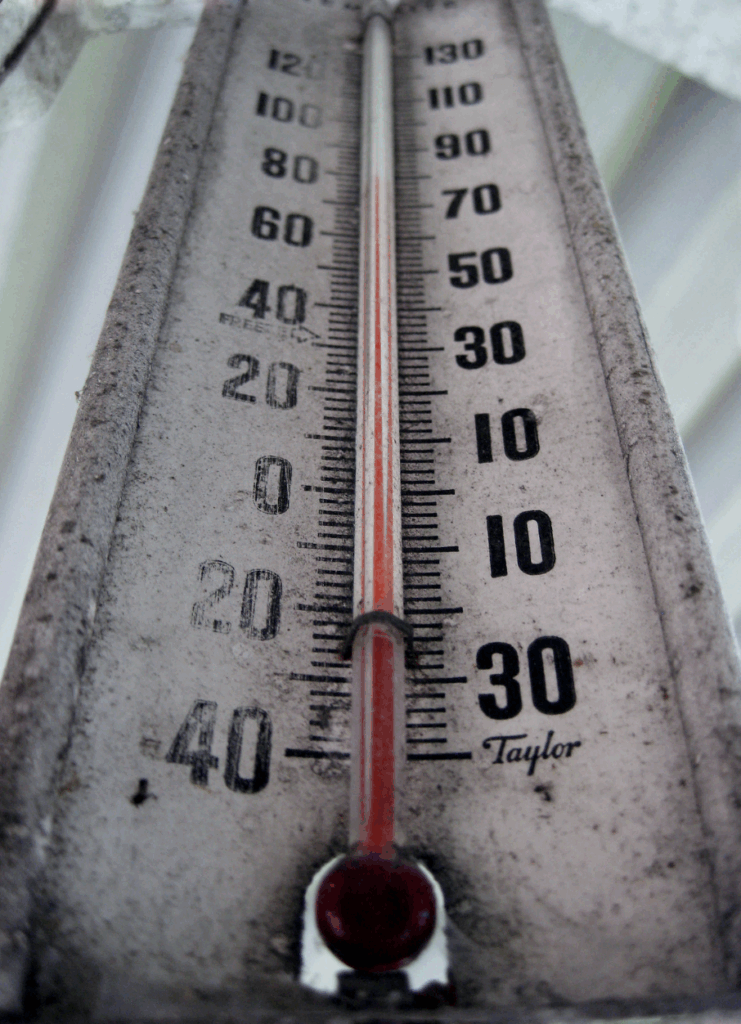
We have a problem.
The 2023 heat dome killed almost every mirliton vine in Louisiana. Then the 2024 heat waves nearly wiped out most first-year vines. How does heat stress cause mirlitons to fail, and what can we do about it?
What is Heat stress?
The term “heat stress” refers to a period in which plants are subjected to high temperatures for long enough to permanently alter their ability to function or grow normally. Heat stress is the cumulative effect of the heat’s severity, the time the plant is exposed to the heat, and the rate at which the temperature is rising.
What is a Heat Wave?
It depends on where you are. Obviously, a warm day in Louisiana might be a blistering heatwave in Vermont. Generally, botanists define a heat wave as any period when temperatures exceed 90℉ for 7-10 days. That’s a national average, of course. Along the Gulf Coast, we can reasonably say that several consecutive days exceeding 93° will stress a mirliton vine and require protective measures.
High temperatures and high heat index are not the same thing. The heat index combines temperature and humidity–but plants can’t feel humidity, nor does it affect them. They only feel the temperature of the surrounding atmosphere. If you place a thermometer next to a leaf, it will tell you precisely the heat that the plant is experiencing.
For our purposes, only the ambient temperature measured with a thermometer determines whether a heat wave is present.
Heat Stress and the Mirliton Canopy
Solar radiation is both life-giving and life-taking for a plant. It’s what fuels photosynthesis that enables plant growth, but it can also damage a plant and cause plant failure.
Solar radiation is the source of all heat stress. It is comprised of infrared rays (IR), which heat up plants when they strike the leaves, and ultraviolet-b (UVB), which regulates plant growth and development. While they both are essential to plant life, excessive IR and UVB can damage a mirliton and cause plant failure.
We tend to think that a heatwave simply dehydrates a plant–like it does humans. It’s not that simple; excessive heat from the sun sets off a cascade of problems. It does this in three ways.
First, excessive UVB can literally kill the plant’s chloroplasts in the leaves. Chloroplasts are essential in the photosynthesis process of turning sunlight into sugars to nourish plant life. Without chloroplasts, the plant is starved of a fundamental nutrient. Interestingly, the main reason imported chayote don’t grow well in the U.S.A. is that they are grown at high altitudes on cloud-covered mountains in Mexico and Central America. The clouds filter out significant UVB. Take the same variety and plant it in the U.S.A., and it will get a full dose of UVB and die.
Second, excessive solar radiation can overheat a plant and induce a type of heat stroke. Stomata are tiny pores on leaves that guard plants against excessive heat by regulating leaf temperature with evaporative cooling. When temperatures rise, stomata open wider, releasing water vapor into the atmosphere. This process, called transpiration in plants, cools the plant and leaf surface, similar to how sweating cools the human body. But too much heat causes the stomata to close, and the plant loses its ability to cool itself. The plant overheats and dies from excessive heat.
Third, when the stomata in the leaves are open, they facilitate a flow of dissolved nutrients from the soil upward to the leaves, thereby nourishing the entire plant. The stomata accomplish this by releasing water vapor from the leaves, which creates a negative pressure, or “pull,” that draws water up from the roots through the plant’s xylem via the transpiration process. This transpiration-driven water movement creates a continuous column of water from the soil, up the roots, and out into the atmosphere.
The open stomata are key to pulling a continuous column of water from the soil, up the roots, and out into the atmosphere. But, too much heat and the plant closes the stomata, which then prevents the plant from not only regulating leaf temperature and taking in CO2 for photosynthesis. Plant temperature soars, nutrients cease to flow, and the plant fails. That means that during a heat wave, no matter how much you water your mirliton vine, the heat may close the stomata, the plant’s temperature will rise, and the plant will fail.
Heat stress also affects the plant’s metabolic processes, causing oxidative stress, which harms cells and impairs growth; gibberellic acids and other phytohormones go awry, causing buds, blossoms, and fruit to drop off.
Bottom line: Heat stress can simultaneously overheat, starve, and trigger a cascade of events that can kill your mirliton vine.
How Can We Protect the Canopy?
We’ve already found the solution: shade cloths. We are fortunate that most mirliton growers use small trellises that can easily and affordably be covered with a 40% shade cloth. Those will filter out substantial UVB, which will protect the chloroplasts, and the infrared rays that will cool the plant. (Don’t use denser shade cloths, as the vine does need solar radiation to grow, and UVB is a natural fungicide.)
Growers who have trellis structures for shade cloths don’t have to worry about heat waves.
Moreover, a shade cloth structure can also serve as protection from excessive rain. That’s particularly important following the 2025 monsoon rains that waterlogged and killed most first-year vines. Your shade cloth frame can double as a “rain-guard” when needed. You can simply drape a sheet of 6-mil plastic over the shade frame of cloth to shunt the rain off to the sides of the bed like an umbrella.
Come hell or high water, you’ll be covered.