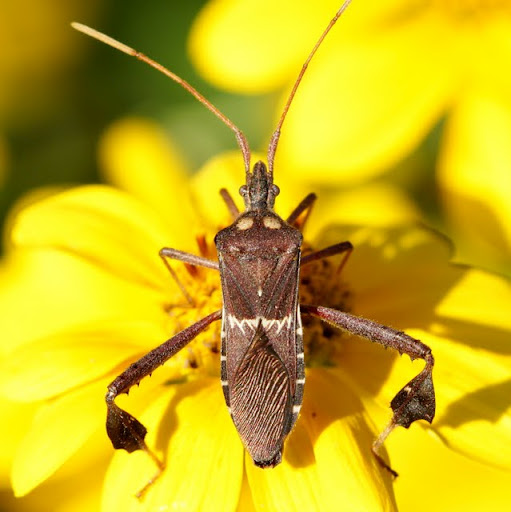
Leaffooted stink bugs have invaded our mirliton gardens and orchards. They feed on flowers and fruit, killing flowers and injecting enzymes and diseases into the fruits that ruin the flavors or bruise them. And, yes, they stink.
There are several leaffooted stink bug species in the Gulf Coast South, but the principal culprit is a new arrival Leptoglossus zonatus (Dallas), widely known as the “western leaffooted bug”. They are with us year-round and overwinter in weeds and tree bark. They emerge in the spring as “nymphs” (immature bugs) and go through five stages called instars. We will concentrate on two of the stages that gardeners are most likely to see on their vines: nymphs and mature bugs.
How to Identify:
Identifying leaffooted bugs is tricky since they look almost identical to assassin bugs, which are beneficial insects that eat bad bugs and don’t damage plants. Because they are physically similar, sometimes people try to distinguish them based on the different markings of the two species. That will work for mature stink bugs, but markings are not always useful for nymphs because they don’t appear in all instars. For example, the characteristic leaf-like “flared” back legs don’t appear in all stages of a leaffooted bug’s life (see the two photos below of nymphs with no flared legs on a mirliton fruit and flowers). A simpler and more reliable way to identify stink bugs is by behavior:
Nymph stage: For most of the growing season, stink bug nymphs are easily identified by their aggregating (swarming) behavior. They like to aggregate into small gangs and search for young flowers and immature fruit. In contrast, assassin bugs are solitary hunters, even as nymphs, and won’t be found in gangs. So don’t t worry about markings; if they behave like a gang, then they are stink bugs. You can control them at this early stage with regular spraying throughout the growing season with insecticidal soap or organic pesticides such as Bee Safe Organicide that won’t harm bees.
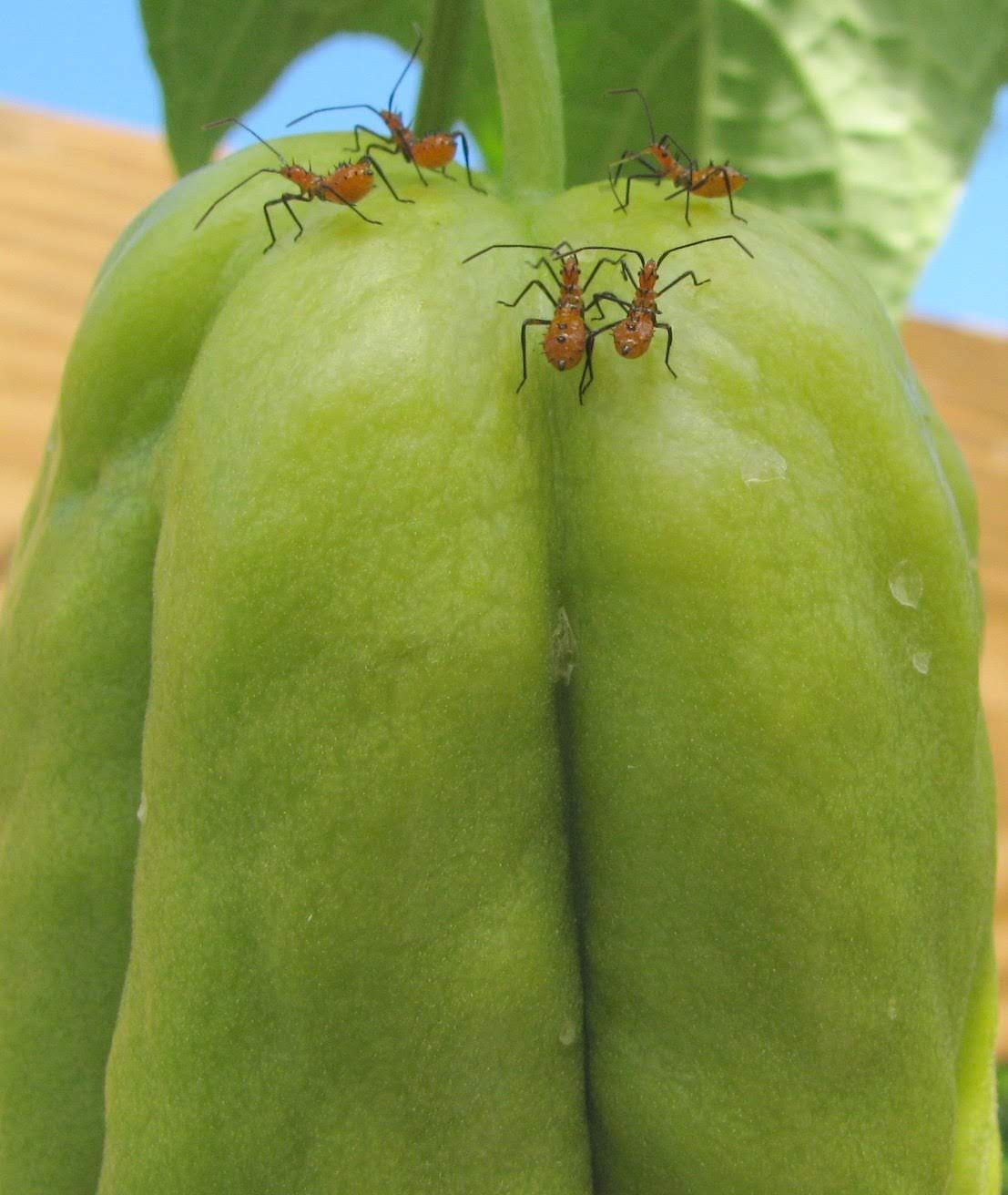
Immature nymph leaffooted bugs in characteristic swarming behavior. Note that at this stage, they don’t have the flared back legs.
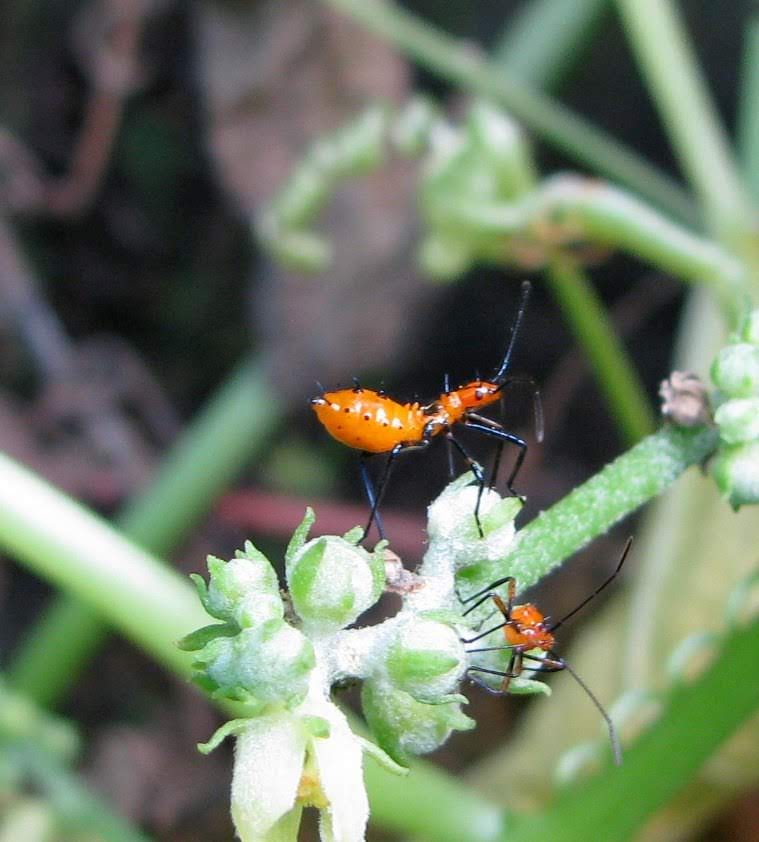
Stink bug nymph feeding on immature flowers (also, no flared back legs)
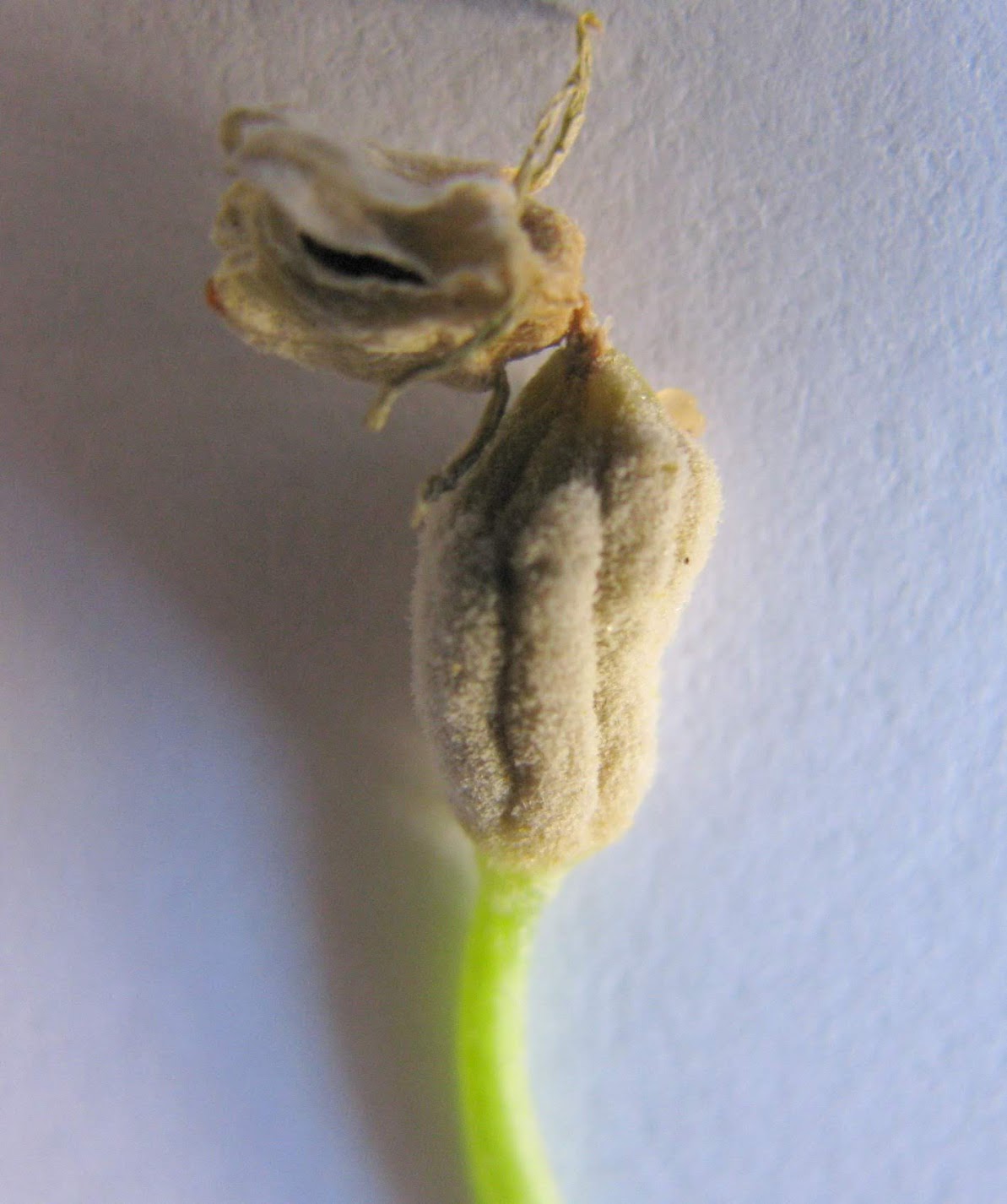
Stink bug damage to young mirliton fruit. Note exudate emerging on top right in a bubble.
Mature stage. Adults can’t be sprayed away; they have a hard exoskeletal structure that protects them from topical insecticides. They are also solitary foragers like assassin bugs, but they are easily identified because they are vegetarians. In contrast, assassin bugs only eat other bugs while leaffooted bugs feed on flowers and fruits. They have to be removed by hand by picking them off by hand, sucking them up with a portable vacuum, or catching them with a butterfly net.
I prefer the hand vacuum (with a homemade 1/2 inch diameter PVC extension—see below) because stink bugs are highly aware and will instantly dash away at the sight of a large extension. Plus, you are less likely to damage flowers. The contents of the vacuum can be emptied into a pail of water with insecticide. Leaffooted bugs and assassin bugs are quick and elusive and difficult to identify as adults. If you accidentally removed an assassin bug, it will not hurt the species since they forage everywhere, unlike leaffooted bugs that target your vegetables and fruits.
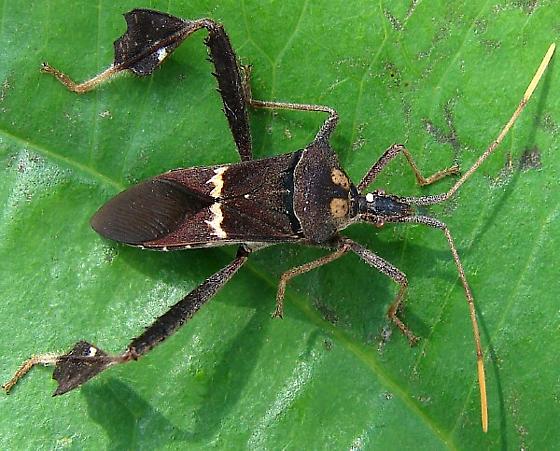
Mature leaffooted bug. Note white mark across the back and the well-developed flared “leaves” on the back legs.
Monitor For Stinkbugs Daily:
The key to managing pests is knowing which ones are on your vine because early intervention is critical. Closely scout your vine every day, top and bottoms of leaves, and use sticky yellow insect traps to collect specimens. Click here for sticky traps.
Click here for an excellent recently updated fact sheet on Leptoglossus zonatus (Dallas)
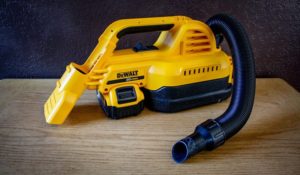
The Dewalt 20v. portable vacuum has the power to vacuum up large bugs and can be used for household and automotive cleaning. An accessory kit is available and that will allow you to fit it with a 1/2-inch PVC pipe extension.