
Renee Lapeyrolerie, proud grower in Treme neighbor of New Orleans
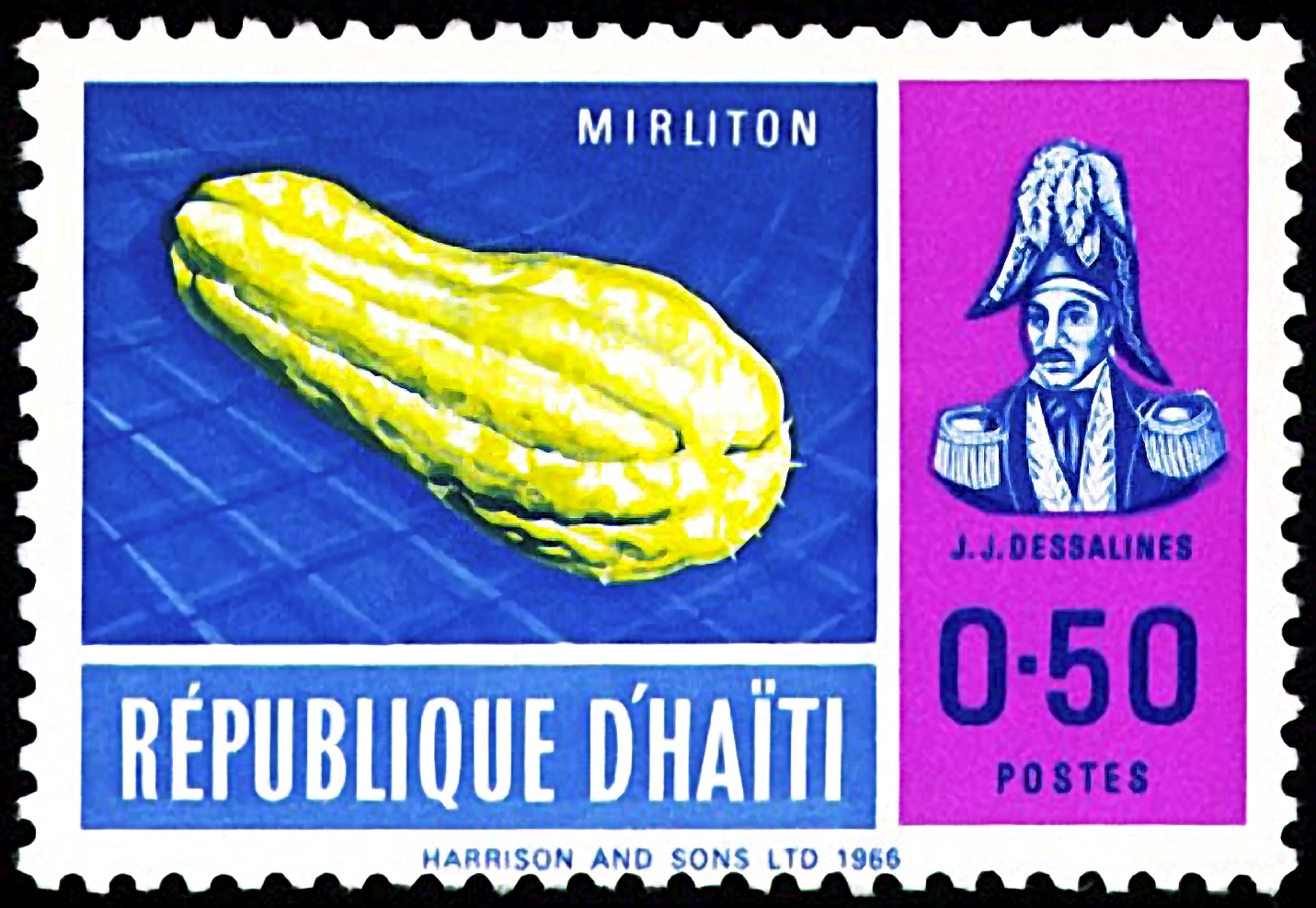
As a young girl in St. John Parish, Louisiana, Renee Lapeyrolerie lived in a community in which mirlitons were a common site in back yards. When she moved to New Orleans to attend Loyola University, she soon began to yearn for the lush growth of the vine. 20 years ago she bought a home in the centuries-old African American neighborhood of Treme (pronounced, Tra-May), a famous community of free people of color, many of them migrants from Haiti, and including a maternal ancestor who bought property in 1795. Haitians brought mirlitons with them from their new nation, an integral part of Haitian cuisine.
Parts of the Treme flooded during hurricane Katrina, but only a few feet. The community was part of the slim alluvial ridge along the Mississippi river and was home to mirliton gardeners for decades.
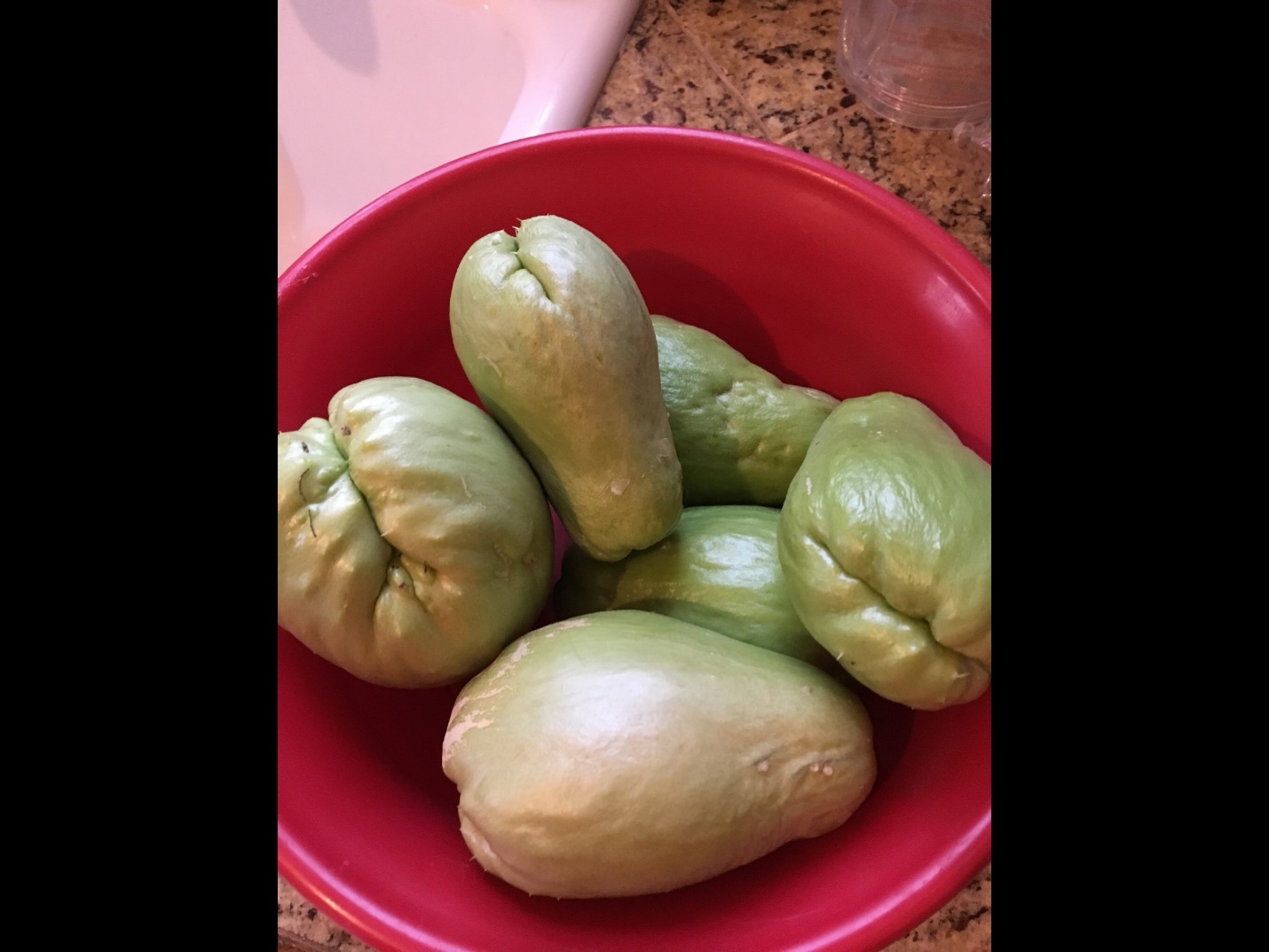
About five years ago Lapeyrolerie (pronounced Lap-a-rol-er-y) purchased a mirliton sprout from a garden center and planted it in her back yard. The vine soon spread about 20 feet along her fence and began to charge up her neighbor’s tree. Its origins as a variety are uncertain, but it is definitely part of the Louisiana landrace because it fits the phenotype (large but uniquely without furrows) and it has proven it can flourish in our climate. In the early years she had some problems with the vine flowering but not fruiting. This was not unusual for New Orleans post-Katrina because the flooding and re-roofing destroyed the habitat for bees (many hives were in attics that were disturbed by roofing). She is considering using a synthetic bee pheromone to attract bees this fall, though she can hand pollinate using instructions on our photo site.
In recent years, her five year old plant produced a good fall crop and she even got a modest spring crop in 2019. For advice on the culture of the plant, Renee had only go to her Aunt Helen and neighbors back in St. John Parish. Renee hopes to inspire fellow Treme residents to take up the mirliton and renew a tradition that is two centuries old and has donated several sprouts and plants to Mirliton.Org.
We have named the variety the “Lapeyrolerie Mirliton Variety” in honor of Renee. 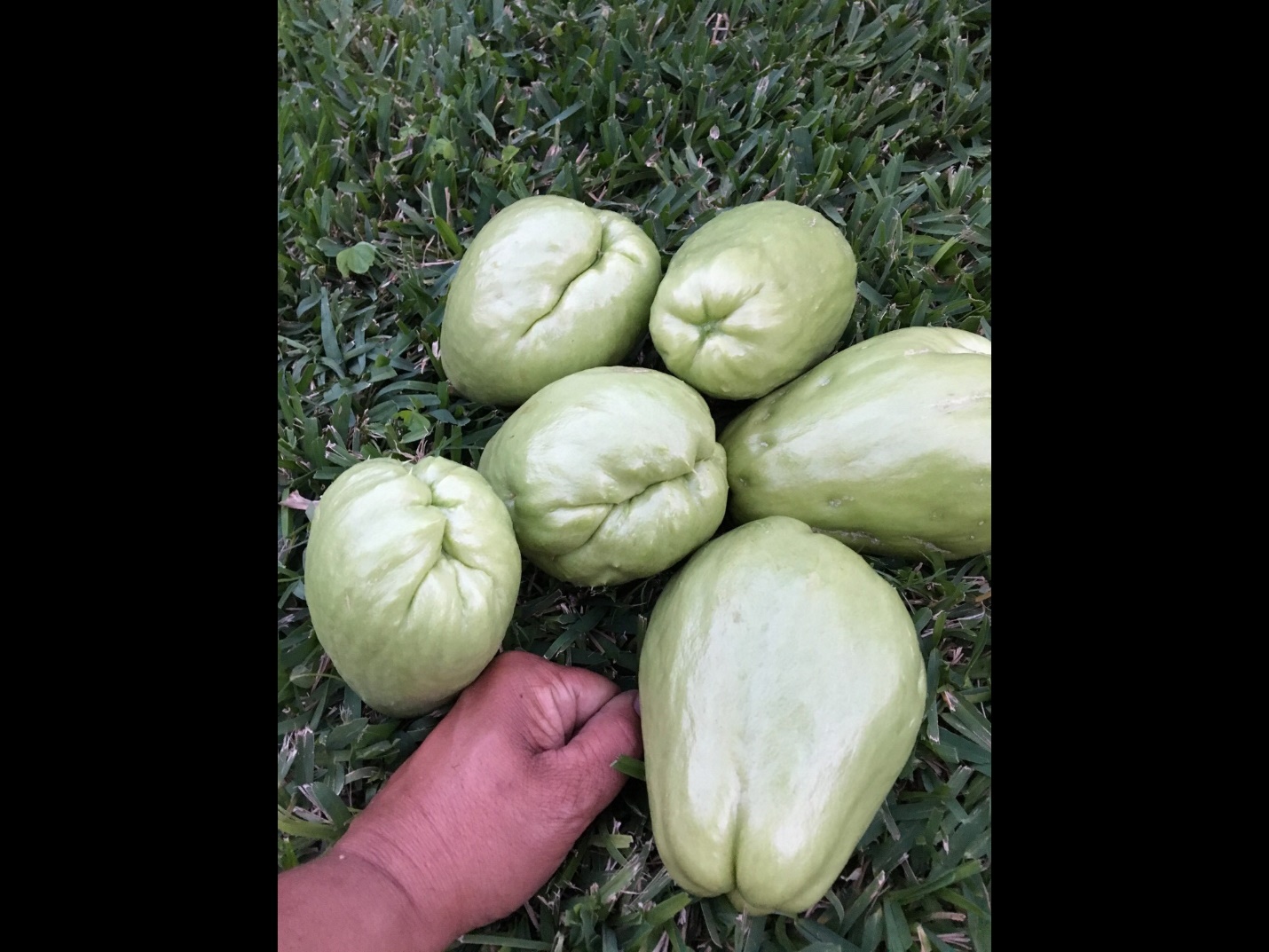 Lapeyrolerie Mirlitons
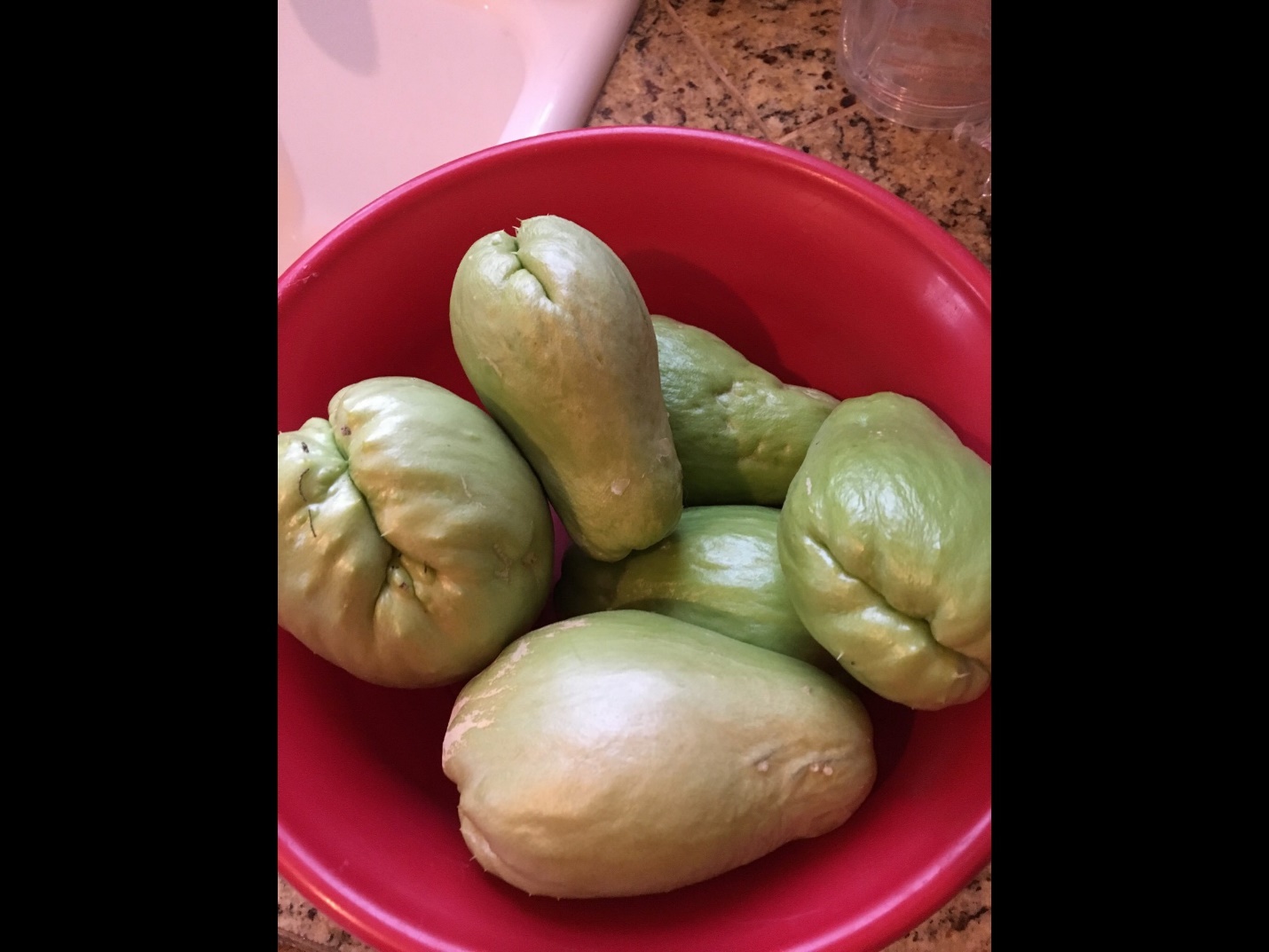
Lapeyrolerie Mirlitons
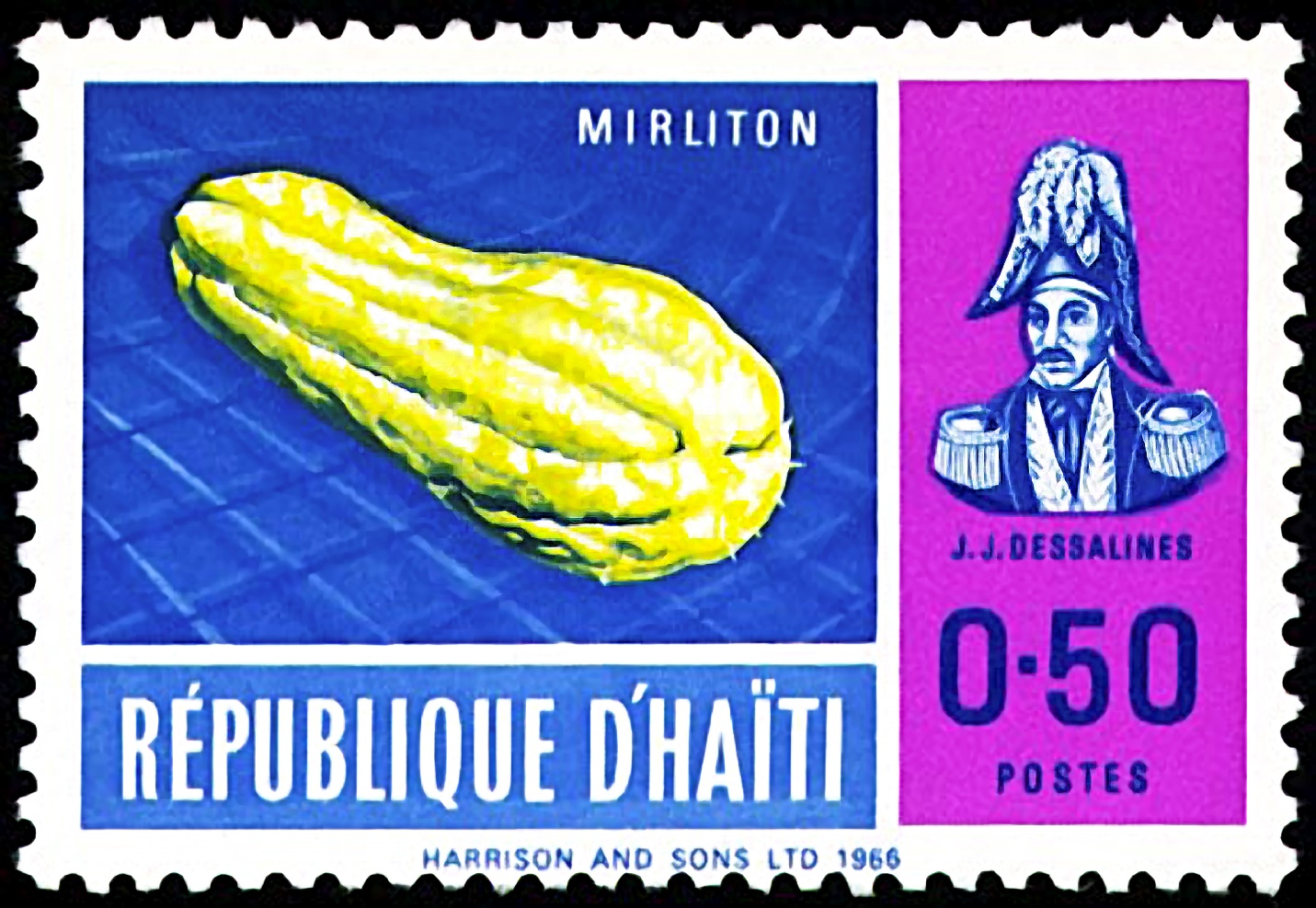
1 Haitian postage stamp, circa 1966

Renee Lapeyrolerie, proud grower in Treme neighbor of New Orleans
As a young girl in St. John Parish, Louisiana, Renee Lapeyrolerie lived in a community in which mirlitons were a common site in back yards. When she moved to New Orleans to attend Loyola University, she soon began to yearn for the lush growth of the vine. 20 years ago she bought a home in the centuries-old African American neighborhood of Treme (pronounced, Tra-May), a famous community of free people of color, many of them migrants from Haiti, and including a maternal ancestor who bought property in 1795. Haitians brought mirlitons with them from their new nation, an integral part of Haitian cuisine.
Parts of the Treme flooded during hurricane Katrina, but only a few feet. The community was part of the slim alluvial ridge along the Mississippi river and was home to mirliton gardeners for decades.
About five years ago Lapeyrolerie (pronounced Lap-a-rol-er-y) purchased a mirliton sprout from a garden center and planted it in her back yard. The vine soon spread about 20 feet along her fence and began to charge up her neighbor’s tree. Its origins as a variety are uncertain, but it is definitely part of the Louisiana landrace because it fits the phenotype (large but uniquely without furrows) and it has proven it can flourish in our climate. In the early years she had some problems with the vine flowering but not fruiting. This was not unusual for New Orleans post-Katrina because the flooding and re-roofing destroyed the habitat for bees (many hives were in attics that were disturbed by roofing). She is considering using a synthetic bee pheromone to attract bees this fall, though she can hand pollinate using instructions on our photo site.
In recent years, her five year old plant produced a good fall crop and she even got a modest spring crop in 2019. For advice on the culture of the plant, Renee had only go to her Aunt Helen and neighbors back in St. John Parish. Renee hopes to inspire fellow Treme residents to take up the mirliton and renew a tradition that is two centuries old and has donated several sprouts and plants to Mirliton.Org.
We have named the variety the “Lapeyrolerie Mirliton Variety” in honor of Renee. 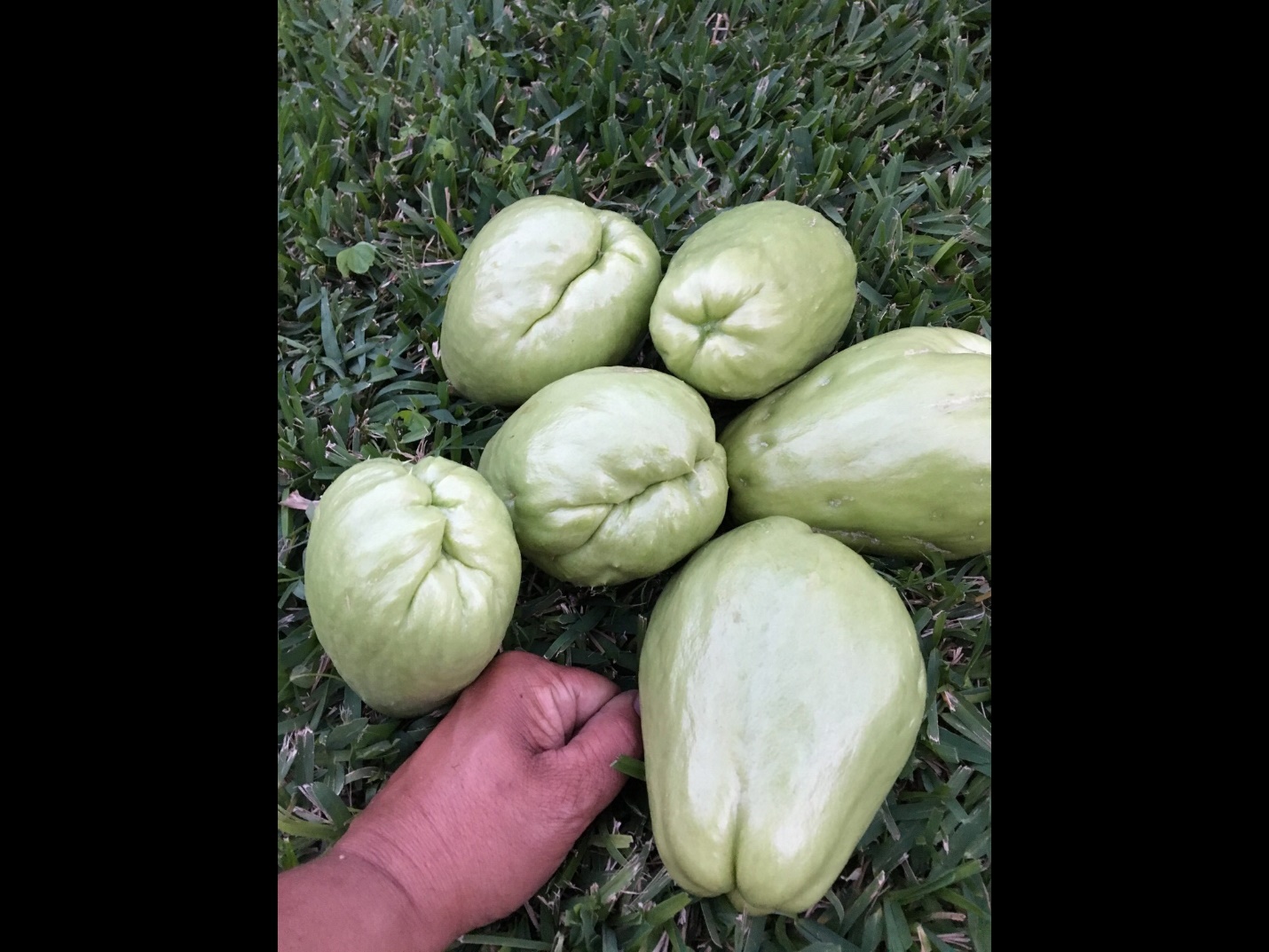 Lapeyrolerie Mirlitons
Lapeyrolerie Mirlitons
1 Haitian postage stamp, circa 1966