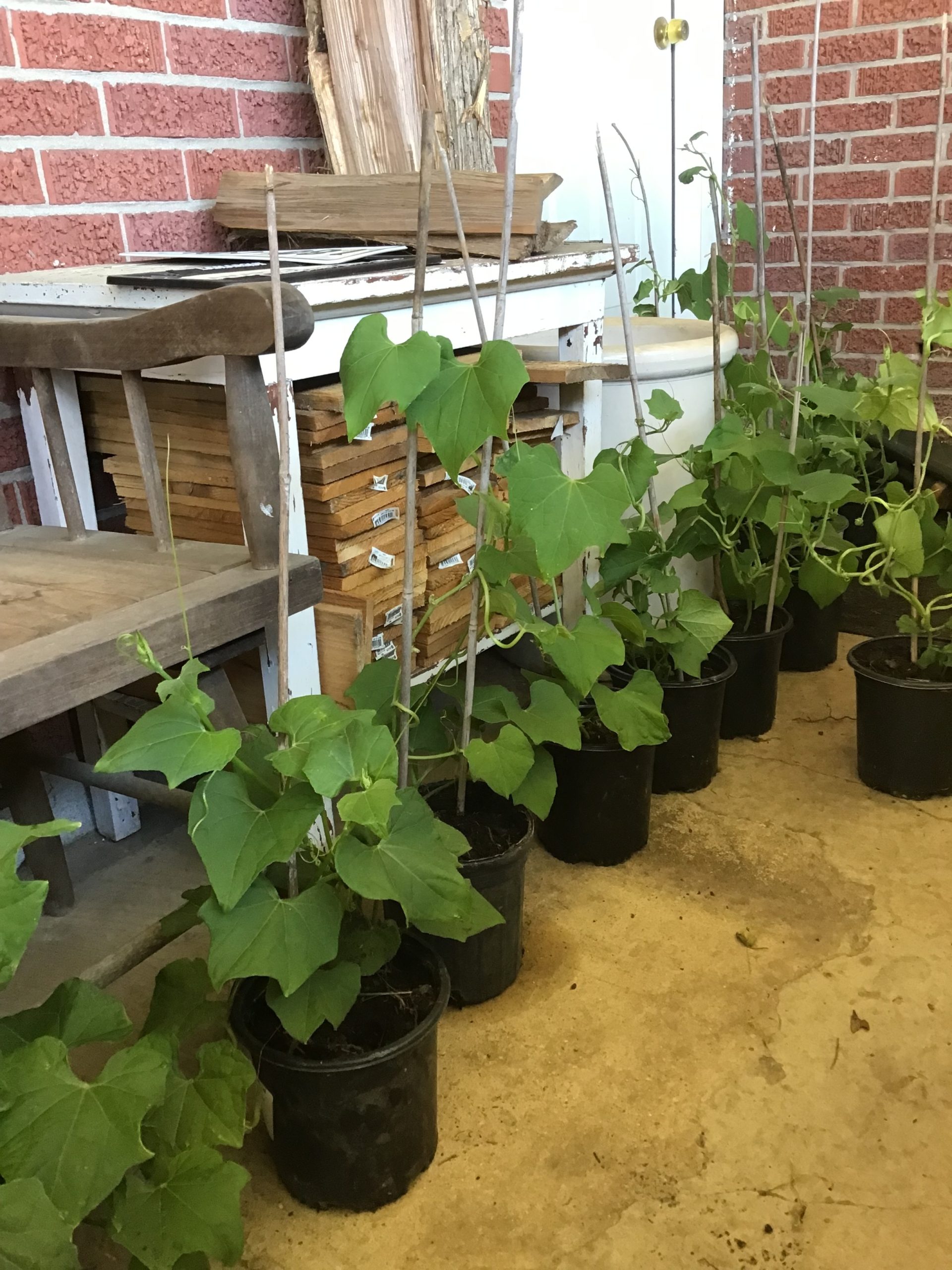
Mirlitons are being overwintered in 3-gallon containers.
How can you get a spring harvest from a newly planted mirliton?
Try a little Wizardry–trick the sprout!
We learned last year that people who plant fall sprouts in containers can get a crop as early as the next spring. How did they do that? They made the sprout think it had been planted in the ground for several months.
Here’s how it works:
The reproduction clock on a mirliton starts the day it senses that it’s in soil. Then it will flower and fruit 110 days later.
Do the math.
If you container-plant a sprout in November and then transplant it into the ground in March, it has been in soil for 110 days by the following May. That’s why so many people who container-planted their fall sprouts last year got a small spring crop.
That won’t happen if you use the old method of overwintering your sprouts in paper bags underneath your sink. No soil, no reproductive clock.
No academic scientist discovered this trick. Mirliton growers discovered it.
Congratulations!
Normally, newly planted mirlitons don’t flower and fruit until the following fall. But if you overwinter them in a container, they will develop a strong rootball, helping them thrive once transplanted.
So, plant that sprout in a 3-gallon plastic or cloth container now and get ready for a spring crop as well as one next fall!
You can either trellis them on a tomato cage or prune them back during the winter. Pruning them back in the container is safe and will result in a compact, bushy plant.
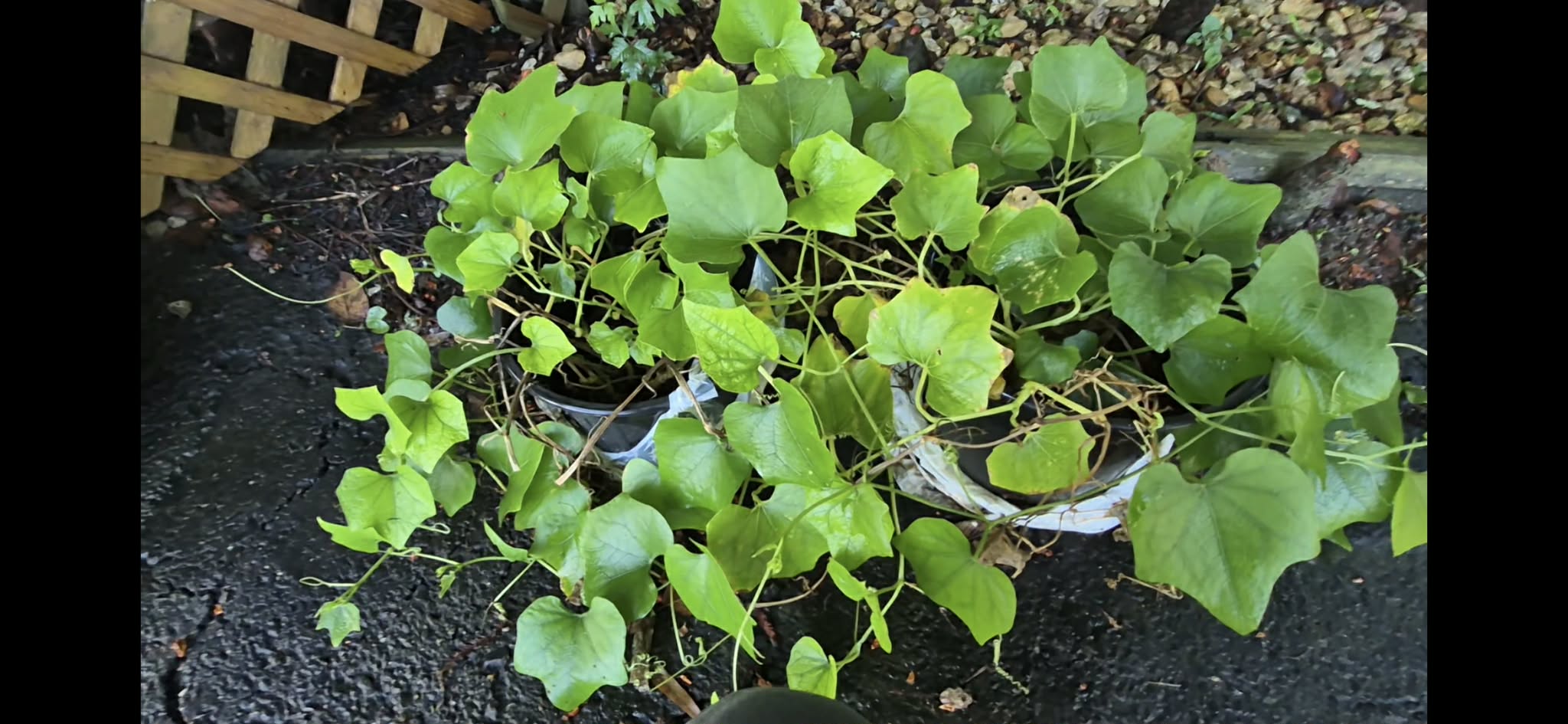
Pruned container plants.