By Lance Hill
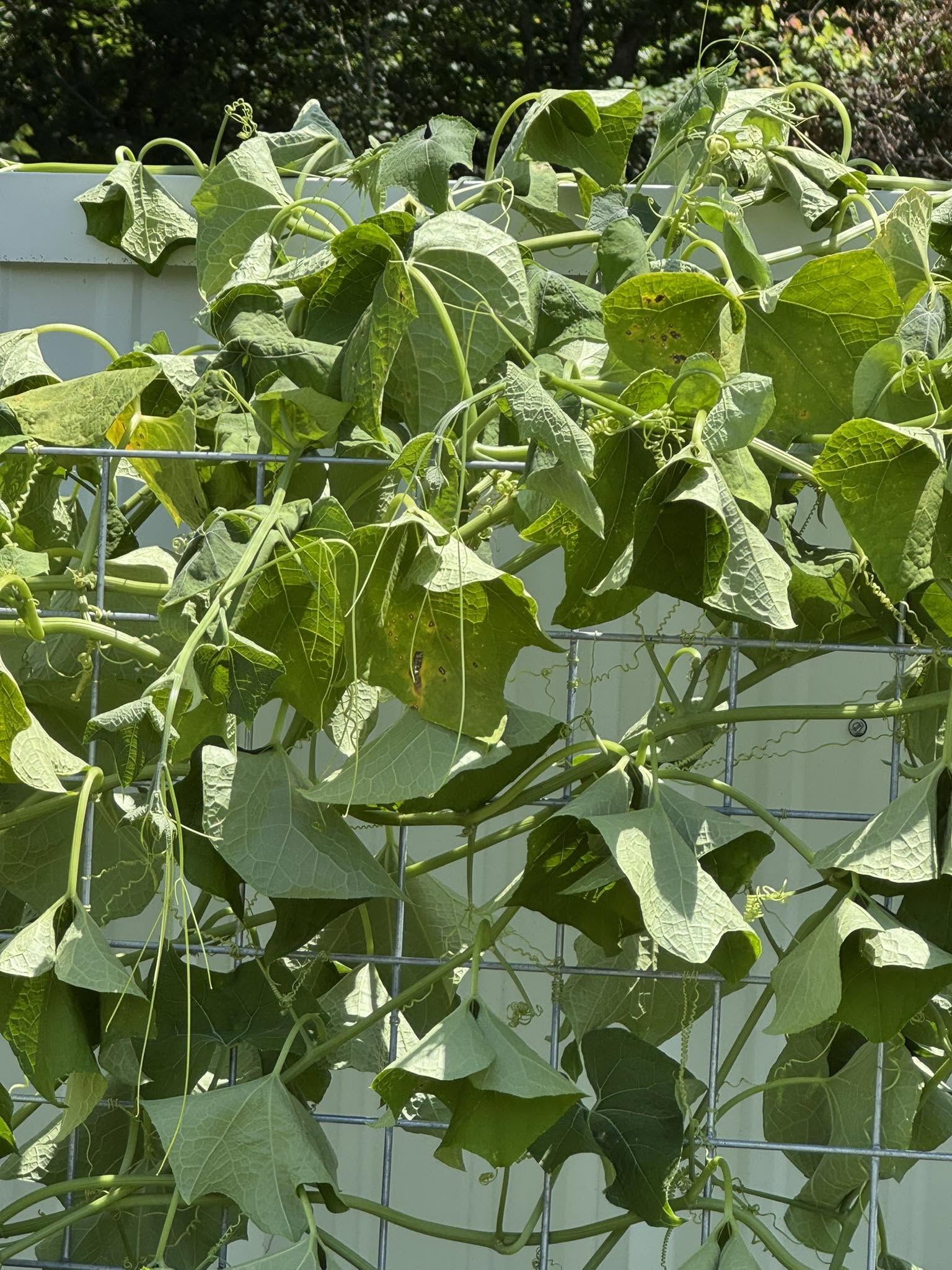
Typical leaf flagging during a temporary wilt. Leaves are no longer orienting toward the sun and are slightly drooping.
I remember the day I saw my first Mirliton vine wilting. I almost called 911. My first impulse was to water it, which I did, but it did not revive it that day. Miraculously, the next morning, the vine was in perfect shape.
Two Types of Wilt:
There are two types of wilting with mirlitons: temporary and permanent. They are different by degree, but while the temporary wilt can be fixed, the permanent one is a more serious problem. Knowing how to recognize a temporary wilt will help prevent it from getting worse.
Mirlitons are part of the cucurbit family along with cucumbers and melons. Cucurbits that have large, paper-thin leaves lose a great deal of moisture during hot weather—sometimes more quickly than the roots can replenish it. The moisture balance is also complicated by the plants’ shallow root structure. Mirlitons have two ingenious responses to excessive daytime heat: (1) they collapse their leaves so there is less surface exposure to direct sun (stress avoidance), and (2) they wait until the cooler nighttime to uptake more water into the leaves. It’s like humans fighting the heat by wearing a hat and shirt to reduce exposed skin surface and drinking water in the shade to rehydrate.
Temporary Wilt:
You can easily learn to recognize a temporary wilt (also called leaf flagging). The leaves will have lost some turgidity but not completely collapsed, as shown in the two photos. When you see this, you can use a soil sampler to sample the soil and see if it is too dry in the root zone (8″ down). You can also use your hands to feel how firm the leaves and stems (petioles) are. The video at the end of this post demonstrates the proper way to feel for a temporary wilt. The last thing you want to do if the plant is in a temporary wilt is to water the vine when it already has plenty of available soil moisture—you will flood the roots and cause root asphyxia, which leads to more wilting. Just wait until the next morning, and if the leaves have fully expanded and properly oriented toward the light, you have no problem. In fact, periodic wilting toughens leaves and gives them more protection from fungi.
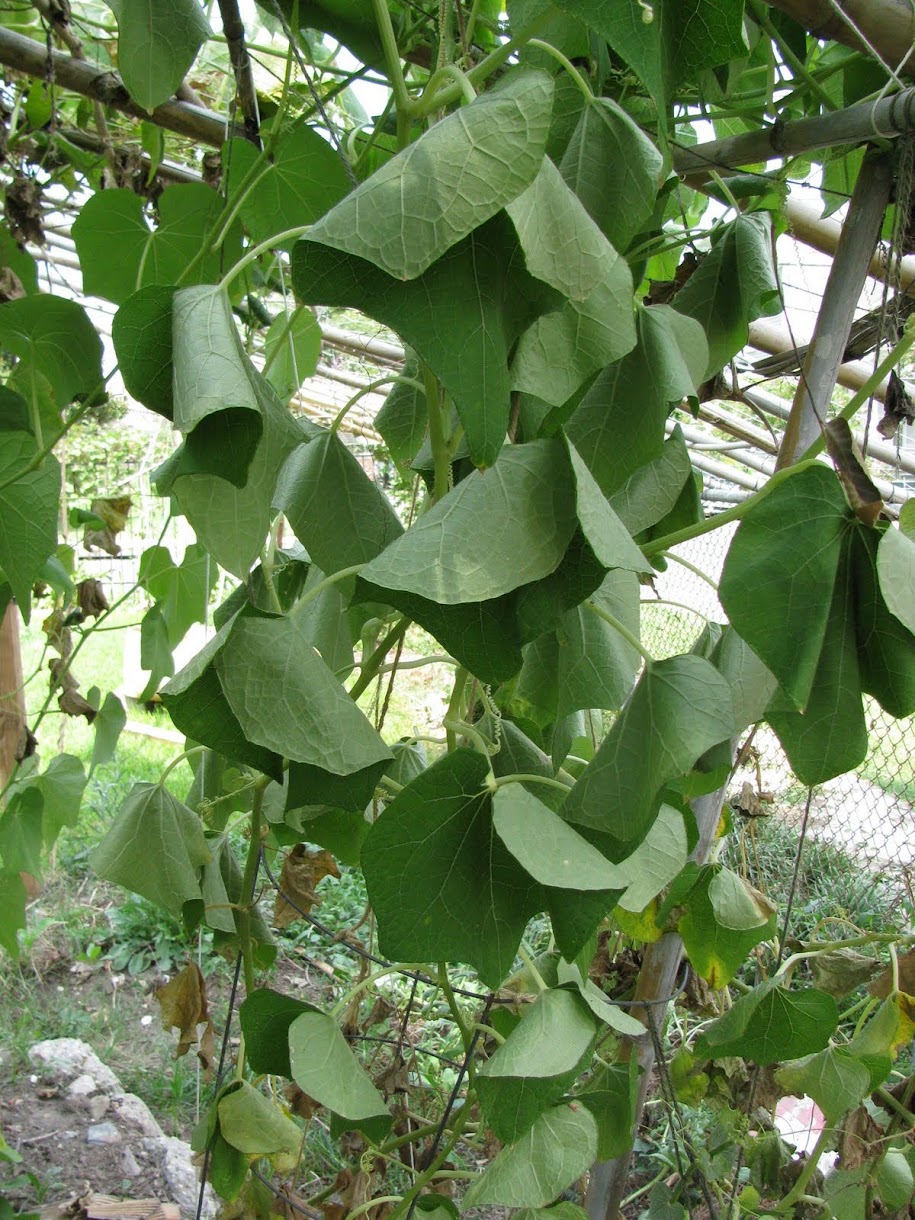
Temporary wilt. This is called “leaf flagging.” Proof will be that the leaves will restore to normal in the evening.

Evidence that it was a temporary wilt: By the next morning, Healthy and Happy Leaves are orienting toward the sun and have no sign of wilt.
Permanent Wilt:
Permanent wilting is caused by disease, pests, or overwatering that blocks the entire flow of water from the roots to the leaves. If you wait until morning and the leaves are still severely wilted, you have a serious problem. Unfortunately, there is no verified solution to these fungal toxins and insects like vine borers that block the uptake of water. August is the month when anthracnose will most likely attack the mirliton because of heat and frequent rains. There is a link below to how to diagnose anthracnose. But don’t worry: mirlitons can usually withstand a bout with anthracnose and still produce some fruit in the fall. In fact, the vine will acquire increased immunity from anthracnose each time it battles it.
.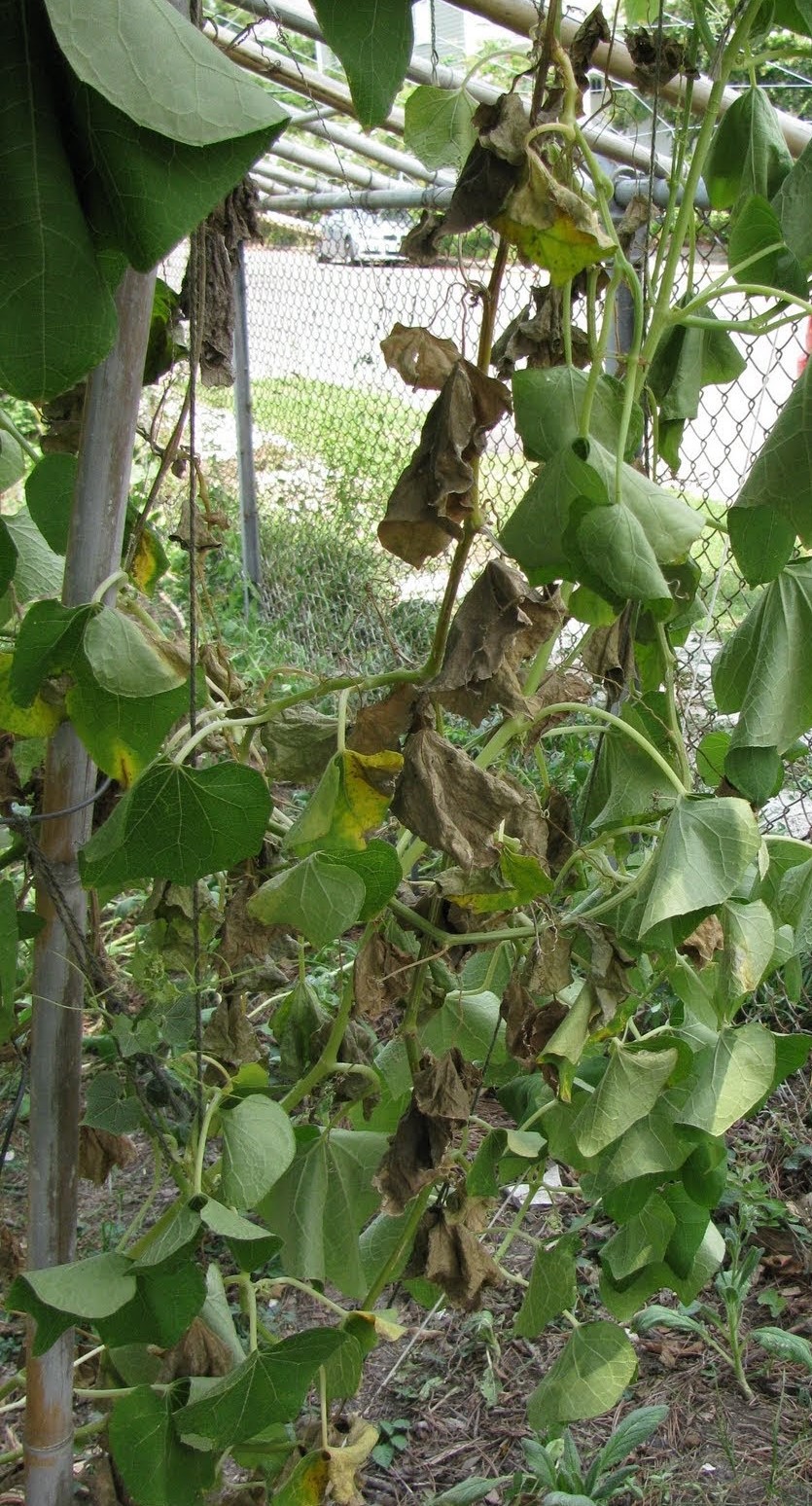
Figure 3: Permanent Wilt. Note how even the leaf stems are drooping.
The reason leaves wilt or hold their shape is because of water pressure. It’s the same reason a limp balloon becomes firm when inflated with air. The key is what scientists call “turgor pressure.” Understanding the simple science of turgor pressure will equip you to identify the difference between temporary and permanent wilting. This short video explains turgor pressure. How to use your hands to test for a temporary wilt.